
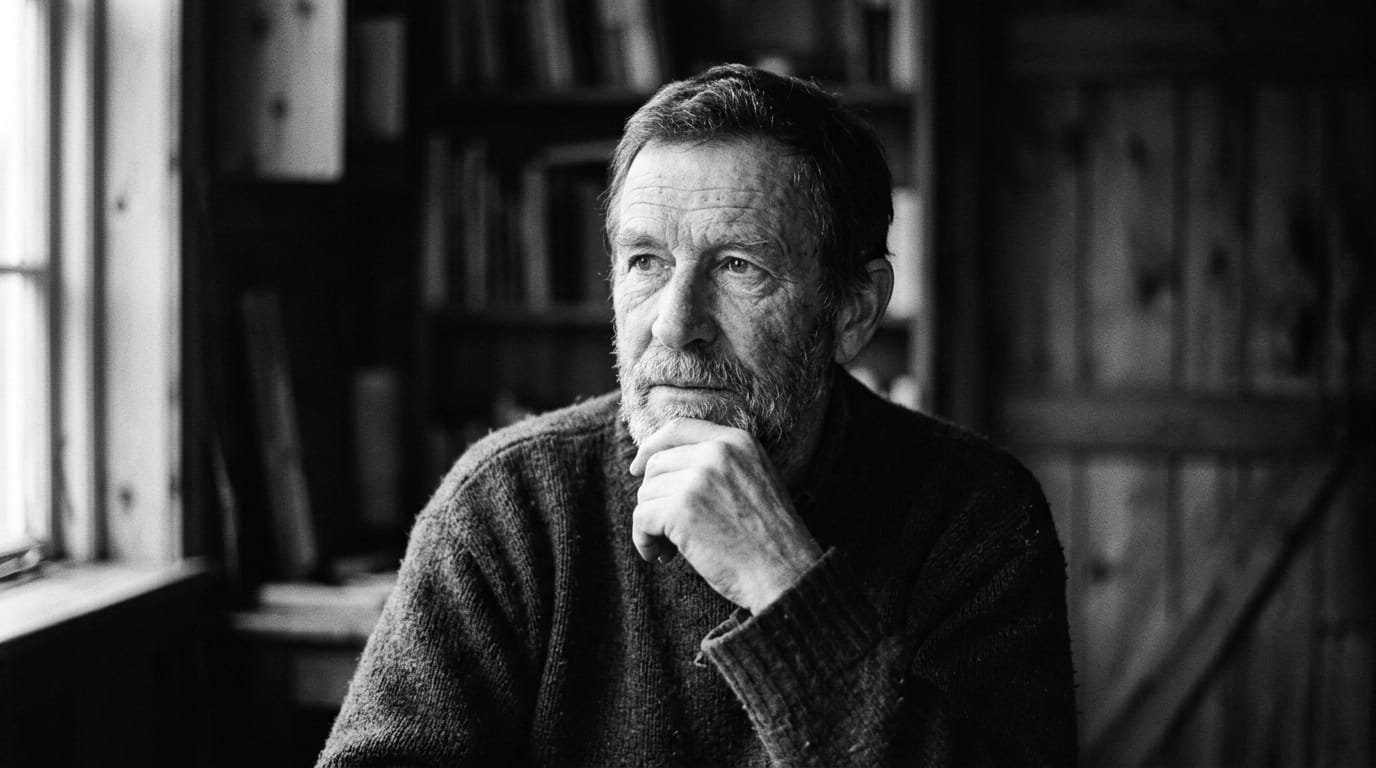
Colour tells you what something looks like. Black and white tells you how it feels. Strip away the distraction of hue and what remains is structure, emotion, and light. The lines in a face become a map. The catch of light in an eye becomes the whole story. Black and white portraiture has outlasted every photography trend for over a century because it forces honesty. There is nowhere to hide. The subject is either present in the frame or they are not. AI portrait tools now bring this level of visual truth to any photo you upload, without a darkroom, a film camera, or years of editing skill. These 12 prompts are built to produce black and white portraits that feel earned rather than filtered, with the kind of tonal depth you find in serious photographic work. For colour portrait work that complements this series, cinematic portrait Gemini prompts cover the full-colour equivalent with the same attention to light and mood.
Each prompt targets a different emotional register, from raw documentary grit to quiet fine art stillness. Upload a clear photo, choose the mood that fits your subject, and let the AI handle the tonal translation. The 8K quality output ensures that every shadow gradient and skin texture holds up at large print sizes where black and white work genuinely lives.
Why Black and White Portraits Age Better Than Any Other Style
A colour photo from ten years ago looks dated. A strong black and white portrait from ten years ago looks classic. The absence of colour removes the timestamp that fashion, filters, and colour grading inevitably leave behind. What remains is light and subject, which do not date.
What makes black and white portraits endure across time:
- Tonal contrast that defines facial structure more clearly than colour ever can
- Shadow depth that adds weight and gravity to expressions that might read as casual in colour
- Skin texture rendered honestly, neither smoothed by colour warmth nor hidden by grading choices
- The absence of background colour distraction, forcing the eye directly to the subject’s face
- Emotional neutrality that lets the viewer project feeling rather than having it assigned by a colour palette
- Print permanence that holds its visual authority across decades of display
Photographers building portrait archives that include both living subjects and memorial work will find that memorial portrait Gemini prompts draw heavily on the same tonal principles that make black and white so suited to preservation and legacy photography.
Choosing Photos That Convert Well to Black and White
Not every photo translates successfully to black and white. The biggest mistake is uploading a photo where different elements of the image are differentiated only by colour rather than by tone or brightness. If the subject’s clothing is a different colour from the background but the same brightness, they will merge in monochrome. Look for photos where there is already contrast in brightness between the subject and their surroundings.
Strong directional light produces the best conversions. Side lighting, window light, and any setup where shadows fall clearly across the face give the AI rich tonal material to work with. Flat, even lighting produces flat black and white results because there is no shadow structure for the AI to deepen or preserve. Facial close-ups and mid-shots generally outperform full body shots in black and white because the tonal detail that matters most is concentrated in the face. The 8K output captures grain, pore texture, and fine shadow gradients that give the result its sense of weight and authenticity.
12 AI Prompts for Black and White Portraits
Raw and Documentary
Prompt 1: Street Documentary Portrait Transform this photo into a raw black and white documentary portrait. High contrast with deep blacks and bright whites. Natural available light preserved and intensified. Gritty, honest rendering of skin texture and expression. No studio polish. Street photography aesthetic with photojournalism weight, 8K quality.
Prompt 2: Weathered Character Study Create a powerful black and white character portrait emphasizing the lines, texture, and story in the subject’s face. Deep shadow in the creases around the eyes and mouth. Strong side lighting or window light. Honest, unflattering rendering that reads as dignified rather than harsh. Documentary portrait photography style, 8K detail.
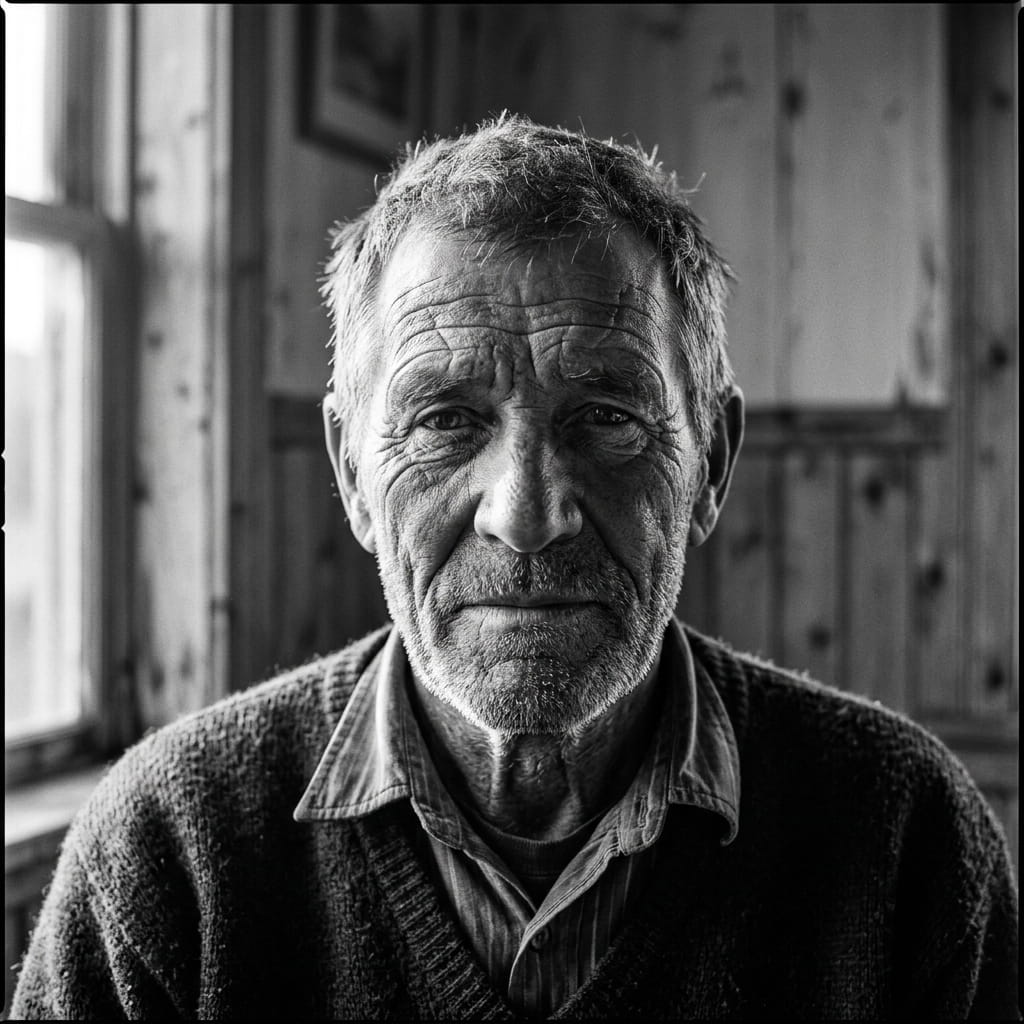
Prompt 3: Candid Moment Frozen Generate a black and white portrait capturing a candid, unposed moment. Subject mid-expression or caught looking away. Available light with natural shadow fall. Slight photographic grain visible. Documentary photography aesthetic, emotionally present, 8K quality.
Raw documentary portraits sit at the opposite end of the spectrum from polished studio work. For those who want to explore the dramatic studio side of black and white, professional portrait Gemini prompts include controlled lighting setups that translate powerfully into monochrome.
Fine Art and Studio
Prompt 4: Classic Fine Art Headshot Transform this into a timeless fine art black and white headshot. Clean grey or white studio background. Soft directional lighting with precise shadow placement. Every skin texture and hair detail rendered sharply. No grain. Archival fine art photography quality, 8K detail.
Prompt 5: Rembrandt Monochrome Create a black and white studio portrait using Rembrandt lighting technique. One light source high and to the side, creating a triangle of light on the shadow side cheek. Rich, graduated shadow filling the rest of the face. Dark background. Classic portrait painting translated into photography, 8K quality.
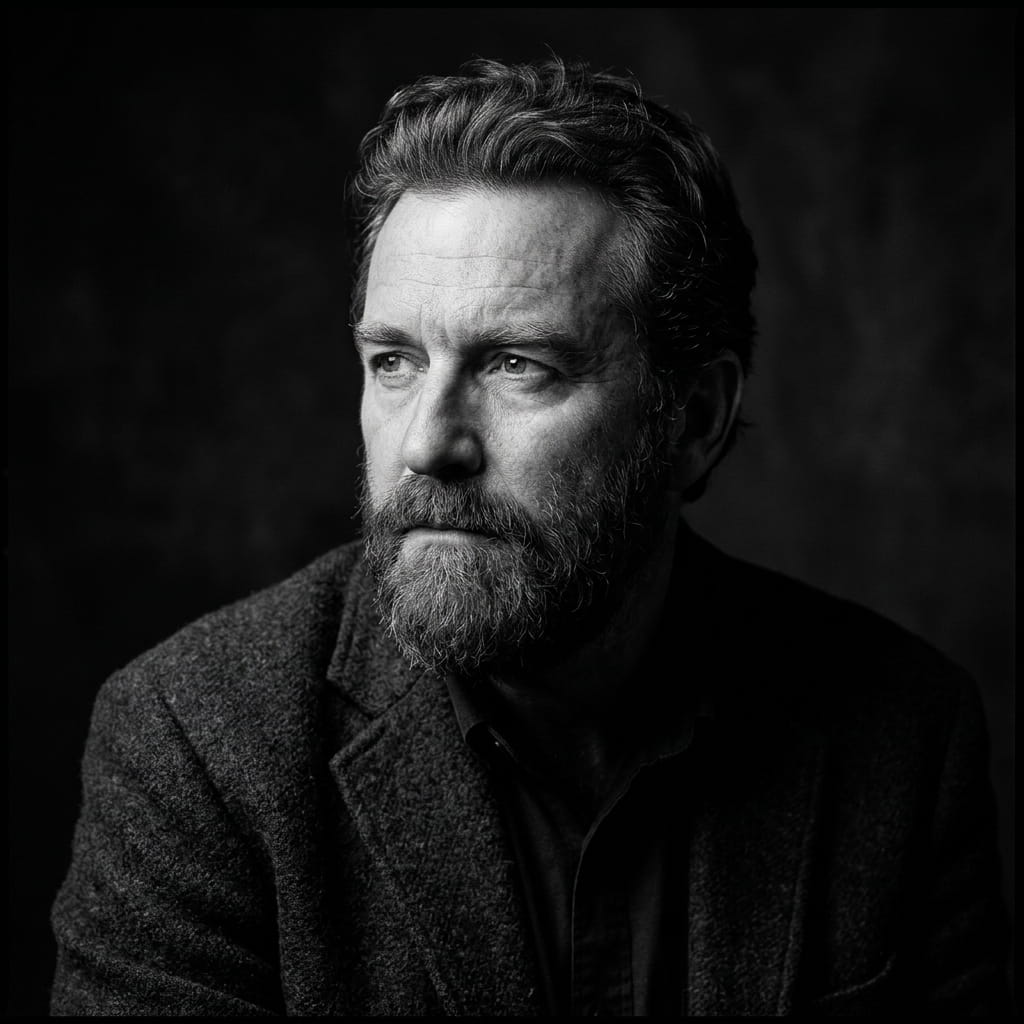
Prompt 6: High Key Clean Portrait Generate a high key black and white portrait. Bright, even lighting with minimal shadow. Clean white background. Skin tones rendered in light greys. Delicate tonal range in the mid-tones. Commercial beauty photography translated into clean monochrome, 8K quality.
High key monochrome portraits work particularly well for bridal and formal occasions. Photographers shooting those subjects will find complementary prompts in the bridal portrait Gemini prompts collection, several of which convert to stunning black and white.
Emotional and Intimate
Prompt 7: Close-Up Vulnerability Transform this into an intimate black and white close-up portrait. Face filling most of the frame. Deep focus on eyes and skin. Soft, directional light creating gentle shadow on one side. Expression honest and unguarded. Fine art photography with emotional weight, 8K quality.
Prompt 8: Quiet Contemplation Create a still, introspective black and white portrait of the subject in a moment of thought. Eyes looking slightly down or away from the camera. Window light or soft ambient light. Gentle tonal range with shadow depth. Intimate portrait photography, meditative mood, 8K detail.
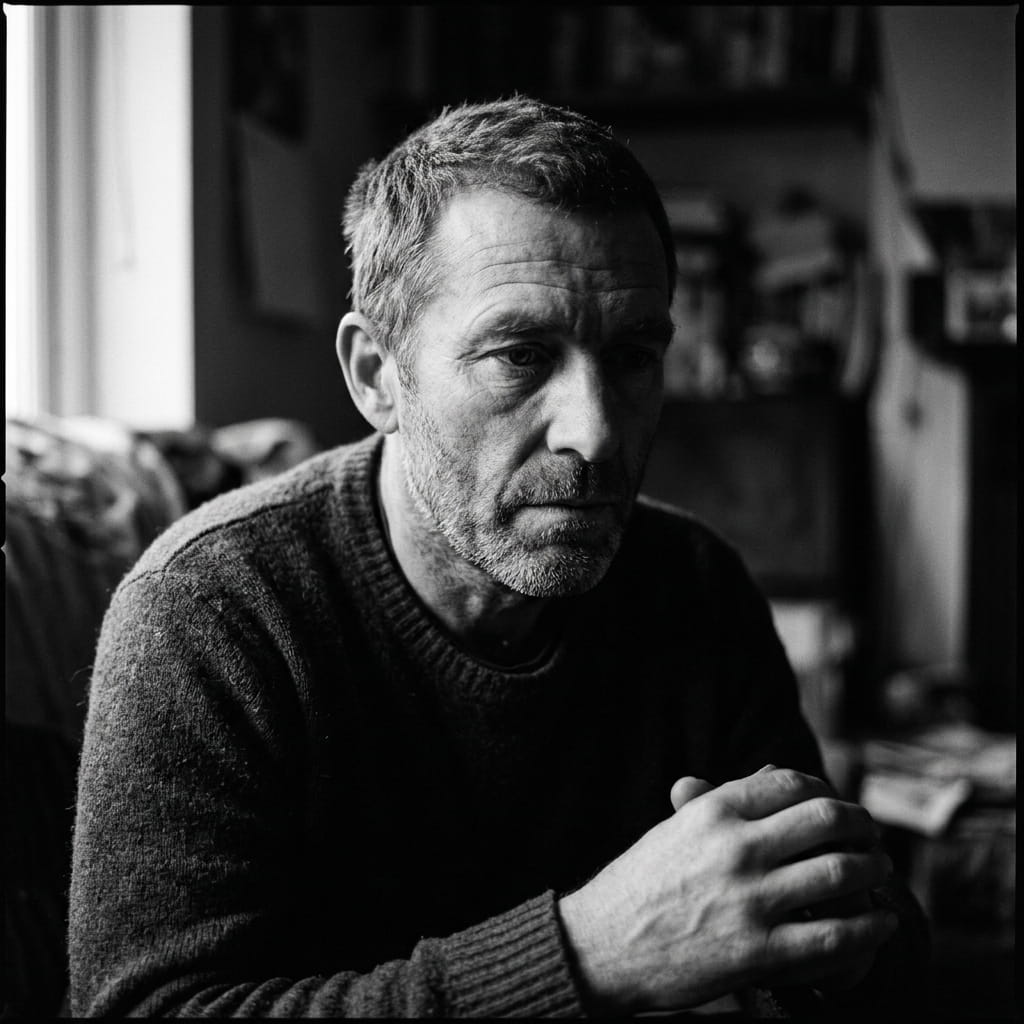
Prompt 9: Grief and Strength Generate a black and white portrait conveying both vulnerability and inner strength. Neutral or slightly downward expression. High contrast lighting that emphasizes the jaw and brow structure. Deep shadow. Subject appears present but interior. Documentary emotional portrait photography, 8K quality.
Timeless and Archival
Prompt 10: Vintage Silver Gelatin Transform this photo into a portrait that mimics the look of a vintage silver gelatin print. Warm blacks rather than cool, subtle tonal compression in the highlights, photographic grain visible at closer inspection. The quality of a mid-century professional portrait. Archival photography aesthetic, 8K quality.
Prompt 11: Film Noir Dramatic Create a black and white portrait with film noir lighting. Strong single source light from a low angle or sharp side position. Deep, hard shadows. Subject with a direct or slightly challenging gaze. Dark, moody atmosphere. Cinematic 1940s portrait photography aesthetic, 8K quality.
Prompt 12: Timeless Formal Portrait Generate a formal black and white portrait built for archival display. Clean, composed posture. Soft but directional studio lighting. Neutral background. Expression dignified and settled. The visual quality of a portrait commissioned for permanent display, 8K detail.
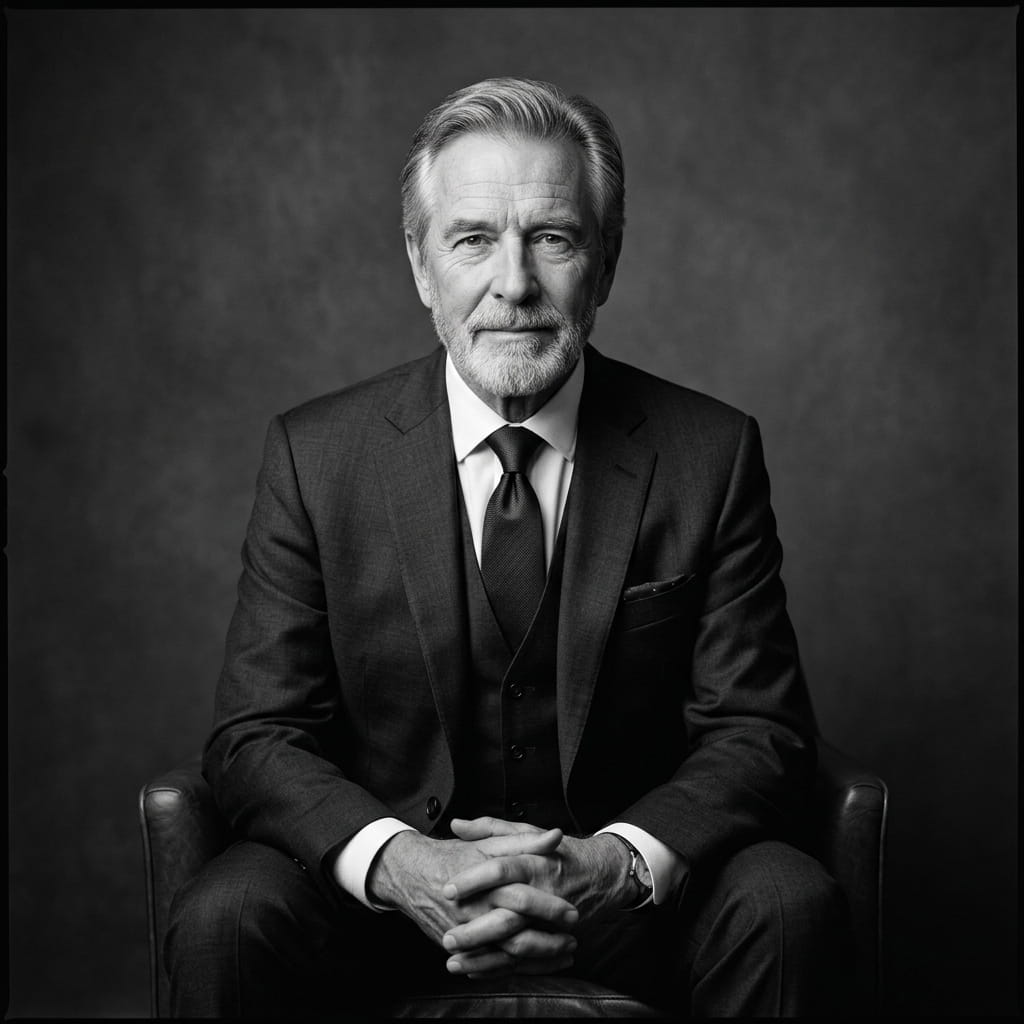
The timeless formal approach works across generations and subjects. For those documenting older family members with this kind of archival permanence in mind, grandparents Gemini AI prompts cover that specific emotional territory with the same intention.
Getting Depth and Grain Right in Monochrome
The two elements that separate a strong black and white portrait from a desaturated colour photo are tonal depth and grain. Most AI outputs default to smooth, clean monochrome. These prompts push past that default, but you can go further with specific follow-up language.
- Add “increase shadow depth in the background” when the subject is not separating clearly from their environment
- Use “add visible photographic grain throughout” when the result looks too digitally clean for the raw style you want
- Specify “preserve highlight detail in skin without blowing out” when working with high contrast lighting prompts
- Try “warm the blacks slightly” for the vintage silver gelatin look and “cool the blacks” for contemporary editorial monochrome
- If the shadow areas look muddy rather than rich, add “open shadow detail while maintaining deep blacks” to your follow-up
What a Complete Black and White Portrait Series Covers
A single black and white portrait makes a statement. A series tells a story arc. The most powerful monochrome portrait collections move through emotional registers rather than repeating the same tonal approach across every image.
- One raw documentary portrait showing the subject in their natural environment or expression
- One fine art studio headshot for formal and professional use
- One close-up intimacy portrait where the face fills the frame
- One dramatic lighting portrait using Rembrandt or noir technique
- One vintage or archival style portrait for display and legacy use
- One quiet, contemplative portrait for the emotional counterpoint to the dramatic pieces
The Permanence That Colour Cannot Carry
There is a reason the most displayed portrait photographs in history are black and white. It is not nostalgia. It is permanence, in more than the metaphorical sense. The process behind the vintage silver gelatin look in prompt 10 isn’t a stylistic invention, gelatin silver printing became the dominant black-and-white photographic process by the 1890s and stayed the standard for both amateur and professional prints through most of the twentieth century, which is exactly the era prompt 10 is recreating. And the physical permanence is real too: print permanence research confirms that black-and-white prints using silver or carbon-based media generally outlast color prints on display, one more reason the format keeps getting chosen for portraits meant to hang on a wall for decades rather than a season.
A monochrome portrait stripped of every colour distraction forces a single conversation between the viewer and the subject’s face. Every line, every expression, every shadow becomes a fact rather than a suggestion. That is a heavier kind of portrait than most people are used to seeing of themselves, and it is worth making.
The 8K output ensures that when these portraits are printed large, they carry the same tonal authority they hold on screen. Fine shadow gradients across the cheekbone, the texture of hair catching a rim of light, the depth in the eye closest to the shadow. All of it holds. These are portraits made to last, not to perform for an algorithm this week and disappear next month. For those who want to extend their portrait collection into editorial colour work, travel photo Gemini prompts offer a different visual register where colour and environment carry the emotional weight instead.
Where Black and White Portraits Perform Best
Monochrome portraits occupy a unique space online because they signal intent. They do not look accidental. That visual seriousness drives different engagement patterns from colour content.
- Fine art and photography communities on Instagram consistently rate black and white portraits higher for saves and profile visits
- Website about pages and speaker profiles with monochrome headshots read as more authoritative than their colour equivalents
- Pinterest boards dedicated to black and white portrait photography attract consistent long-tail traffic from users searching for printing and display inspiration
- LinkedIn profiles using clean fine art monochrome headshots stand out against the sea of colour corporate photos
- Google Discover responds well to visually distinctive featured images, and a strong high-contrast monochrome portrait stops the scroll more reliably than a soft colour photo
Start With the Portrait That Feels Most True
Black and white photography does not require a special subject or a special occasion. It requires an honest photo and a clear intention for how the light should fall and where the emotion should sit. These 12 prompts give that intention a specific form. Start with the portrait style that matches your subject best, raw and documentary if the power is in their story, fine art studio if the power is in their presence, or intimate close-up if the power is in what their face holds quietly.
Upload your photo, choose your prompt, and see what remains when colour stops doing the work. What remains is the portrait.
Frequently Asked Questions
Which AI tool works best for these black and white portrait prompts?
These prompts are written to work with ChatGPT with image capabilities, Google Gemini, and most major AI image tools that accept photo uploads with descriptive prompts. The language is deliberately tool-agnostic so you can test across platforms and compare results for the same source photo.
Why does my black and white result look flat instead of having depth?
Flat monochrome usually means the source photo had even, shadowless lighting. Black and white needs tonal contrast to work. Try uploading a photo taken near a window with light coming from one side, or add the phrase “increase contrast and deepen shadow areas” to your prompt to push the AI toward a more dimensional result.
Can I use these prompts for old family photos that are already in black and white?
Yes. These prompts work well for restoring and enhancing existing black and white photos. The AI can improve tonal range, reduce noise and damage artifacts, and sharpen detail in older prints or scans. For photos of family members who have passed, memorial portrait prompts offer additional guidance specifically built for that emotionally careful work.
What is the difference between high key and low key black and white portraits?
High key portraits use bright, even lighting with minimal shadow, producing images in lighter grey tones with an airy, clean quality. Low key portraits use strong directional light with deep shadow, producing images dominated by dark tones with dramatic contrast. High key suits commercial and beauty work. Low key suits character, drama, and fine art portraiture.
Do black and white portraits print better than colour for home display?
For large format display, black and white portraits are generally more forgiving in different lighting conditions than colour prints. They do not shift in appearance under warm or cool ambient light the way colour photos do. The 8K quality output from these AI prompts ensures the tonal detail that makes monochrome printing rewarding is preserved at any print size.