
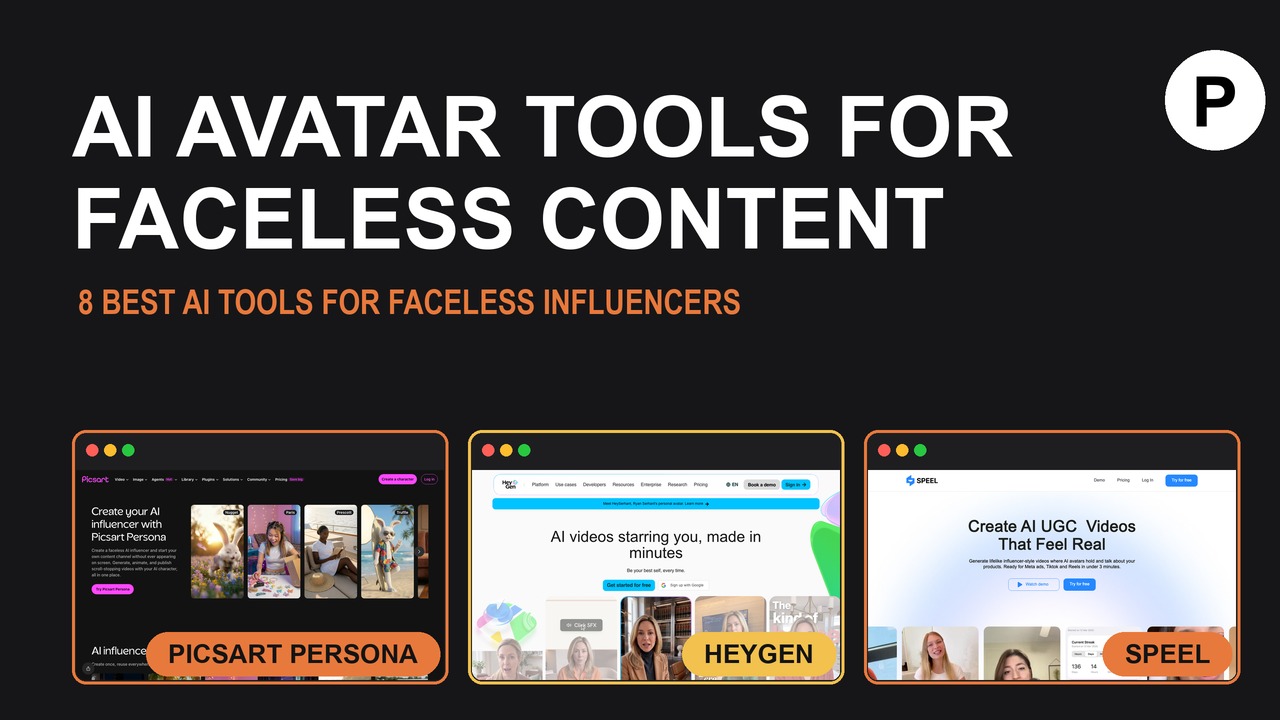
Faceless content built around AI avatars has moved past being a workaround for camera-shy creators. It’s now a deliberate content strategy, and the major platforms are responding by building tools specifically for launching digital personas rather than one-off avatar clips.
The technical piece that separates a recognizable persona from a pile of disconnected videos is character consistency: the same face, voice, and tone showing up video after video. Below are eight tools that handle different pieces of that problem, from general-purpose avatar generation to purpose-built persona and episodic content tools.
Key takeaways
- Character consistency across videos, not raw avatar quality, is what makes a persona recognizable rather than a series of unrelated clips.
- Tools now split into two camps: general-purpose avatar platforms (HeyGen, Synthesia, D-ID) and dedicated persona-building tools (Picsart Persona, Picsart Storyline).
- Fliki, Speel, and Glif each fold avatar generation into a broader workflow, script-to-video, ad production, or multi-model automation, aimed at reducing the number of separate tools a creator needs.
- The avatar is only one part of a working persona. A consistent script voice, a locked visual reference, and a fixed posting schedule matter just as much as the generation tool itself.
1. HeyGen
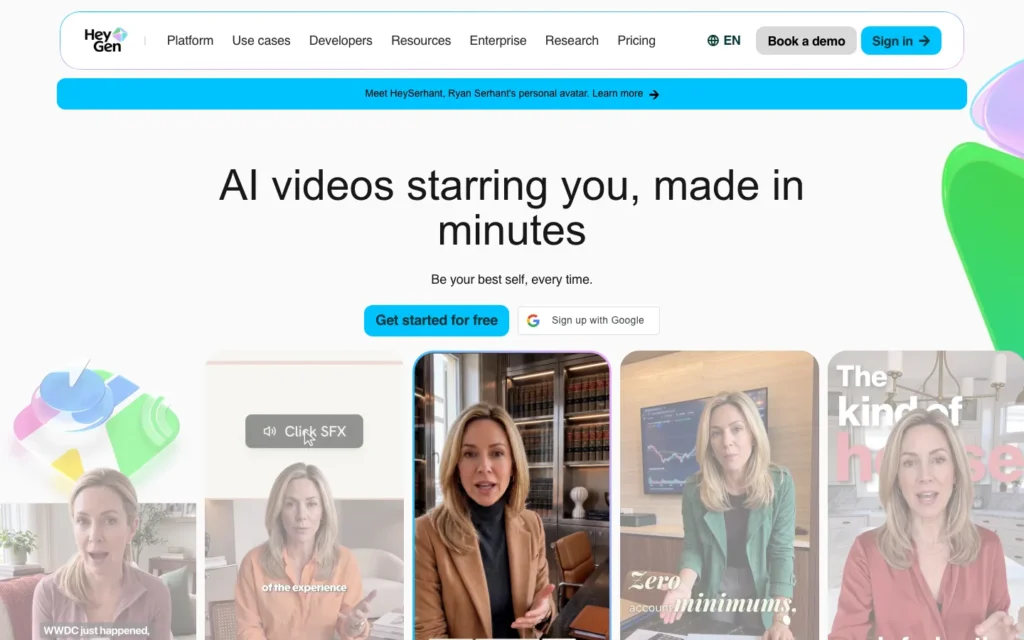
HeyGen builds realistic AI avatars with accurate lip-sync, and it can translate content into multiple languages while keeping the avatar’s mouth movements matched to the new audio track.
That combination, multilingual output paired with lip-sync accuracy, is the main reason it fits a faceless channel trying to reach several language audiences from one core script. A creator can produce one avatar and one script, then adapt it across markets instead of running separate production for each language.
2. Synthesia
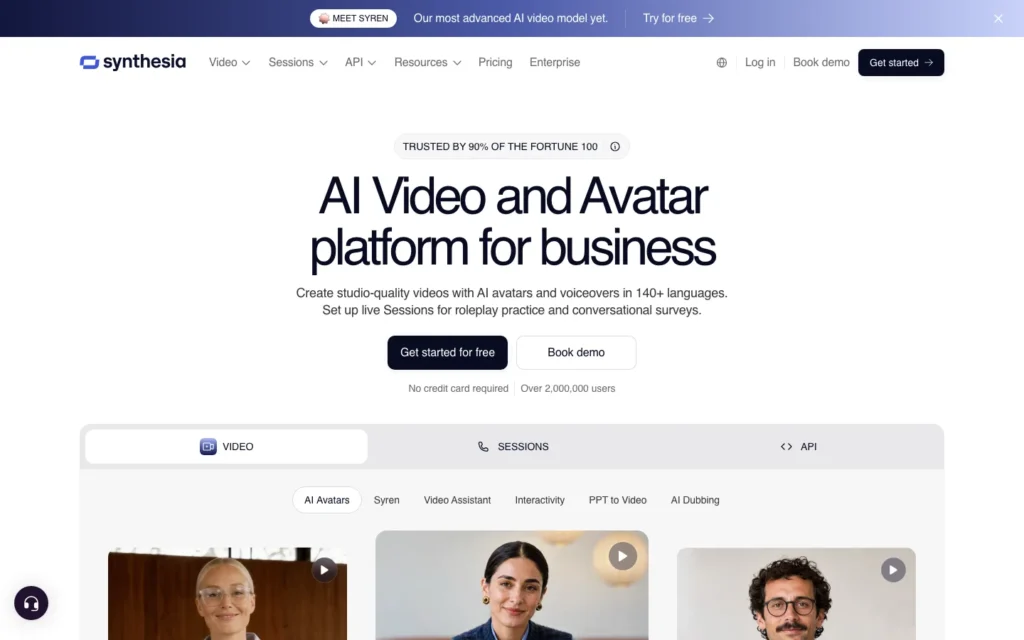
Synthesia was built around corporate training and presentation content before it became a common pick for faceless creator channels. That enterprise background shows up in the output: consistent, professional avatars designed to hold up across large volumes of video rather than a single polished clip.
Creators who want a presenter-style look, closer to a news anchor than a stylized character, tend to get more out of Synthesia than a more casual or cartoon-adjacent avatar aesthetic would offer.
3. D-ID
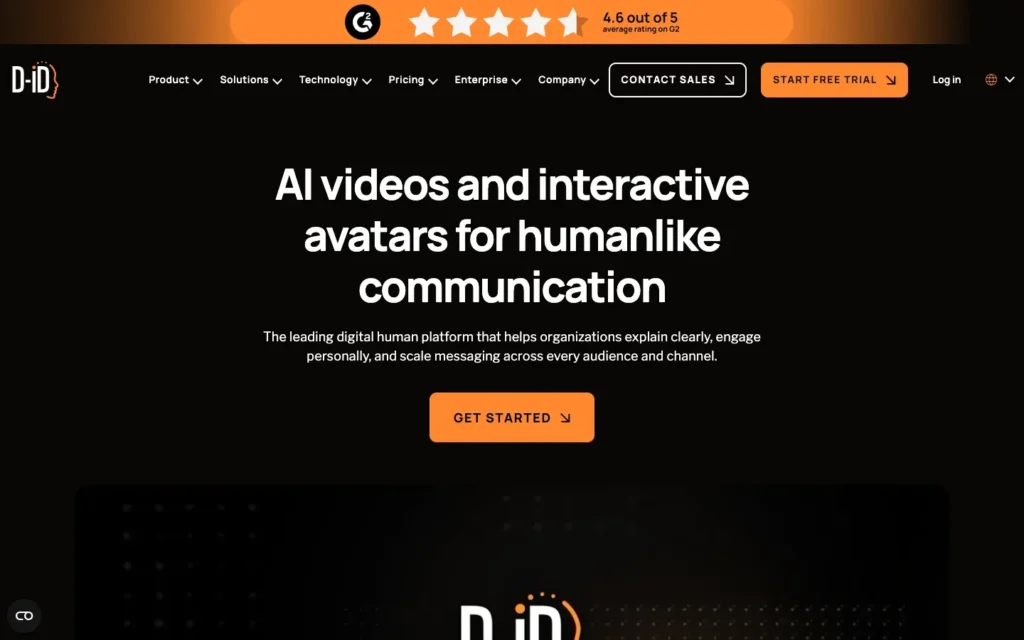
D-ID animates a single still photo into a talking avatar, which means a creator can start from one reference image instead of picking from a library of pre-built 3D models. That gives direct control over exactly how the persona looks from the first step, since the source photo defines the character rather than a template.
This matters most for creators who already have a specific character design or reference image in mind and want to animate that exact look rather than compromise on a preset avatar.
4. Picsart Persona
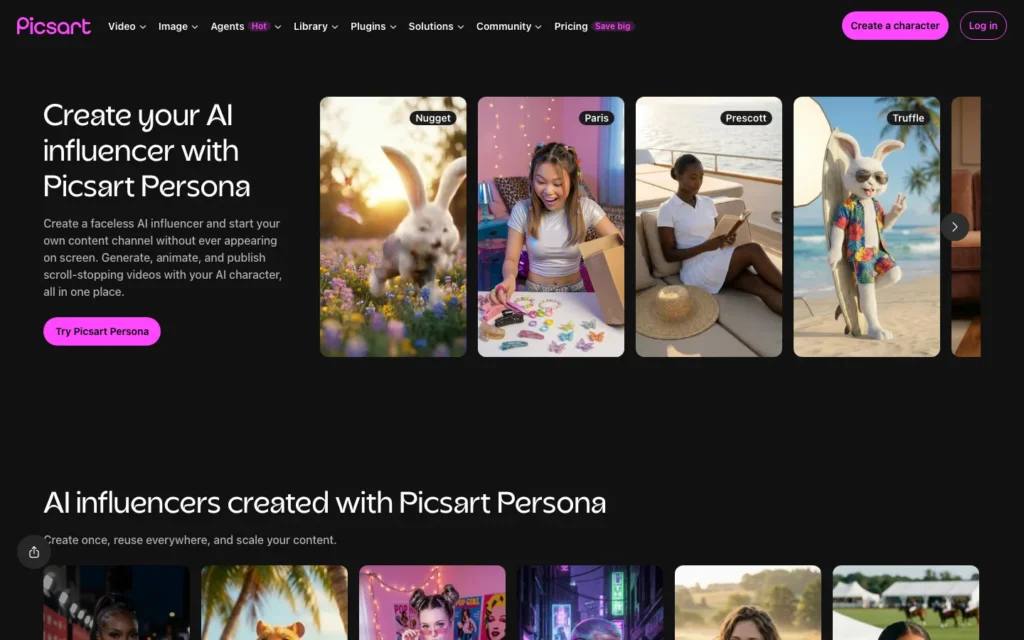
Character consistency is the most common failure point in AI avatar content, and Picsart’s Persona tool was built specifically to address it. The tool lets creators lock in a digital persona designed to look and behave the same way across every piece of content it appears in.
That focus on consistency as the core feature, not an afterthought added to a general avatar tool, is what separates Persona from the rest of this list. It fits creators planning a long-running channel or series where the same recognizable character needs to show up across dozens of videos without drifting.
5. Picsart Storyline
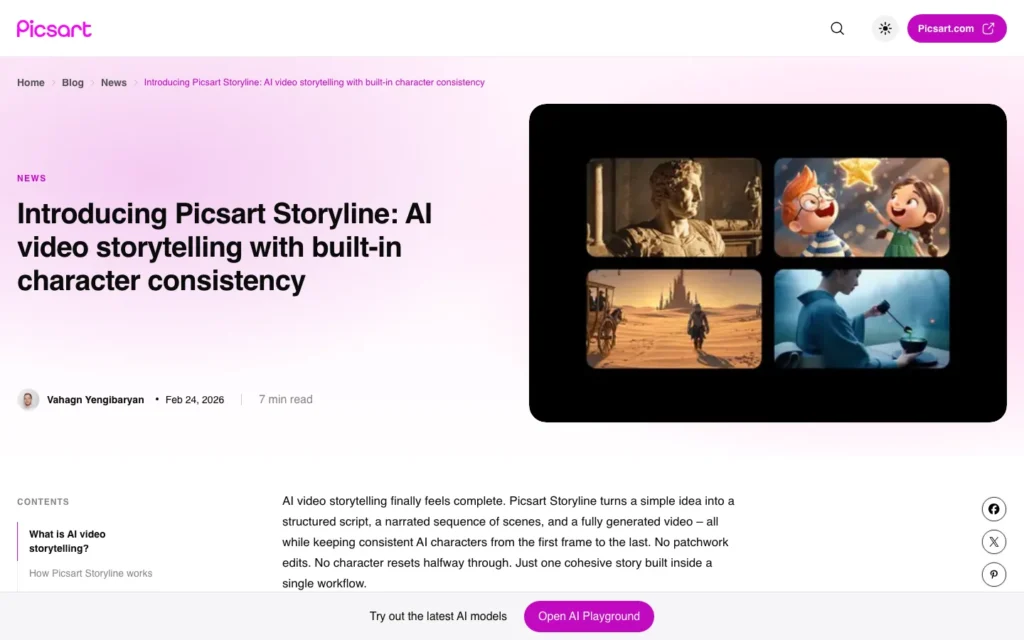
Storyline pairs with Persona to handle episodic, narrative-driven content. Rather than treating each video as a standalone clip, it’s built around the idea of an ongoing animated series with a consistent character carrying the story forward.
Educational explainer channels and narrative-driven series are the clearest fit here, since both depend on the same character reappearing across an ongoing storyline instead of a rotating cast.
6. Fliki
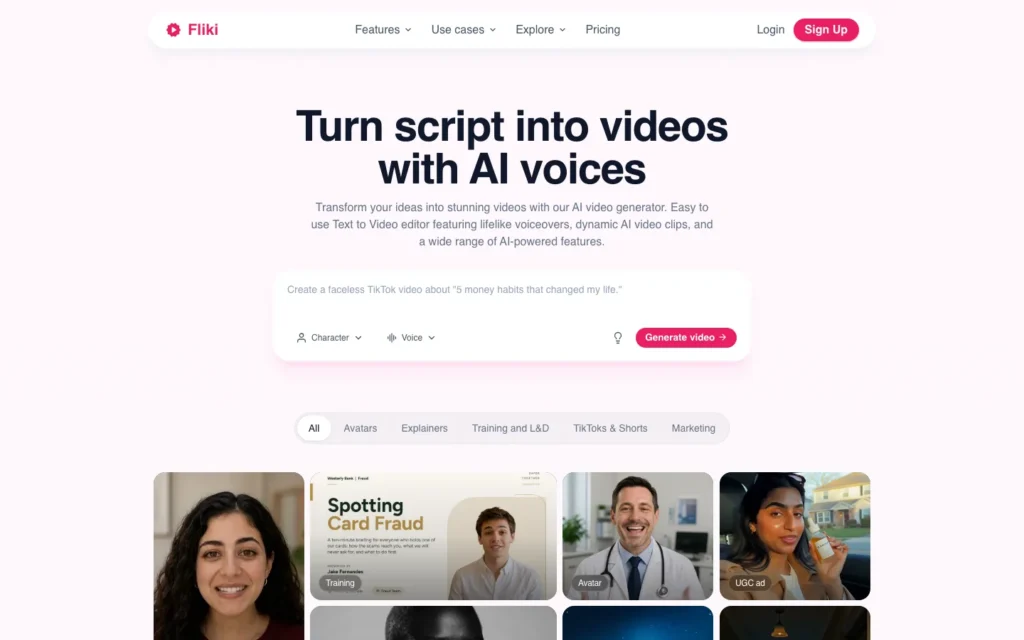
Fliki combines AI avatars with a full script-to-video pipeline, so a creator can go from a written idea to a finished video, avatar, voice, and visuals included, without leaving the platform. Fliki also handles scripting assistance alongside avatar and voice generation, which cuts down the number of separate tools needed to finish a video.
That all-in-one workflow is the reason it fits creators who want avatar generation folded into a broader production tool rather than a single-purpose avatar platform.
7. Speel
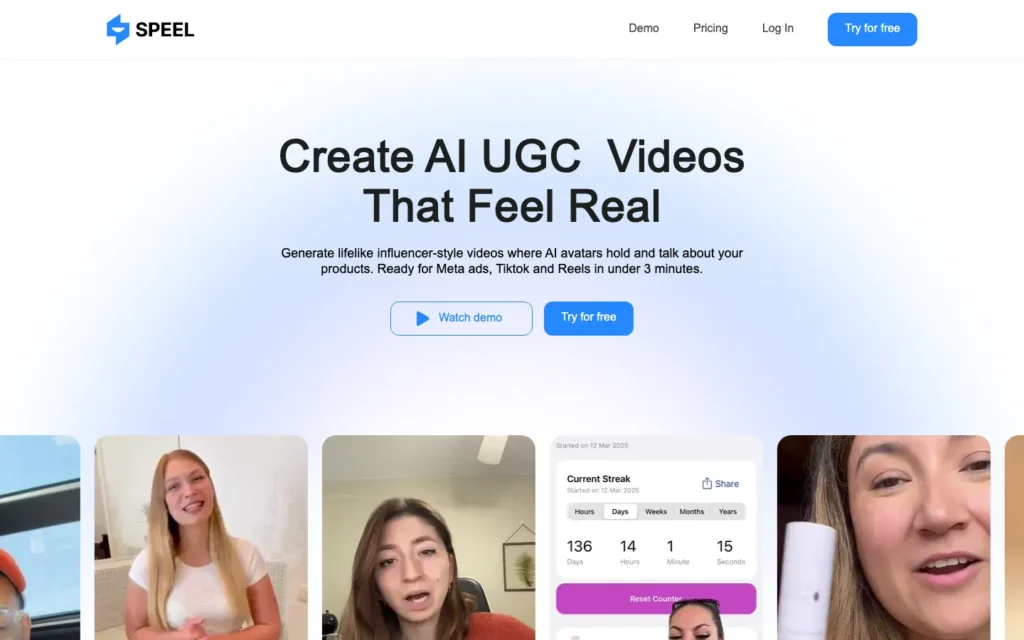
Speel focuses on AI actors for advertising and product content specifically, and character consistency across multiple clips is one of its core strengths for brands that need a recognizable spokesperson. Speel is built around UGC-style ad content rather than general creator content, and that shows in how its workflow handles A-roll and B-roll style production.
Brands wanting a consistent AI spokesperson for product videos are a better fit here than individual creators building a personal channel.
8. Glif
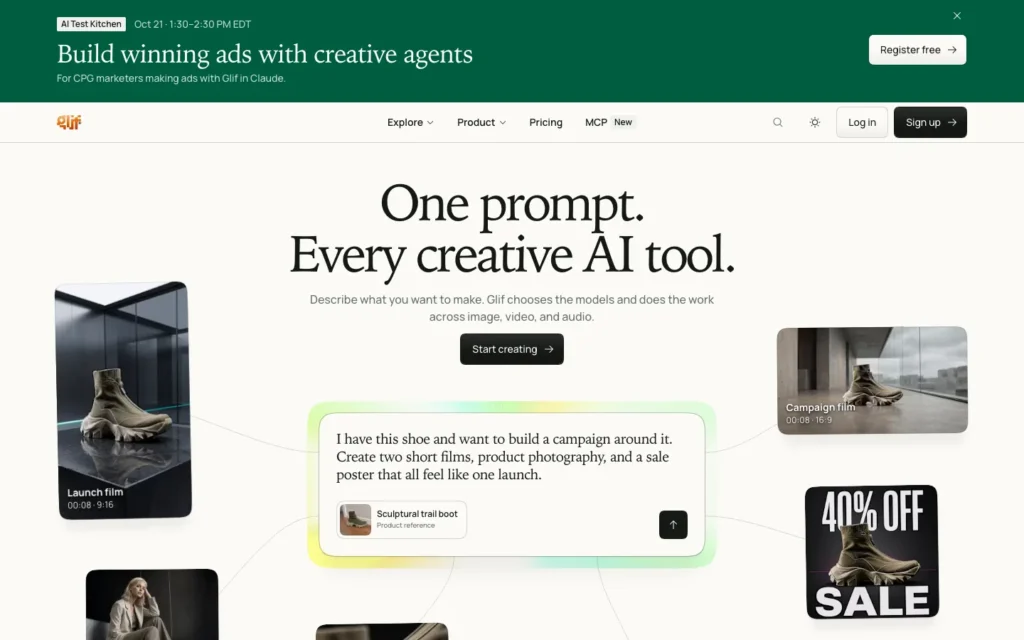
Glif connects multiple AI models into automated workflows, and creators have used it to build entire rosters of AI influencers, including one documented case of a single user launching ten separate AI personas to promote a tennis brand.
Glif chains several AI capabilities together instead of functioning as a single avatar generator, which suits creators or small agencies wanting to build and manage several distinct personas at once rather than focusing on one.
Building a persona that actually holds together
Picking a tool from this list solves the generation problem. The harder part is keeping a consistent character, voice, and posting schedule going long enough for an audience to actually recognize and follow the persona.
A few things separate a lasting AI persona from a one-off video:
- Locked visual consistency. The same face, proportions, and general styling need to persist across every video, which is exactly the problem Picsart Persona is built to solve directly.
- A defined personality in the script. The avatar delivers the words, but the personality itself comes from consistent tone and phrasing in the script, not the visual model.
- A realistic production cadence. Committing to three to five videos a week is easier with an all-in-one tool like Fliki than juggling separate tools for script, avatar, and voice.
- Voice consistency alongside visual consistency. The same voice, cloned or picked from a library, matters as much as the avatar’s face for building recognition over time.
- A clear niche. A general-purpose avatar with no consistent content focus struggles to build an audience compared to one built around a specific, narrow topic.
Pairing an avatar tool with text-to-speech tools built specifically for faceless YouTube channels covers the voice side of this for creators who want narration without a visible avatar in every scene.
How to launch your first AI avatar persona
Choose an avatar approach that matches your niche. A polished, presenter-style avatar from Synthesia works differently from a stylized, animated persona from Picsart, so match the tool to the content style before anything else.
Lock in the persona’s appearance before producing content. Generate and save one consistent reference for the avatar’s look, then reuse that same reference across every future video instead of regenerating a new look each time.
Write a short character bio. A few sentences describing the persona’s tone and personality keep scripts consistent even months into producing content.
Produce a small batch before launching. Having several videos ready before the first one goes live avoids the gap between an early content burst and a stalled second week.
Post on a fixed schedule. Three to five times a week is a realistic baseline for building early momentum with a new persona.
Review what resonates and refine the character. Early audience response usually shows which parts of the persona’s tone or content focus are working, and that’s worth adjusting into rather than ignoring.
Conclusion
None of these eight tools alone guarantee a successful AI persona. What they provide is the technical foundation, a consistent appearance, a reliable voice, a repeatable production process, that a lasting channel needs underneath a genuinely well-defined character and a real posting commitment.
Creators building real audiences around AI avatars treat the persona like an ongoing project, bringing the same consistency and planning to it that a real creator would bring to an on-camera channel.
Frequently Asked Questions
What makes an AI avatar persona recognizable?
Character consistency: the same face, voice, and tone showing up video after video. Consistency across videos matters more than raw avatar quality, which is the difference between a persona and a series of unrelated clips.
Which AI avatar tool is best for multilingual faceless content?
HeyGen. It translates content into multiple languages while keeping the avatar’s lip-sync matched to the new audio, so one avatar and one script can be adapted across markets.
Which tool is built specifically for character consistency?
Picsart Persona. It lets creators lock in a digital persona designed to look and behave the same way across every piece of content, and Picsart Storyline extends that character into episodic, narrative-driven series.
Can I animate my own character design?
Yes. D-ID animates a single still photo into a talking avatar, so the source image defines the character instead of a preset template.
Which tool is best for a presenter-style avatar?
Synthesia. It was built around corporate training and presentation content, so its avatars look consistent and professional, closer to a news anchor than a stylized character.
Which tool suits brands that need an AI spokesperson?
Speel. It focuses on AI actors for advertising and product content, with character consistency across multiple clips for brands that need a recognizable spokesperson.
Can I manage several AI personas at once?
Yes. Glif chains several AI models into automated workflows, and one documented case involved a single user launching ten separate AI personas to promote a tennis brand.
How often should I post with a new AI persona?
Three to five times a week is a realistic baseline for building early momentum, ideally with a small batch of videos ready before the first one goes live.
You may also like
- Nano Banana trend: 10 Google Gemini AI prompts to create viral aesthetic Instagram portraits: visual reference styling that pairs well with building out an avatar’s look.
- 9 best AI content automation tools for agencies: tools for scaling avatar-based content production across multiple personas or clients.
- Best AI tools to turn long videos into shorts: a way to extend the reach of longer avatar-hosted content into short-form clips.