
Cold outreach to creators gets a reply only 15 to 20 percent of the time, and once a campaign involves more than a handful of names, manual follow-ups alone can eat over 20 hours a week. The tools below handle a specific piece of that workload, from finding the right creator to drafting the first message to tracking what happens after someone says yes.
Key takeaways
- Manual outreach breaks down once a program grows past a handful of creators; personalized drafting and follow-up tracking are the two tasks that consume the most time.
- Authenticity filtering during discovery matters as much as outreach automation, since contacting accounts with inflated engagement wastes the same hours automation was meant to save.
- Ecommerce-native platforms that connect directly to Shopify or Amazon tend to outperform generic outreach tools for brands running gifting or affiliate programs.
- Automation solves volume, not relationship quality. The strongest results still come from specific, relevant personalization and a human review before deals close.
- Post-outreach tracking, not just the first pitch, decides whether a program can prove which creator relationships actually drive revenue.
1. HypeAuditor
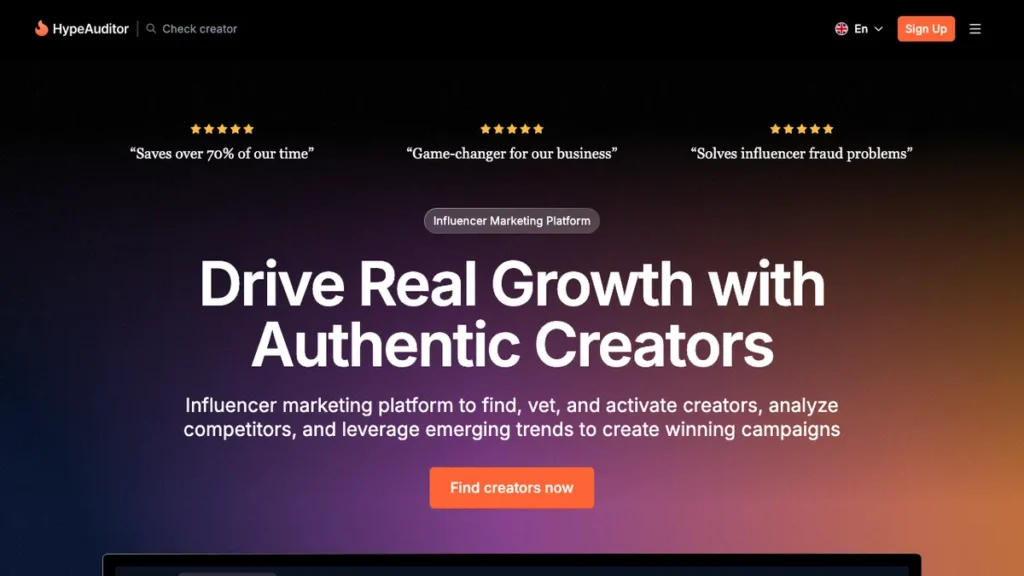
HypeAuditor pairs an influencer finder with more than 78 filters, covering niche, audience quality, and engagement rate, with automated outreach that sends email and text campaigns across Instagram, TikTok, YouTube, Twitch, and X.
What sets it apart is where the authenticity check sits: built into discovery itself, so bots and fake engagement patterns get screened out before a brand spends any time reaching out to a creator whose audience isn’t real. That makes it a fit for brands that have already been burned by outreach to inflated-follower accounts and want that screening handled at the source rather than bolted on afterward.
HypeAuditor is available at hypeauditor.com.
2. Upfluence
Upfluence scans billions of creator profiles and includes an AI campaign copilot, Jaice, that identifies best-fit creators and generates personalized outreach sequences. Its deeper integration is with Shopify and Amazon, tying creator matching directly to a brand’s actual sales data instead of treating influencer marketing as a separate activity.
Ecommerce and DTC brands already running a Shopify or Amazon storefront get the most out of this connection, and teams weighing their broader stack can look at it alongside the wider set of AI tools for Shopify store owners that touch adjacent parts of the store.
Upfluence is available at upfluence.com.
3. GRIN
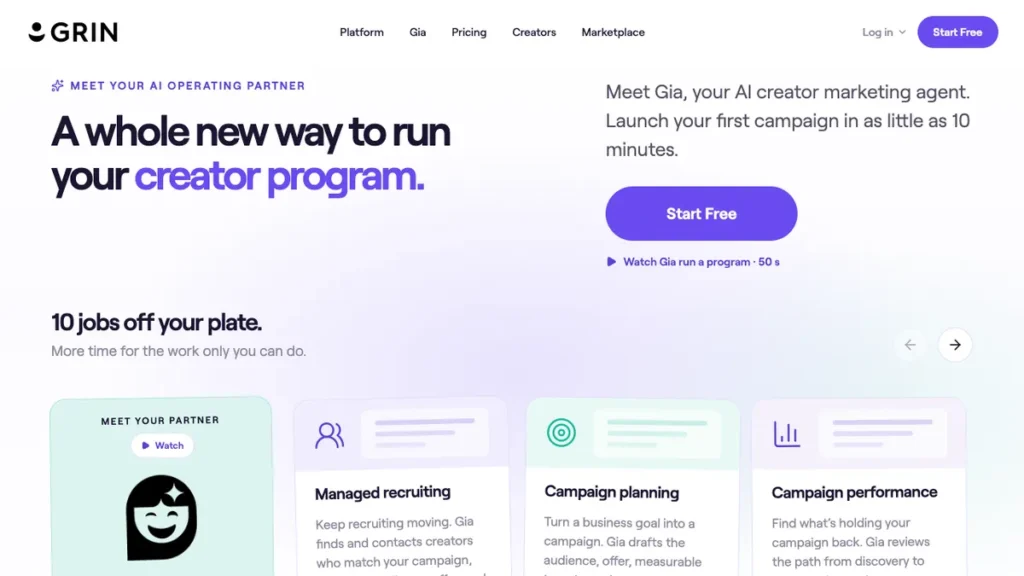
GRIN automates the full creator lifecycle: outreach, onboarding, product gifting, affiliate code generation, and performance reporting, built around DTC brands that want creator activity tied back to actual sales.
The gifting and affiliate side is where GRIN does the most work, handling the operational load of sending products, generating unique codes, and tracking the sales that follow, rather than stopping at the first message. Brands running a gifting or affiliate-based program get the whole workflow automated, not just the outreach step.
GRIN is available at grin.co.
4. CreatorIQ
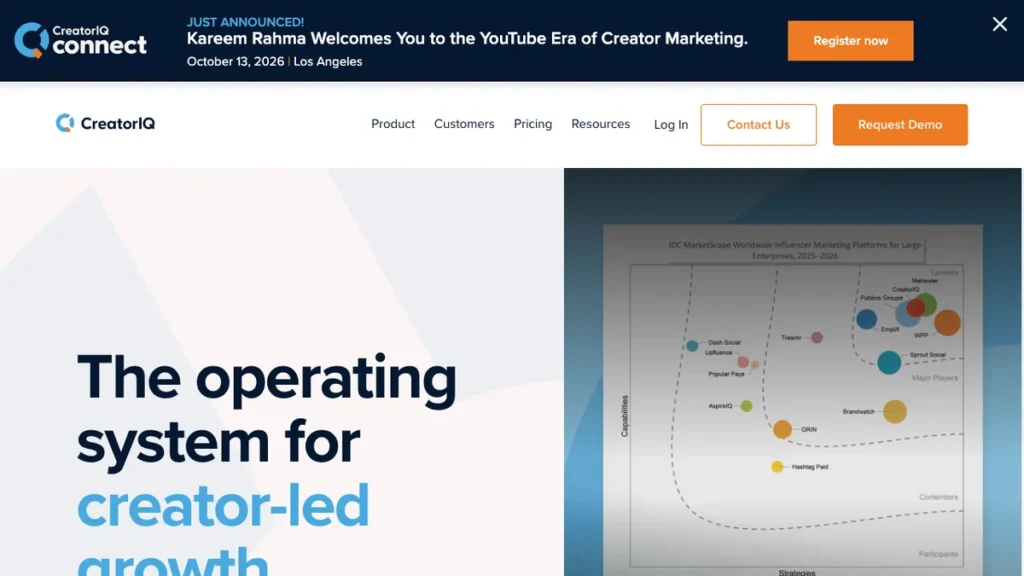
CreatorIQ is built for enterprise-scale programs: fraud detection and brand safety tooling come standard, aimed at teams coordinating complex campaigns across multiple markets rather than running a single smaller one.
That scale and safety layer suits Fortune 500-level measurement needs specifically. Agencies managing several client accounts at this level often pair it with the broader AI content automation tools for agencies to keep outreach and content production coordinated across those accounts.
CreatorIQ is available at creatoriq.com.
5. Influencer Hero
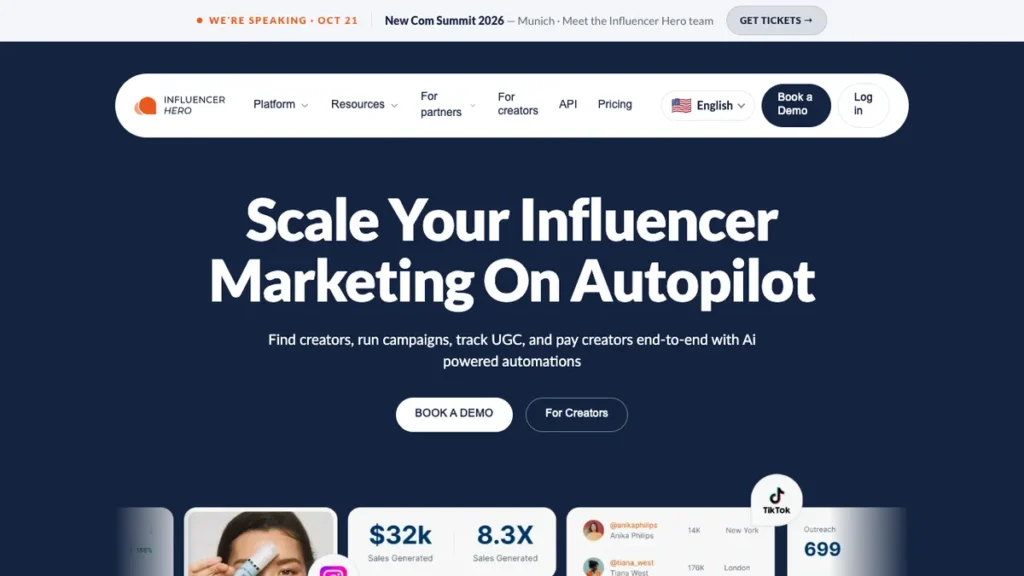
Influencer Hero bundles AI-powered creator discovery, personalized outreach automation, CRM, gifting, and affiliate tracking into one dashboard instead of requiring separate tools for each function. For brands that would rather keep discovery, outreach, relationship tracking, and gifting logistics in a single place than stitch together several point solutions, that consolidation is the main draw.
6. Janney AI
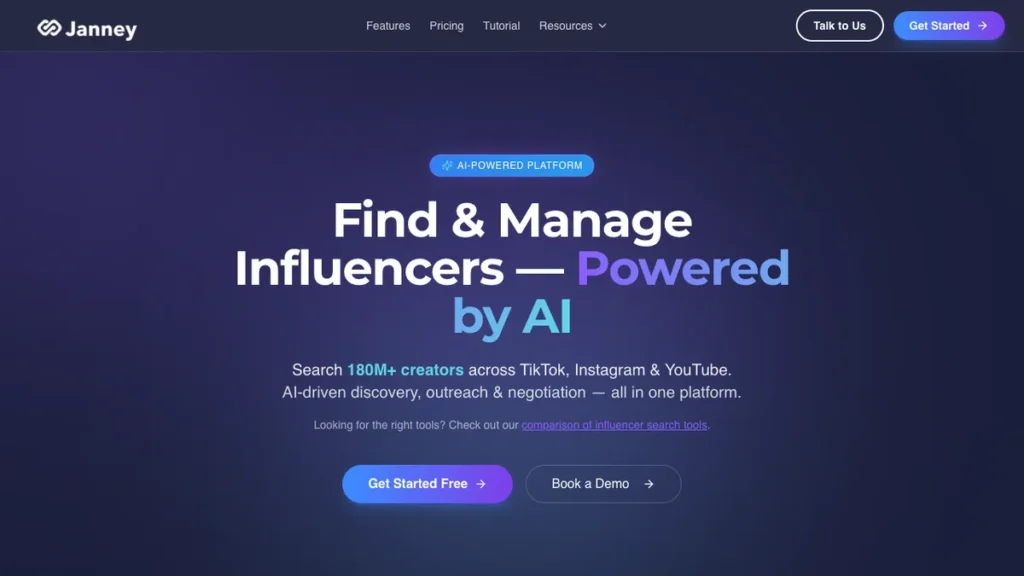
Janney AI sends autonomous, AI-driven outreach directly from a brand’s own Gmail or Outlook inbox, pulling from a database of more than 180 million creator profiles, and includes AI-assisted negotiation before a human needs to step in.
Outreach sent from a brand’s actual email address tends to land as more natural first contact than a message from a third-party platform, and Janney pairs that with a notably low entry price for the depth of automation on offer. That combination makes it a fit for smaller brands and teams that want genuinely autonomous outreach and negotiation without an enterprise-level budget.
7. Archive
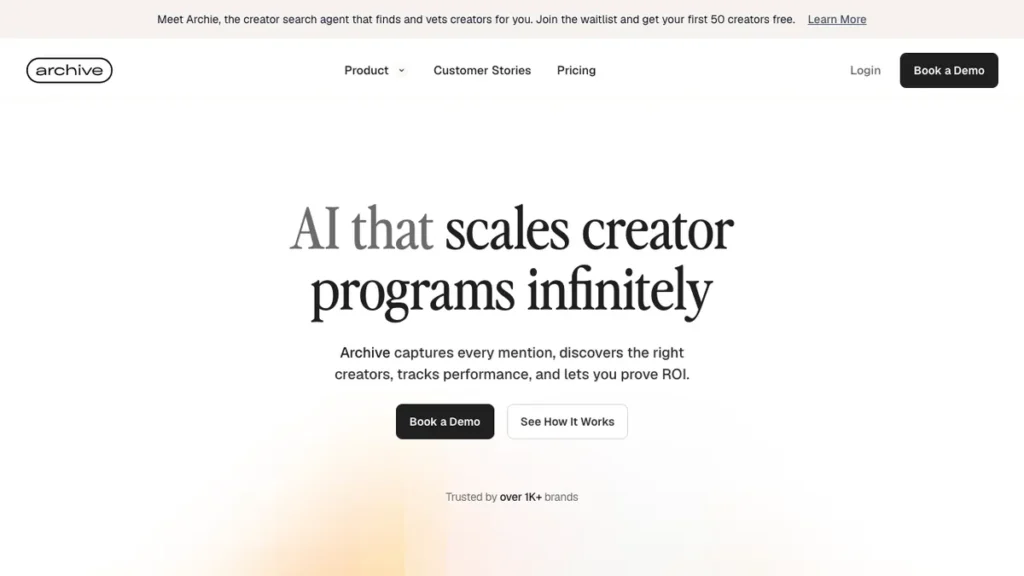
Archive connects creator discovery with social listening and content capture. Its AI watches video, listens to audio, and reads text, so every detected post becomes searchable, brand-safe data tied back to the outreach effort that produced it.
Where Archive differs is the part of the process it prioritizes: what happens after outreach succeeds. Rather than treating a successful pitch as the finish line, it tracks and organizes the resulting content and relationship, which fits brands that already have outreach volume figured out but struggle to keep track of what creators actually post once a partnership begins.
How to choose the right outreach tool
Program size and workflow needs point to different tools. A single-founder brand running its first gifting campaign has different requirements than an agency coordinating fraud detection and reporting across a dozen enterprise accounts.
Ecommerce integration is worth weighing early if the program runs on Shopify or Amazon. Upfluence, GRIN, and Influencer Hero all connect outreach directly to product seeding, promo codes, or affiliate tracking, which matters more the larger the gifting volume gets.
Post-outreach tracking is the piece most tools stop short of. If proving which creator relationships actually drove revenue matters as much as getting the first response, that’s the gap Archive is built to close.
Automation alone doesn’t replace a real relationship strategy
Automating the first message and the follow-up sequence solves the volume problem. It doesn’t, by itself, win the creators who become long-term partners.
Personalization still has to be specific. A message that references a creator’s actual recent content performs meaningfully better than a template with only a name swapped in. Authenticity screening protects the budget as much as the brand’s reputation, since reaching out to accounts with inflated engagement wastes the same hours automation was meant to save, just at a larger scale. Negotiation still benefits from a human in the loop; AI-assisted tools speed up the back-and-forth, but a final review before a deal closes catches context an automated system can miss. And post-outreach tracking matters as much as the initial pitch, since tools that stop at securing a response leave a brand manually chasing deliverables and payments once the relationship actually starts.
Ecommerce integration compounds this over time. A platform connected directly to sales data shows which creator relationships are actually driving revenue, not just which ones responded to the first message. For brands weighing whether AI-generated content could substitute for some of these partnerships outright, Speel is worth a look for producing UGC-style ad content without relying on a human creator for every piece.
How to automate your first influencer outreach campaign
Define specific creator criteria before searching. Decide on niche, follower range, and engagement rate before opening a discovery tool, rather than browsing broadly and hoping the right fit turns up.
Screen for authenticity before outreach begins. Filtering out inflated or fake engagement before sending a single message avoids wasting follow-up effort on accounts that won’t deliver.
Personalize the first message meaningfully. Reference something specific about the creator’s actual content instead of a generic template with a name inserted.
Set a realistic follow-up sequence. Two or three follow-ups spaced several days apart typically outperforms either a single message or an aggressive daily cadence.
Keep a human in the loop for negotiation. Let AI draft and speed up the back-and-forth, then review terms personally before finalizing anything.
Track content and payment after the deal closes. Use a tool with post-outreach tracking, or a connected system, to confirm deliverables and payments instead of losing track once a creator says yes.
Conclusion
Influencer outreach automation solves a real, measurable problem: the volume of personalized contact and follow-up that manual work can’t sustain at any real campaign size. The tools that matter most combine that automation with authenticity screening and post-outreach tracking, not just a faster first message.
The brands getting the strongest results aren’t the ones sending the most automated pitches. They’re the ones using automation to reach the right creators with relevant, specific outreach, then tracking what happens after the relationship actually begins.
Frequently Asked Questions
What is the best AI tool to automate influencer outreach?
It depends on your program. HypeAuditor is the pick when authenticity screening matters most, Upfluence and GRIN suit ecommerce and DTC brands running gifting or affiliate programs, CreatorIQ fits enterprise-scale programs, Janney AI suits smaller teams wanting autonomous outreach, and Archive fits brands that need strong post-outreach tracking.
How often do creators reply to cold outreach?
Cold outreach to creators gets a reply only 15 to 20 percent of the time. Once a campaign involves more than a handful of names, manual follow-ups alone can take over 20 hours a week, which is the workload these tools are built to cut.
Which influencer outreach tools connect to Shopify or Amazon?
Upfluence connects most deeply to Shopify and Amazon, tying creator matching to a brand’s actual sales data. Upfluence, GRIN, and Influencer Hero all connect outreach directly to product seeding, promo codes, or affiliate tracking, which matters more as gifting volume grows.
Which tool is best for enterprise influencer programs?
CreatorIQ. It is built for enterprise-scale programs, with fraud detection and brand safety tooling included as standard, and suits teams coordinating complex campaigns across multiple markets.
Can influencer outreach be sent from my own Gmail or Outlook?
Yes. Janney AI sends autonomous outreach directly from a brand’s own Gmail or Outlook inbox, drawing on a database of more than 180 million creator profiles, and includes AI-assisted negotiation before a human steps in.
Can AI fully replace manual influencer outreach?
No. Automation solves volume, not relationship quality. The strongest results still come from specific, relevant personalization and a human review before deals close, since automated systems can miss context during negotiation.
Why does post-outreach tracking matter?
Because the first pitch is not the finish line. Tracking content, deliverables, and payments after a creator says yes is what lets a brand prove which relationships drive revenue. Archive is built specifically to close that gap.
You may also like
- 9 Best AI Tools for Google Ads Management: tools for managing the paid budget alongside a creator marketing program.
- 7 Best AI Tools for Freelancers: suited to a solo marketer running outreach without a dedicated team.
- Glif AI Review: a closer look at a multi-tool platform for producing AI-driven brand content alongside a creator outreach strategy.