
TL;DR: Voice quality decides whether a faceless YouTube video feels professional or gets clicked away from in the first few seconds, so the text-to-speech engine matters as much as the script itself.
- ElevenLabs remains the benchmark for natural sounding narration, with voice cloning and API access that most automation pipelines build on top of.
- Murf.ai and DupDub bundle text-to-speech inside a fuller studio, syncing voiceover directly with video clips instead of exporting audio separately.
- Amazon Polly and Fish Audio serve creators automating voiceover generation at scale through code, rather than a manual, one video at a time workflow.
A faceless channel has no on-camera presence to hold attention, which puts almost the entire retention burden on the voice. A flat or robotic narration causes viewers to leave within seconds, while a natural, well-paced voiceover can carry a video the way a strong host would on camera.
This article covers ten AI text-to-speech tools used by faceless YouTube creators in 2026, compared on voice realism, cloning capability, and whether they work as a standalone voice engine or a full production studio. It is written for creators building finance, history, motivation, storytelling, and list-style channels without recording their own voice, a production model covered more broadly in our AI marketing roadmap.
1. ElevenLabs
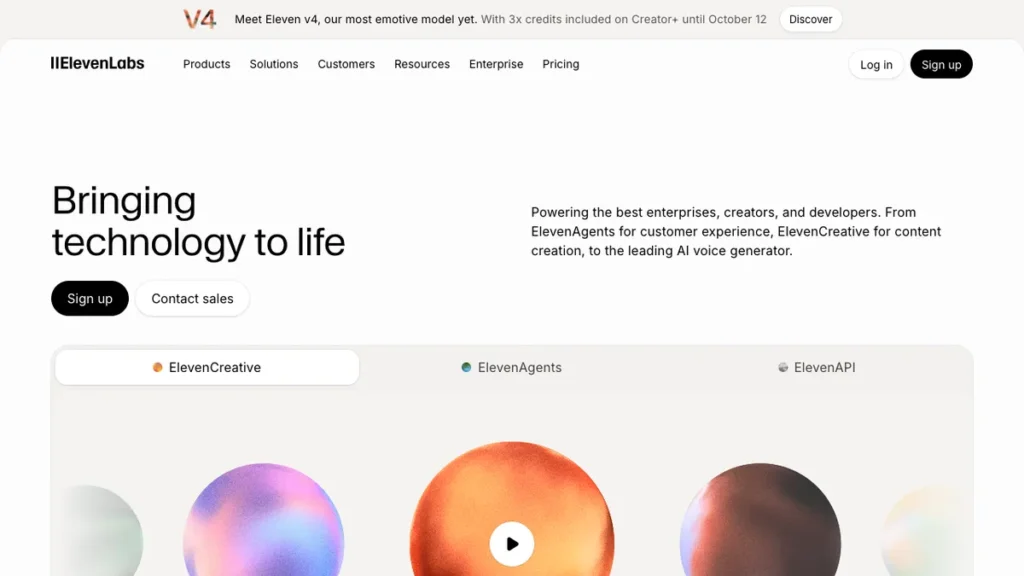
ElevenLabs has set the standard for AI text-to-speech, producing voices widely considered the most natural sounding on the market, with realistic pacing and emotional range. It supports voice cloning, letting a channel maintain one consistent voice across years of content.
The differentiator is API quality. ElevenLabs’ well-documented API is what most video automation tools build on under the hood, which matters if your faceless channel workflow generates narration programmatically rather than one script at a time. It also supports over 30 languages, opening multilingual channels from the same voice profile.
This fits creators who want the most natural-sounding narration available and plan to scale production through automation rather than manual generation.
2. Murf.ai
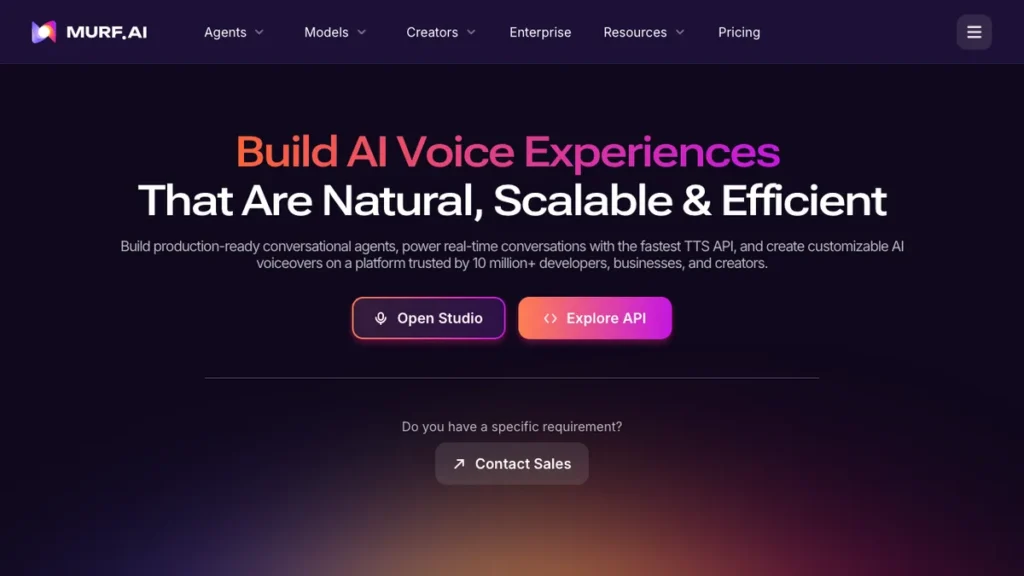
Murf.ai offers over 200 ultra-realistic voices across 20 languages inside a full production studio, not just a text box that returns an audio file. You can sync voiceover directly with video clips, adjust pitch, speed, and emphasis, and add background music without leaving the platform.
The differentiator is the AI Dubbing feature, which translates and dubs content into multiple languages while preserving the original emotional tone, a meaningful advantage for channels scaling into international audiences.
This fits creators who want voice generation and basic video assembly handled inside one studio rather than exporting audio into a separate editor.
3. DupDub
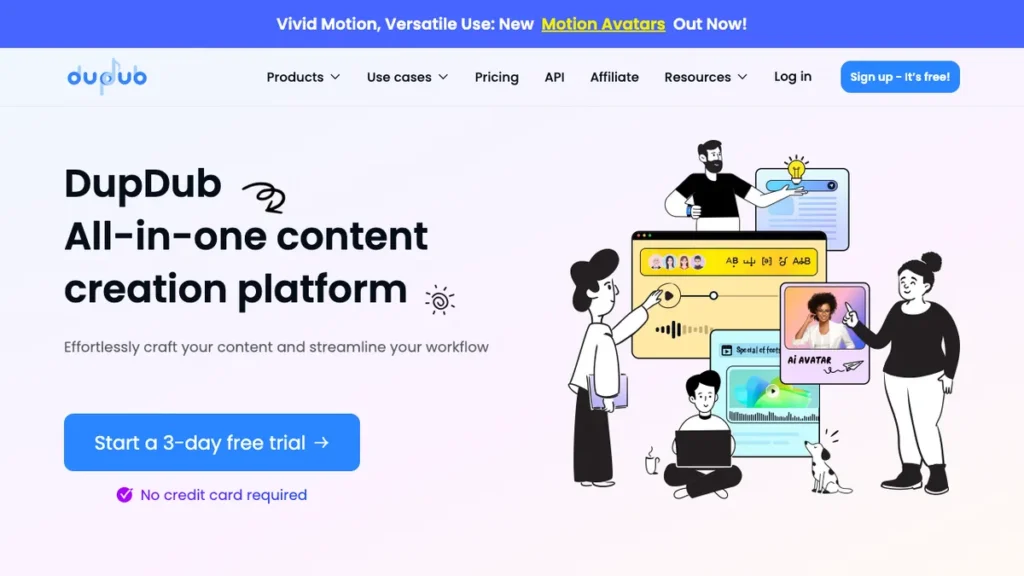
DupDub positions itself as an all-in-one content creation platform, combining text-to-speech, AI scriptwriting, and video editing in one workflow. Beyond narration, it can animate a still photo into a talking avatar, useful for faceless channels that still want some visual presence without appearing on camera directly.
The differentiator is breadth. Rather than specializing purely in voice, DupDub covers script generation through to a finished video, with a library of 700 or more stock voices and ultra-realistic voice cloning, an approach worth comparing against the AI video production tools in our DeepBrain AI Studios review.
This fits beginner to intermediate creators who want one platform handling script, voice, and video rather than assembling a separate tool for each step.
4. Speechify
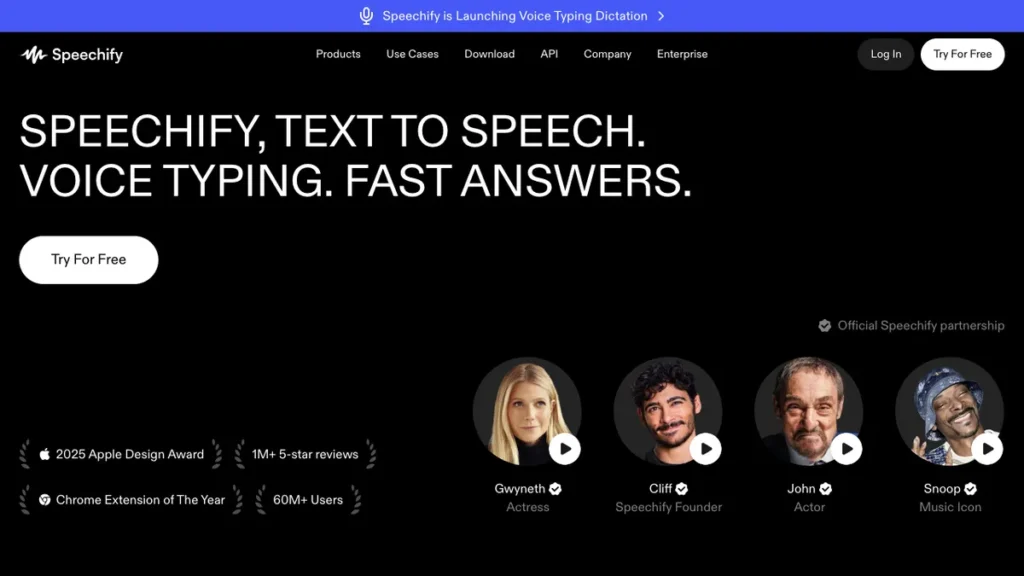
Speechify converts text into clear, natural-sounding speech aimed at a wide range of YouTube styles rather than one specific niche. It keeps the workflow simple, focused on getting from script to usable narration quickly.
The differentiator is ease of use over deep customization. Speechify prioritizes a straightforward path from written script to spoken audio, which suits creators who do not need extensive pitch and emphasis controls.
This fits creators who want dependable narration without spending time tuning voice parameters for every video.
5. Play.ht
Play.ht focuses on ultra-realistic voice output built for commercial use, including long-form narration common in faceless documentary, history, and explainer channels. It supports scaling across many uploads with consistent voice quality.
The differentiator is its focus on long-form reliability, maintaining natural pacing across scripts that run well past the short clips many TTS tools are optimized for.
This fits creators producing longer narrated videos, ten minutes or more, where voice consistency across a long script matters more than quick turnaround.
6. WellSaid Labs
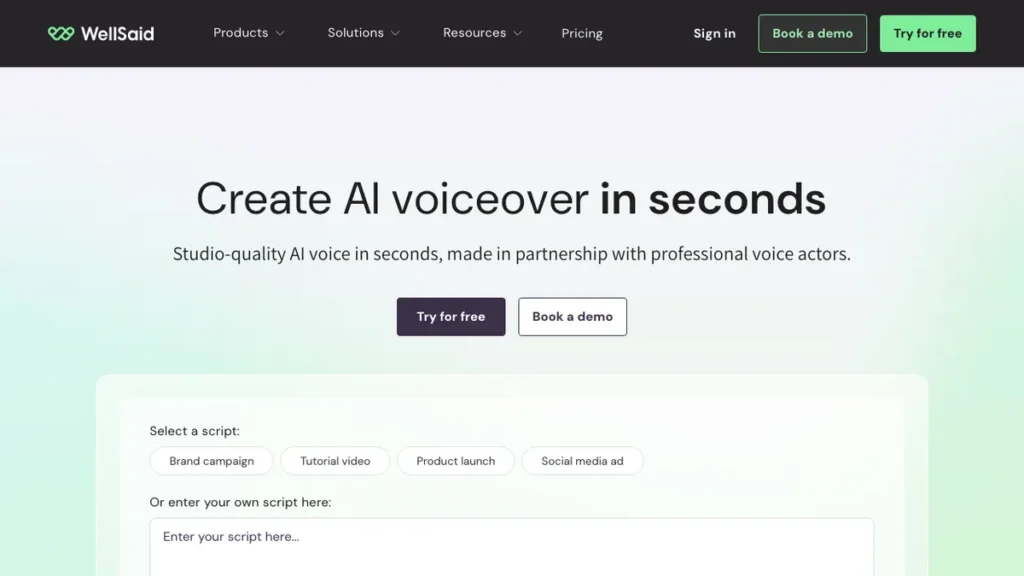
WellSaid Labs is built around enterprise-grade voice realism, originally aimed at corporate training and marketing narration before becoming a common pick for polished faceless content. Its voices are tuned for clarity and professionalism over casual, conversational tone.
The differentiator is that professional narration quality, which suits finance, education, and corporate-adjacent faceless channels more than casual storytelling formats.
This fits channels in serious or educational niches where a polished, authoritative voice matters more than a casual or energetic tone.
7. Fish Audio
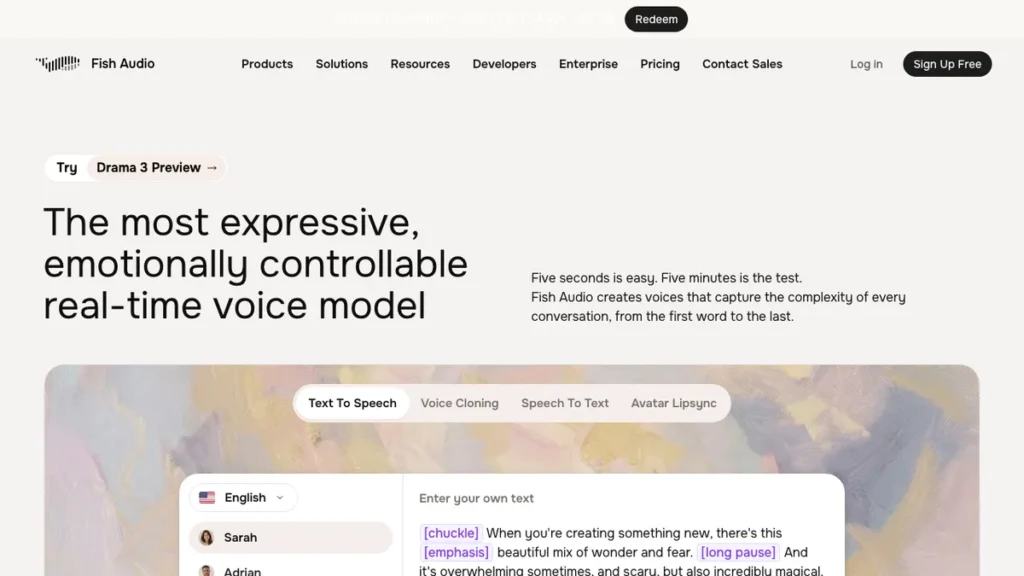
Fish Audio’s 2026 S2 system adds multi-speaker synthesis, natural-language voice control, and streaming inference with time-to-first-audio under 100 milliseconds. That speed makes it well suited to real-time or near-real-time voice generation pipelines.
The differentiator is latency. Where most TTS tools generate audio in a batch process, Fish Audio’s streaming inference supports workflows that need narration generated almost instantly, useful for automated, high-volume channel production.
This fits technically inclined creators automating voice generation into a larger pipeline where processing speed affects output volume.
8. Podcastle
Podcastle combines AI voice generation with a broader audio and video editing suite, originally built around podcast production before expanding into narration for video content. It handles both text-to-speech and basic audio cleanup in the same interface.
The differentiator is the audio-first editing layer around the voice engine, useful for faceless channels that also want noise reduction and audio leveling handled without a separate tool, a workflow that connects to the broader freelancer toolkits in our roundup of AI tools for freelancers.
This fits creators who want narration and audio polish handled together rather than generating voice in one tool and cleaning it up in another.
9. Amazon Polly
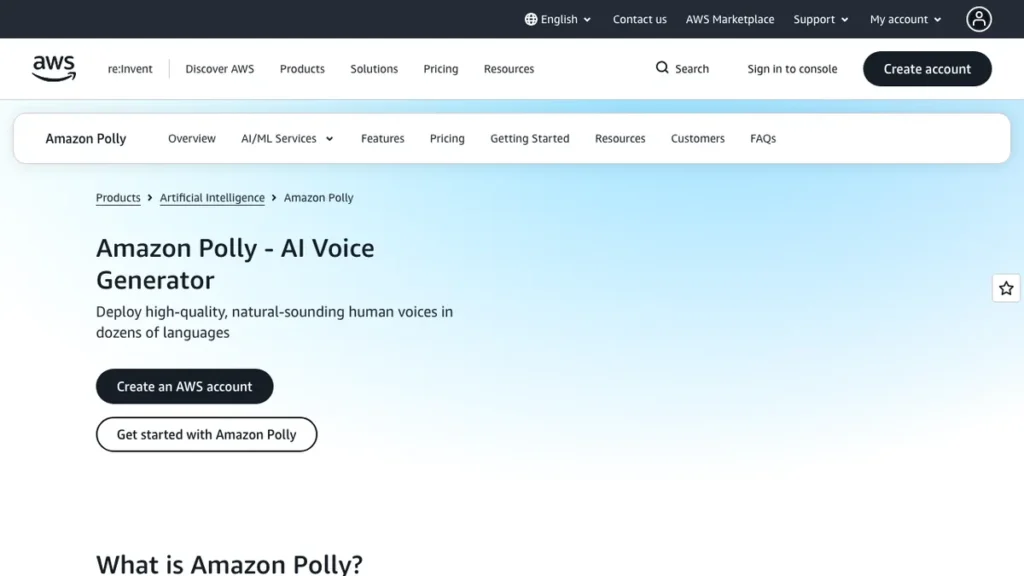
Amazon Polly is a developer-focused text-to-speech service accessed through AWS, built for programmatic voice generation rather than a creator-facing dashboard. It integrates directly into automated pipelines through code.
The differentiator is scale and cost efficiency for high-volume, code-driven production. Channels generating dozens of videos through automated scripts often route narration through Polly precisely because it is built for that kind of integration rather than manual, one-off use.
This fits technically capable creators or teams running multiple faceless channels through an automated pipeline rather than manually generating each voiceover.
10. Resemble AI
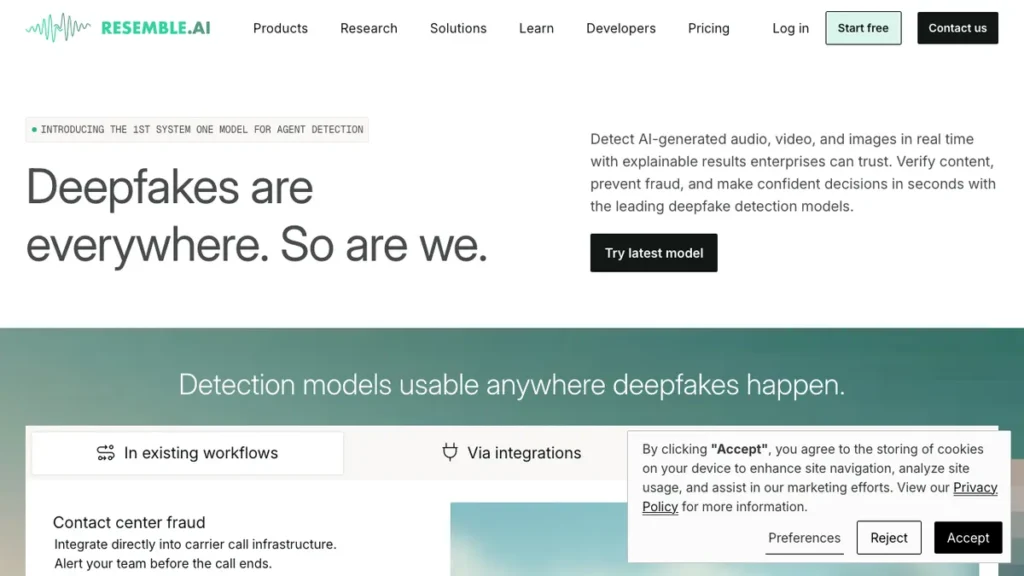
Resemble AI centers on voice cloning and custom voice creation, letting creators build a fully branded, consistent narrator voice from a sample recording. It also offers API access for integrating narration into a larger content pipeline.
The differentiator is the emphasis on a fully custom, ownable voice rather than choosing from a stock library, which matters for channels building a recognizable audio identity over time.
This fits creators who want a unique, brand-specific voice rather than a voice shared across many other channels using the same stock library.
Which Text-to-Speech Tool Fits Your Channel
The right pick depends on how much of your workflow you plan to automate and whether voice realism or production speed matters more. A single weekly upload and a multi-channel automated operation call for very different tools.
Choose Based on Your Use Case
Most natural sounding narration overall: ElevenLabs remains the benchmark, with voice cloning and API access that scales into automation later.
Voiceover synced directly with video in one studio: Murf.ai and DupDub both handle narration and basic video assembly together.
Long-form, documentary-style narration: Play.ht’s focus on long-form reliability keeps pacing consistent across longer scripts.
Professional or corporate-adjacent tone: WellSaid Labs is tuned for clarity and authority over casual delivery.
High-volume, code-driven pipelines: Amazon Polly and Fish Audio both fit automated workflows better than manual, one-at-a-time generation.
A fully custom, branded voice: Resemble AI focuses on cloning a unique voice rather than picking from a shared stock library.
How to Add AI Narration to a Faceless Video
Step 1: Write or generate your script Have a finished script ready before generating narration, since most TTS tools price and time their output based on script length.
Step 2: Choose a voice matching your channel’s tone Pick a voice style suited to your niche, authoritative for finance or history, energetic for lifestyle or motivation content, using the comparison section above as a starting point.
Step 3: Generate the voiceover Paste the script into your chosen tool and generate narration, checking pacing and emphasis on any technical terms or numbers your script includes.
Step 4: Review pronunciation and pacing Listen through the full narration before syncing it to video, since AI voices can still mispronounce uncommon names or industry terms that need manual correction.
Step 5: Sync narration to your video timeline Import the audio into your video editor, or use a studio tool like Murf.ai or DupDub that handles syncing inside the same platform.
Step 6: Export and review the final mix Check that narration levels sit clearly above background music before publishing, since a voice buried under music undermines retention as much as a robotic-sounding voice does.
Conclusion
ElevenLabs remains the strongest overall pick for realism and API flexibility, while Murf.ai and DupDub suit creators who want voice generation bundled with video assembly in one studio. Amazon Polly and Fish Audio fit a different need entirely, powering automated, high-volume production rather than manual, per-video generation.
Whichever tool you choose, review the full narration before publishing, since even the most natural sounding AI voice can still stumble on an uncommon name or technical term that needs a manual fix.
Frequently Asked Questions
Which TTS tool is considered the best overall for natural-sounding narration?
ElevenLabs remains the benchmark, producing voices widely considered the most natural sounding on the market, with voice cloning and a well-documented API that most video automation tools build on under the hood.
Which tools sync voiceover directly with video instead of just exporting audio?
Murf.ai and DupDub both bundle text-to-speech inside a fuller production studio, letting you sync narration with video clips, adjust pitch and pacing, and add background music without leaving the platform.
Which tool is best for high-volume, automated channel production?
Amazon Polly and Fish Audio both fit code-driven pipelines better than manual, one-at-a-time generation. Polly integrates directly into AWS automation, and Fish Audio’s 2026 S2 system streams audio with time-to-first-audio under 100 milliseconds.
Does ElevenLabs support multiple languages?
Yes, ElevenLabs supports over 30 languages, which opens up multilingual channels from the same cloned voice profile.
Which tool is best for long-form, documentary-style narration?
Play.ht focuses on ultra-realistic voice output built for commercial use, maintaining natural pacing across long scripts common in faceless documentary, history, and explainer channels.
Can I get a fully custom, brand-specific voice instead of a stock one?
Resemble AI centers specifically on voice cloning and custom voice creation, letting creators build a fully branded, ownable narrator voice from a sample recording rather than choosing from a shared stock library.
You May Also Like
- Best AI Tools for Digital Marketers: a roundup of AI tools built for marketing teams managing multiple content channels.
- Fliki AI Review: a review of an AI video tool worth comparing against the studio-style voice tools covered here.
- Vidu AI Review 2026: a look at an AI video generation tool for creators pairing narration with generated visuals.