
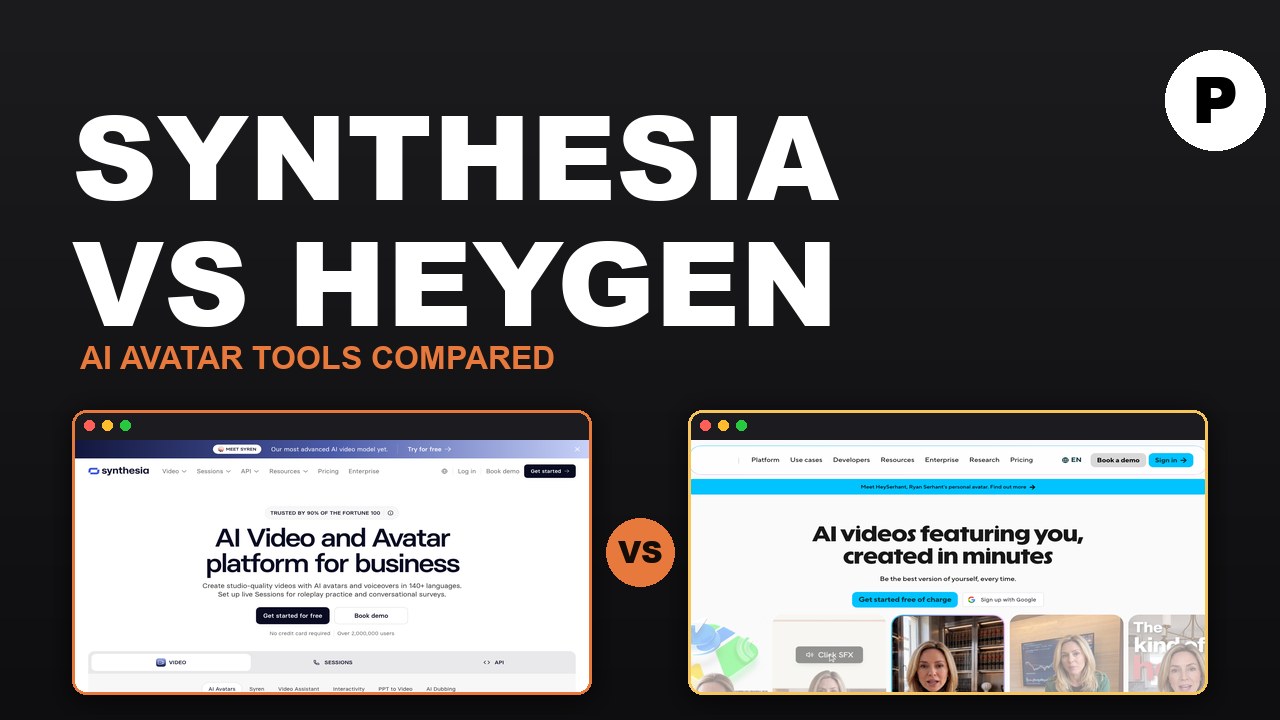
Synthesia and HeyGen both turn a script into a talking avatar video, but they solve different problems. Synthesia is built for teams that need consistency across many languages and a longer enterprise track record. HeyGen is built for creators and small teams who want a large avatar library and fast output at a lower entry cost. The right pick depends less on which tool has more features and more on what your content actually needs: language reach, custom avatars, volume, or budget.
Key takeaways
- Both platforms price their entry tier around $29 a month, but what that tier includes differs sharply.
- HeyGen ships a much larger avatar library from the start (500+ vs Synthesia’s 125+).
- Synthesia unlocks custom avatars at the entry tier; HeyGen holds that feature behind its $149 Business plan.
- Synthesia supports 140+ languages against HeyGen’s 30 to 40, a real gap for international content.
- Both moved to credit-based pricing in 2026, so re-rendering after a script edit now has a direct cost on either platform.
- HeyGen has grown faster recently and leans toward creators and small businesses; Synthesia leans toward enterprise and training teams.
| Synthesia | HeyGen | |
|---|---|---|
| Founded | 2017, London | 2020, Los Angeles |
| Entry paid tier | Around $19 to $29/month | Around $29/month |
| Free plan | Limited or unavailable depending on current promotion | Yes, includes a small number of watermarked videos |
| Avatar library at entry tier | 125+ avatars | 500+ avatars |
| Custom avatars | Available from entry paid tier | Requires Business tier ($149/month) |
| Languages supported | 140+ | 30 to 40+ |
| Team and enterprise features | Stronger, longer enterprise track record | Growing, less mature at enterprise scale |
| Recent growth | Steady, enterprise-focused | Reportedly G2’s fastest-growing product in category |
| Recent funding | $200M Series E | $60M Series A |
Both platforms have changed their pricing structure more than once in 2026, moving from simpler unlimited or per-minute plans to credit-based systems. Confirm current tiers directly on each vendor’s site before you budget against these figures.
Where Synthesia leads
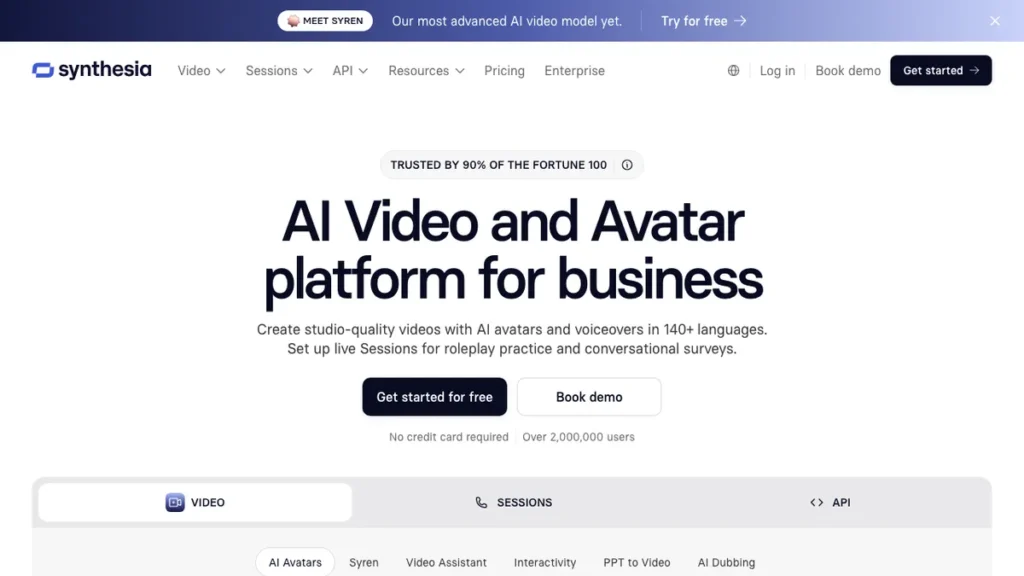
Language coverage is Synthesia’s clearest structural advantage. It supports more than 140 languages against HeyGen’s 30 to 40, which matters directly for a business producing training or marketing content across many international markets from one source script.
Synthesia also unlocks custom avatars, built from your own likeness or a team member’s, starting from its entry paid tier. HeyGen gates the same capability behind its considerably more expensive Business plan. For a company that wants a branded, recognizable presenter without an enterprise budget, that difference in where the feature sits is practical, not cosmetic.
Synthesia’s history stretches back to 2017, three years earlier than HeyGen, and its recent $200 million Series E round points to deeper enterprise penetration and a stronger reputation for customer support among reviewers.
Where HeyGen leads

HeyGen’s entry tier ships with a substantially larger avatar library, over 500 options against Synthesia’s 125-plus, so a solo creator or small business gets more visual variety without paying for a higher tier.
HeyGen has also grown faster recently, reportedly named G2’s fastest-growing product in its category, and it now carries a larger and faster-growing base of recent reviews than Synthesia. Reviewers repeatedly point to HeyGen’s easier avatar creation process and better results when customizing from a user’s own submitted photos, which fits its broader appeal among individual creators and small teams next to Synthesia’s more enterprise-leaning positioning.
At the entry tier, HeyGen’s Avatar III engine tends to cost less per minute of finished video than Synthesia’s equivalent tier, though that gap narrows or reverses depending on which avatar quality tier and credit allocation a given plan includes.
What both platforms share
Both companies moved to a shared credit system in 2026, replacing the simpler unlimited or flat per-minute plans each previously offered. The actual cost of a finished video now depends on which avatar engine tier consumes how many credits per minute, not just the plan’s advertised monthly price.
Both platforms also carry a cost worth checking before you commit: re-rendering a video after a script edit consumes additional credits on either system, and that can raise the effective cost of any process built around frequent revisions.
Teams already producing UGC-style ads with an AI actor platform have a useful third data point here. Speel’s own testing found it more flexible for that specific format than either Synthesia or HeyGen, while still conceding Synthesia’s edge in enterprise avatar options and HeyGen’s simpler interface for presentation-style content.
Matching the platform to your actual need
| Situation | Best fit | Why |
|---|---|---|
| Producing content across many international markets | Synthesia | Language coverage more than triples HeyGen’s current support |
| Wanting a custom, branded avatar without an enterprise budget | Synthesia | Custom avatars available from the entry tier rather than gated behind a $149/month plan |
| Solo creator wanting avatar variety at low cost | HeyGen | Larger avatar library and generally lower cost per minute at entry tier |
| Enterprise team needing compliance, SSO, and dedicated support | Synthesia | Longer track record and deeper enterprise feature set |
| Producing a high volume of quick social or marketing clips | HeyGen | Faster avatar creation process and broader adoption among creators |
| Uncertain and want to test directly | Both | Free or low-cost entry tiers make a side-by-side test on a real script the most reliable check |
How to decide between the two
Count the languages your content actually needs. If your use case spans more than a handful of languages, Synthesia’s coverage advantage stops being a nice-to-have and becomes a practical requirement.
Check whether custom avatars matter to your budget. If a branded, custom avatar is a must-have and the budget does not stretch to HeyGen’s Business tier, Synthesia’s lower-cost path to that same feature is worth weighing heavily.
Calculate actual cost per finished minute against your expected usage. Map your typical video length and monthly volume against each platform’s specific credit allocation rather than comparing the advertised monthly price on its own.
Test both on the same real script. Running the same script through both platforms’ free or lowest paid tier surfaces real differences in avatar realism and ease of use that a feature list will not show you.
Factor in re-rendering costs for your actual workflow. If your process involves frequent script revisions, add the credit cost of re-rendering into your total budget rather than treating the first render as the only cost.
Reassess as your team or volume grows. A platform that fits a solo creator’s needs may not scale the same way once a team, multiple languages, or enterprise compliance requirements enter the picture. Teams building out a wider AI marketing roadmap around video content should plan for that shift early rather than after they’ve outgrown a plan.
Conclusion
Neither platform is simply better in the abstract. Synthesia’s language coverage, entry-level custom avatars, and enterprise maturity suit international and larger organizations. HeyGen’s larger avatar library, faster growth, and generally lower cost per minute at entry suit solo creators and smaller teams producing high-volume content.
The credit-based pricing shift on both platforms in 2026 means the real decision now comes down to matching your specific video length and volume to each platform’s credit math, not comparing headline monthly prices.
Frequently Asked Questions
Is Synthesia or HeyGen better?
Neither is better in every case. Synthesia is stronger on language coverage (140+ languages), custom avatars at the entry tier, and enterprise maturity. HeyGen is stronger on avatar variety (500+ at the entry tier), faster growth among creators, and generally lower cost per minute at entry. The right choice depends on your languages, budget, and video volume.
How much do Synthesia and HeyGen cost?
Both price their entry paid tier at roughly $29 a month, with Synthesia sometimes starting nearer $19. Custom avatars are included from Synthesia’s entry paid tier but sit behind HeyGen’s $149 a month Business plan. Both now use credit-based pricing, so confirm current tiers on each vendor’s site before budgeting.
Which AI avatar tool supports more languages?
Synthesia supports more than 140 languages, while HeyGen supports roughly 30 to 40. If you produce training or marketing videos for many international markets from one script, that gap matters more than almost any other feature.
Can I create a custom avatar with Synthesia and HeyGen?
Yes on both, but the entry point differs. Synthesia offers custom avatars built from your own likeness or a team member’s starting at its entry paid tier. HeyGen reserves custom avatars for its Business tier at $149 a month.
Do Synthesia and HeyGen have free plans?
HeyGen has a free plan that includes a small number of watermarked videos. Synthesia’s free access is limited or unavailable depending on its current promotion, so check its pricing page for what is offered right now.
How does credit-based pricing affect the real cost of each tool?
Both platforms moved to credits in 2026, so the cost of a finished video depends on which avatar engine tier uses how many credits per minute, not just the monthly price. Re-rendering a video after a script edit also consumes credits, which raises the effective cost of any workflow with frequent revisions.
Which tool is better for enterprise and training teams?
Synthesia generally fits enterprise and training teams better. It has the longer track record (founded 2017), a deeper enterprise feature set, and a reputation for stronger customer support among reviewers. HeyGen’s enterprise features are growing but less mature at scale.
You may also like
- Fliki AI Review 2026: A hands-on comparison that tests Synthesia against several other script-to-video platforms on price and output quality.
- Pictory AI Review 2026: Another direct pricing and quality comparison against Synthesia from real test videos.
- Best AI Video Tools Compared: A broader look at how leading AI video generators stack up beyond just avatar-led platforms.