
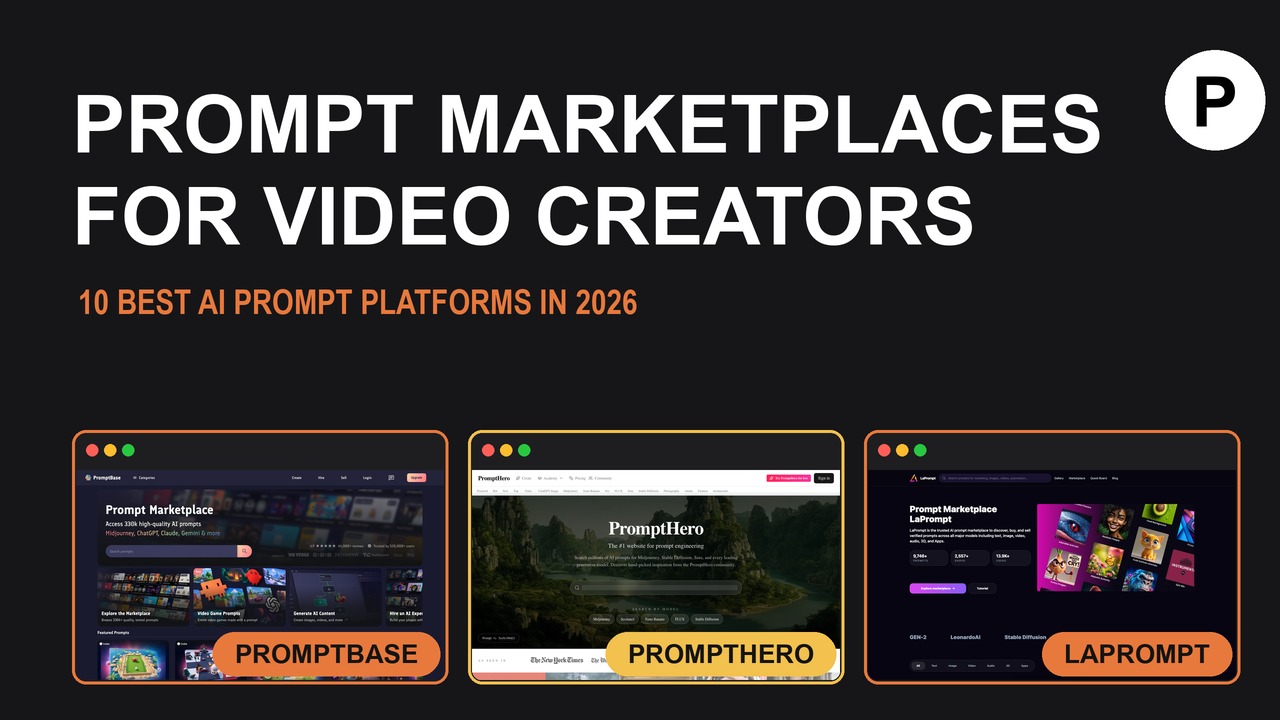
A prompt that already works saves more time than writing a new one every time you sit down to script a video, and that’s the entire reason a market for buying, selling, and organizing prompts exists. Most creators comparing these platforms aren’t actually short on prompts. They’re short on a system for keeping the ones that work.
This roundup covers ten platforms that approach that problem differently: general marketplaces, free community libraries, and tools built specifically around video and content workflows.
Key takeaways
- Prompt platforms fall into three broad types: buy-and-sell marketplaces, free community libraries, and tools built specifically for video creator workflows.
- The gap most creators face isn’t access to prompts. It’s having no saved system at all, so the same script or thumbnail concept gets rewritten from scratch every time.
- Some platforms (PromptHero, Snack Prompt) let you see or compare output before you buy, which removes the guesswork of an untested prompt underperforming.
- Prompt Architects and God of Prompt are built around ongoing creator workflows (personal libraries, Notion delivery) rather than one-off purchases.
- Building a personal library, organized by content type and customized to your own tone, matters more than which single marketplace you pick.
1. PromptBase
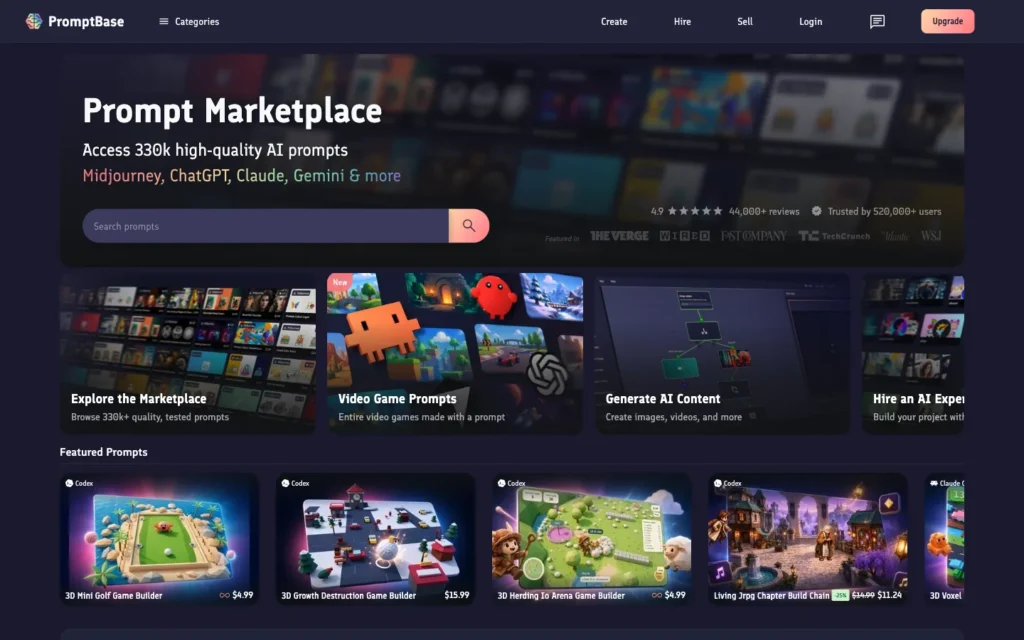
PromptBase is the most established marketplace in this category. Creators buy and sell individual prompts with licensing across a wide range of models, including Midjourney, ChatGPT, DALL-E, Sora, and FLUX.
What sets it apart is simply breadth: it has the widest model coverage of any pure marketplace here, including direct support for Sora prompts. If the priority is selection and an established track record over anything else, this is the obvious starting point.
2. PromptHero
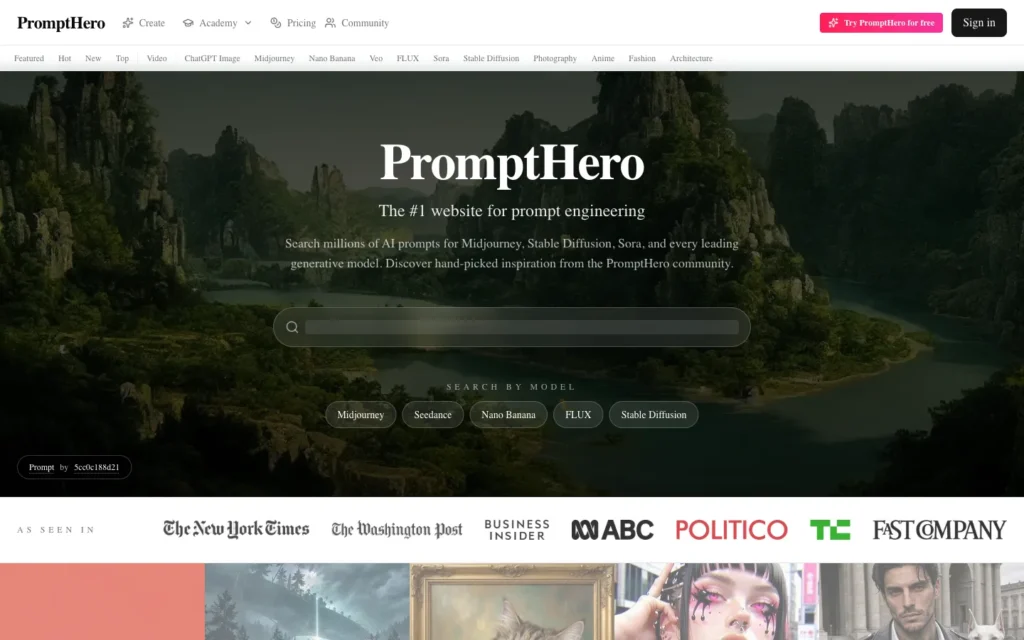
PromptHero is a community marketplace built around image-model prompts, strongest for Midjourney and Stable Diffusion. Buyers can see the actual image a prompt produced before paying for it.
That see-before-you-buy structure is the whole appeal. It removes the guesswork that comes with a text-only prompt description, which matters most for creators sourcing thumbnail-style visuals or reference images where the exact look has to be right the first time.
3. FlowGPT
FlowGPT is a free, community-driven library for ChatGPT prompts rather than a paid marketplace. Its strength is productivity and communication prompts, which overlaps heavily with scripting and text-generation work.
Because there’s no per-prompt cost, it works well as a low-friction starting point for creators who mainly need help with scripts and outlines and don’t want to commit money before testing the format.
4. AIPRM
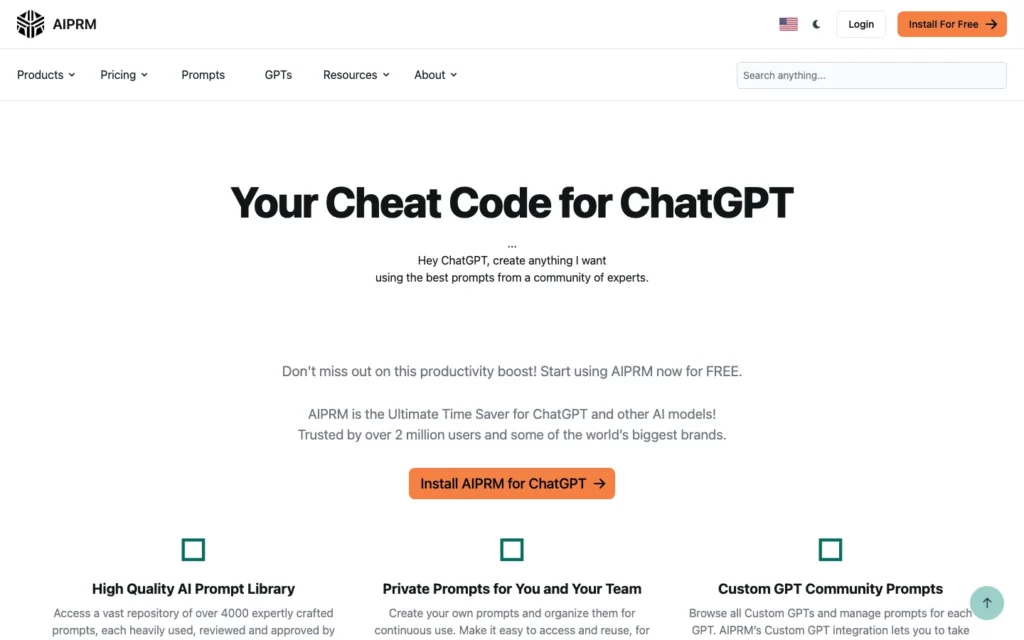
AIPRM takes a different approach entirely: instead of sending you to a separate site, it injects a curated prompt catalog directly into the ChatGPT, Claude, and Gemini web interfaces. The prompt is one click away in the tab you’re already using.
That browser integration removes the copy-paste step between finding a prompt and using it, which is a real time saver during a scripting session. The catalog leans heavily toward SEO and marketing templates, so creators whose needs sit elsewhere may find the selection narrower than expected.
5. Snack Prompt
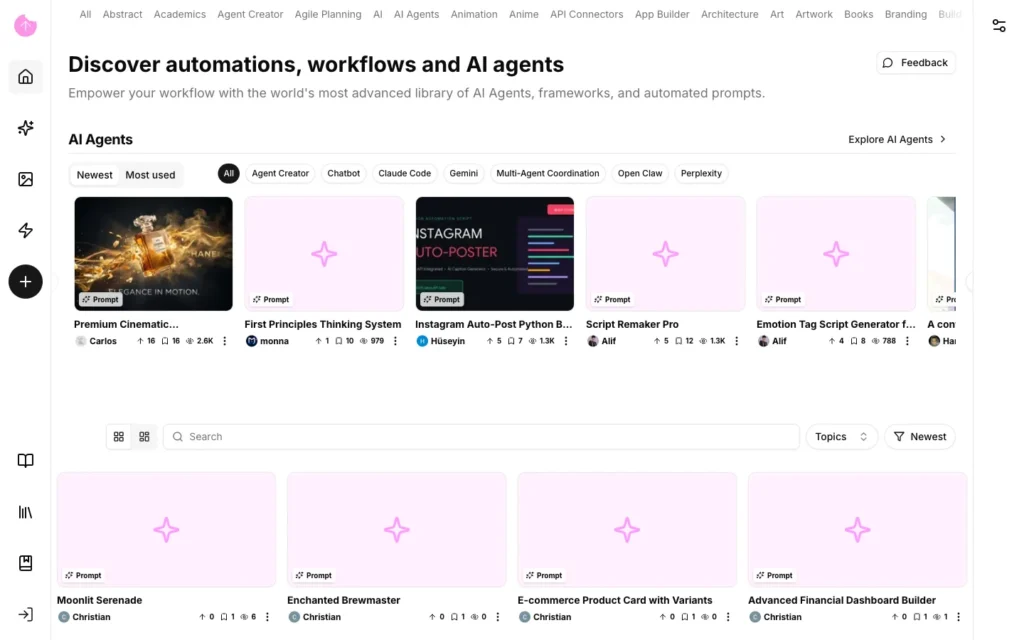
Snack Prompt runs on a freemium model with a voting system that surfaces the prompts people actually find useful. Creators can also monetize their own prompts through subscriptions or pay-per-use.
Its standout feature is side-by-side output comparison, letting a user run the same prompt across multiple models in one interface. For a creator deciding which model actually fits a given production workflow, that comparison is more useful than reading a prompt description and guessing.
6. LaPrompt
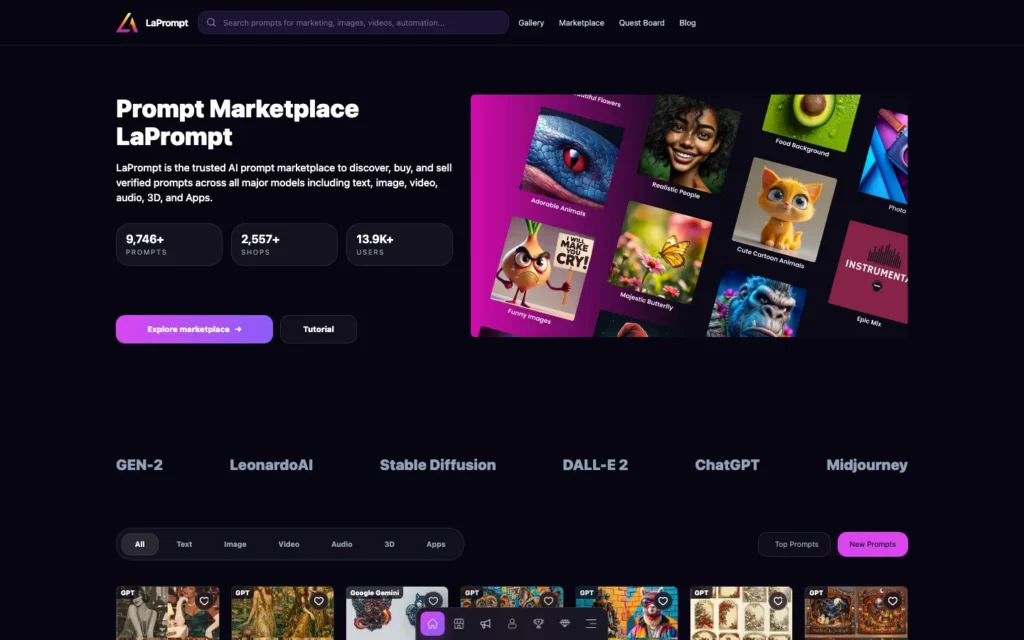
LaPrompt connects professional prompt engineers with buyers who want to skip trial and error. It supports Midjourney, ChatGPT, DALL-E, Stable Diffusion, and other platforms through a curated marketplace.
Sellers can open separate storefronts for different niches, which is useful for a creator building a personal brand around one specific prompt specialty rather than selling generically. The overall structure favors curation and seller reputation over an open, unmoderated library.
7. Promptrr
Promptrr spans a wider set of categories than most entries here: digital marketing, design, fashion, architecture, and food, alongside the more common AI art and chat prompt categories.
That breadth is the main reason to consider it. A creator whose content spans multiple niches gets more value from one platform covering several subject areas than from juggling separate marketplaces for each one.
8. God of Prompt
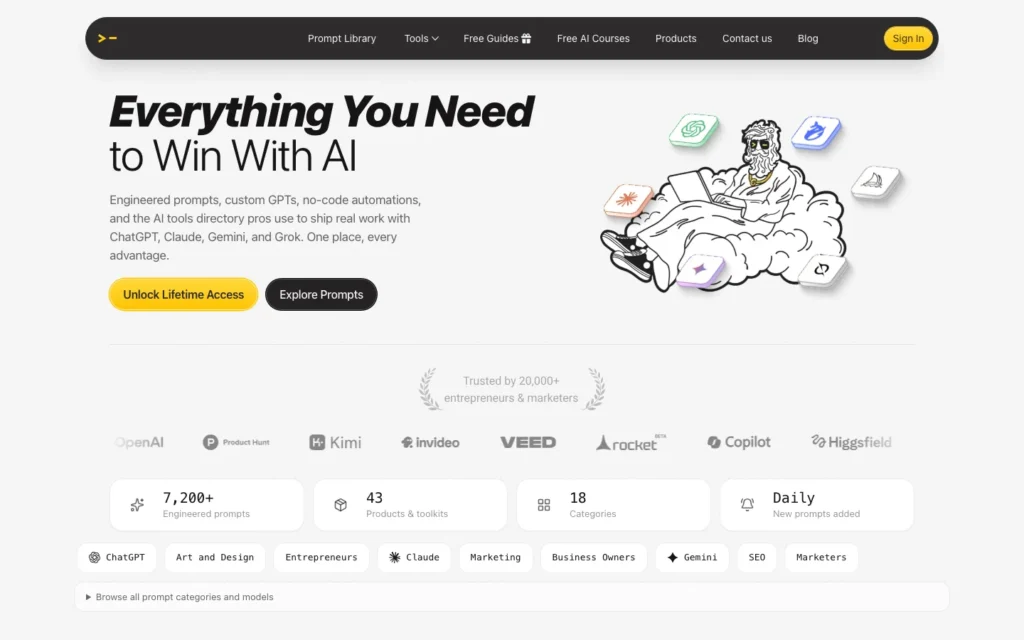
God of Prompt delivers its prompts through a Notion-based system, organized into categorized bundles. There’s a free tier alongside paid bundles, including a writing pack aimed at content creators and copywriters.
The Notion delivery format is the differentiator, and it only helps if Notion is already part of your daily process. For a creator who plans content there already, prompts arrive inside the format they’re working in rather than requiring a separate destination to remember.
9. Prompt Architects
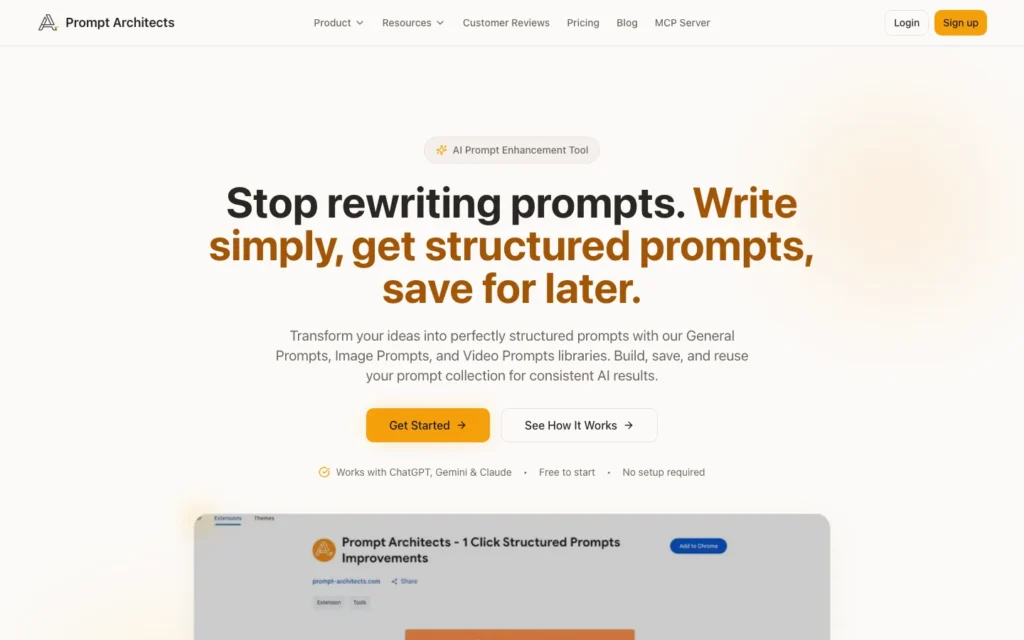
Prompt Architects is built specifically around content creator workflows. It includes image prompt templates formatted for Midjourney and Ideogram, plus a personal library where a creator can save a pre-filled thumbnail or Shorts prompt matched to their own series style.
That personal library is the reason it earns a spot on this list over more generic catalogs. Video-specific formats such as thumbnails and Shorts hooks aren’t treated as an afterthought category buried among general image prompts. This fits creators running a consistent series who want a reusable system rather than searching a generic catalog each time they need a new concept.
10. Taskade Genesis
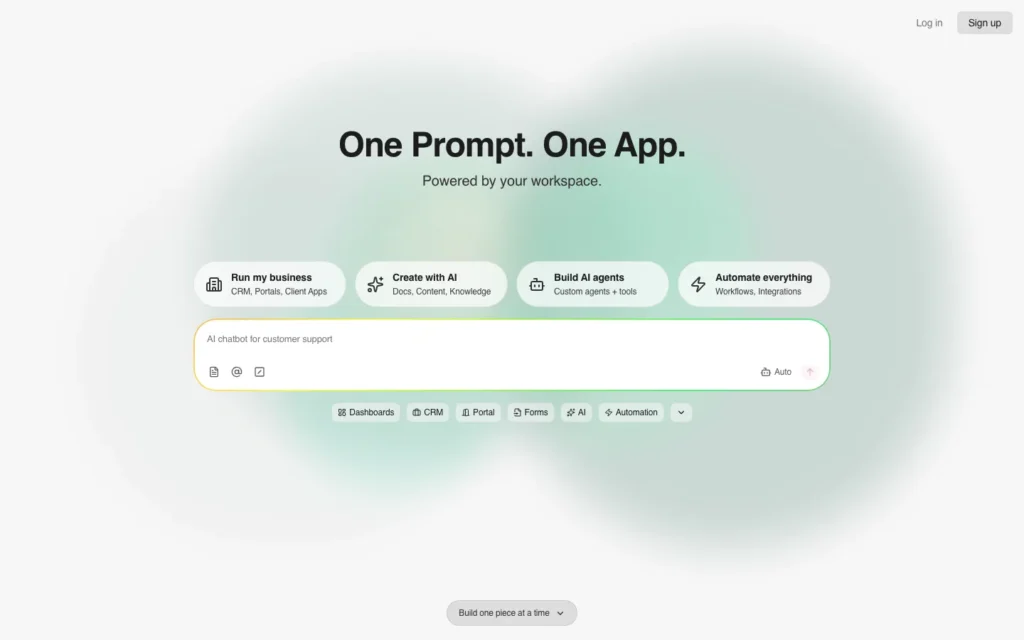
Taskade Genesis sits apart from the pure marketplaces above. It bundles discovery, testing, and execution into one platform, so a prompt becomes something that actually runs rather than text to copy elsewhere.
That execution layer is the differentiator: no copying a purchased prompt into a separate tool just to use it. For creators who want an end-to-end system rather than a library of text to paste around, this is the closer fit.
Building a personal prompt system instead of buying one-off
The bigger issue most creators run into isn’t a shortage of available prompts. It’s that they have no saved system at all before signing up for any of these platforms, not a Notion page, not a document, nothing.
A real prompt system needs more than access to a catalog:
- A library organized by content type. Separate prompts for scripts, thumbnails, and Shorts hooks matter more than one undifferentiated pile of text.
- A pre-filled template matched to your own series style. A generic prompt needs editing every time. One pre-filled with your specific tone and format needs only a small swap.
- Proof of output before relying on a prompt. Platforms like PromptHero that show the actual result a prompt produced save the disappointment of an untested prompt underperforming mid-production.
- A place that fits your existing workflow. A Notion-based system like God of Prompt’s only helps if Notion is already part of your daily process. Otherwise it becomes one more destination to remember to check.
- Room to sell what works. Once a personal system produces consistently strong results, platforms like Snack Prompt or LaPrompt let that same system become a source of income from other creators.
Prompts meant to humanize AI-generated scripts before they go into a video pair well with AI to human rewrite prompts, regardless of which marketplace the original script prompt came from.
How to build a prompt library instead of starting over each time
Audit what you currently improvise from scratch. Track scripts, thumbnails, and hooks written fresh for a week to see where a saved template would actually help.
Pick one marketplace matched to your biggest gap. A creator missing script prompts needs a different platform than one missing thumbnail or Shorts hook templates.
Test before committing to a paid bundle. Platforms offering visible output or a free tier let you confirm quality before spending on something larger.
Customize purchased prompts to your own style. A generic prompt performs better once adjusted to your specific tone, niche, and format rather than used exactly as sold.
Save your customized versions in one organized place. Whether that’s Notion, a dedicated platform, or a simple document, the goal is never starting from a blank input again for a repeated content type.
Revisit and refine the library periodically. A prompt library only gets more valuable over time if it’s actually updated as your content style and the underlying AI models both evolve.
Conclusion
The right marketplace depends on what’s actually missing: model selection, cost, or a library organized specifically around video production rather than general-purpose prompts. None of the ten platforms above solve that on their own.
The bigger opportunity for most creators isn’t finding the perfect marketplace. It’s finally building a saved, organized prompt system instead of rebuilding every script and thumbnail concept from memory each time.
Frequently Asked Questions
What is the best AI prompt marketplace for video creators?
It depends on what is missing. PromptBase has the widest model coverage including Sora, PromptHero shows output before you buy, Snack Prompt compares output across models, and Prompt Architects is built around creator workflows with a personal prompt library.
Which marketplace lets me see the result before buying a prompt?
PromptHero. Buyers can see the actual image a prompt produced before paying, which removes the guesswork of a text-only description. Snack Prompt also lets you compare output across models side by side.
Is there a free prompt library for scripts and outlines?
FlowGPT. It is a free, community-driven library for ChatGPT prompts, strongest for productivity and communication prompts that overlap with scripting and text generation.
Which tool works directly inside ChatGPT, Claude, and Gemini?
AIPRM. It injects a curated prompt catalog directly into the ChatGPT, Claude, and Gemini web interfaces, though its catalog leans toward SEO and marketing templates.
Which marketplace supports Sora prompts?
PromptBase. It supports Midjourney, ChatGPT, DALL-E, Sora, and FLUX, which is the widest model coverage of any pure marketplace on this list.
Can I sell my own prompts?
Yes. Snack Prompt lets creators monetize prompts through subscriptions or pay-per-use, and LaPrompt lets sellers open separate storefronts for different niches.
What should a personal prompt library include?
A library organized by content type, pre-filled templates matched to your series style, proof of output before relying on a prompt, a home that fits your existing workflow, and room to sell what works.
Do I need Notion to use God of Prompt?
It helps. God of Prompt delivers prompts through a Notion-based system, which only fits well if Notion is already part of your daily process.
You may also like
- Glif AI Review: A tool that automates prompt formatting across multiple AI models once a concept is ready.
- Nano Banana Trend: 10 Google Gemini AI Prompts to Create Viral Aesthetic Instagram Portraits: A ready-to-use example of the kind of tested prompt library this article discusses.
- 9 Best AI Content Automation Tools for Agencies: Tools for scaling content production once a solid prompt library is in place.