
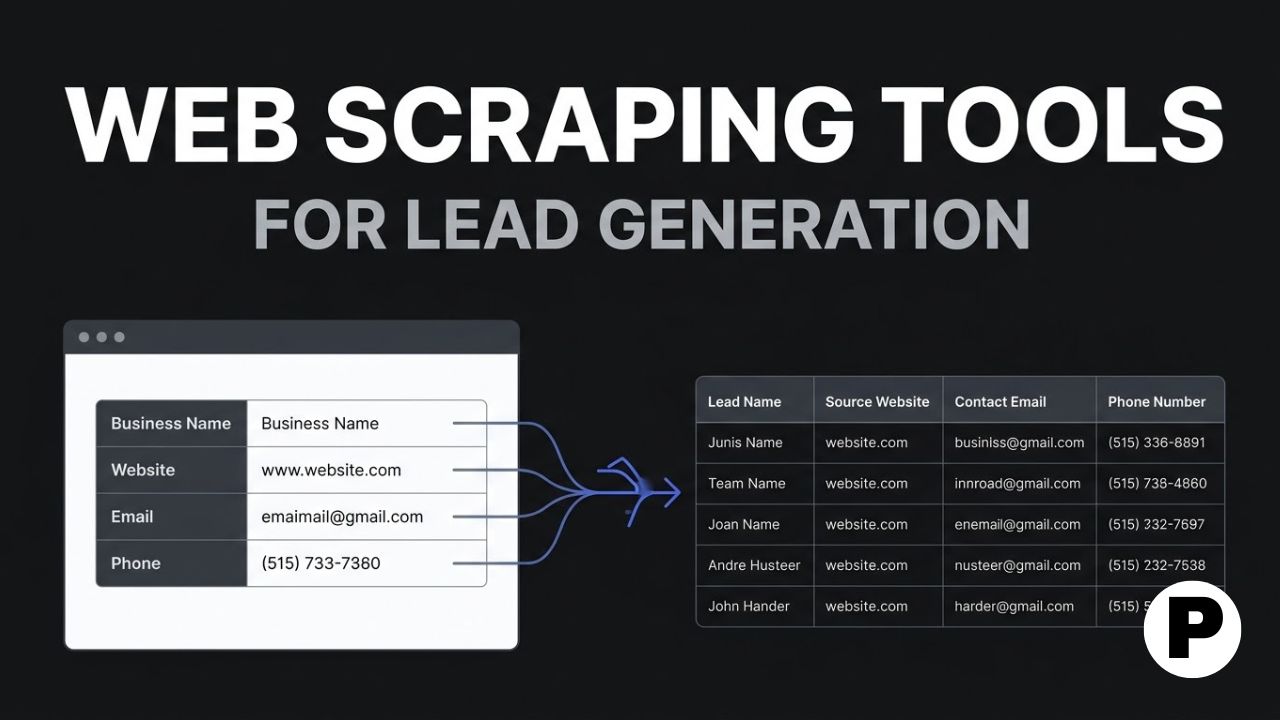
TL;DR: Manually copying emails and business names from websites into a spreadsheet is slow, outdated by the time you finish, and no longer necessary in 2026 given how many scraping platforms now handle the process end to end.
- Scrapy remains the go-to open-source option for teams with Python expertise who need full control over large-scale scraping.
- Bright Data and Apify both lead on pre-built infrastructure, residential proxies and ready-made Actors respectively, for teams that do not want to build scrapers from scratch.
- Scrape.do and Zyte API stand out on pricing and reliability for hard-to-scrape B2B directories, charging only on successful calls or bundling anti-bot handling into one request.
A web scraper collects raw data from websites, but for lead generation specifically, the more useful platforms take that data further with enrichment, verification, or CRM-ready formatting rather than leaving you with a raw file to clean up manually. The line between a pure scraper and a full lead generation tool keeps getting thinner every year, and the right choice depends on whether your bottleneck is data collection at scale or turning raw prospects into a usable outreach list.
This article compares ten web scraping tools used for lead generation in 2026, covering open-source frameworks, no-code platforms, and enterprise proxy infrastructure. It is written for sales, marketing, and growth teams building prospect lists who need to choose between coding a custom scraper and using a managed platform.
1. Scrapy
Scrapy is an open-source web scraping framework that gives teams full control to build and customize their own scrapers rather than working within a fixed platform. It is free to use and best suited to large-scale projects that need flexibility a managed tool cannot offer.
The differentiator is that complete customization, at the cost of requiring real Python expertise to build and maintain, an entry point that pairs well with the broader technical tooling covered in our roundup of the best vibe coding tools. There is no managed infrastructure here, so proxy rotation and anti-bot handling are the developer’s responsibility.
This fits advanced users with Python knowledge who need to scrape large, specific datasets and are comfortable maintaining their own infrastructure.
2. Octoparse
Octoparse is a no-code web scraping tool built around a drag-and-drop interface, aimed at marketers and non-technical teams who need a cloud-based solution without writing code. A free plan is available, with premium plans starting around 99 dollars a month.
The differentiator is accessibility. Where Scrapy demands coding skill, Octoparse trades some flexibility for a visual workflow that a marketing team can operate directly without engineering support.
This fits marketing teams that want to build and run scrapers themselves without depending on a developer for every new data source.
3. Bright Data
Bright Data runs on one of the largest residential and ISP proxy networks available, making it particularly effective against websites with aggressive anti-bot protection. Its Web Scraper IDE and no-code data collectors return structured results without requiring custom parsers.
The differentiator is proxy depth combined with a library of 700 or more pre-built scrapers covering major sites, which suits teams scraping heavily protected directories rather than simple public pages.
This fits larger teams or agencies running multiple scraping pipelines across different verticals who need reliability against anti-bot measures more than budget-friendly pricing.
4. Apify
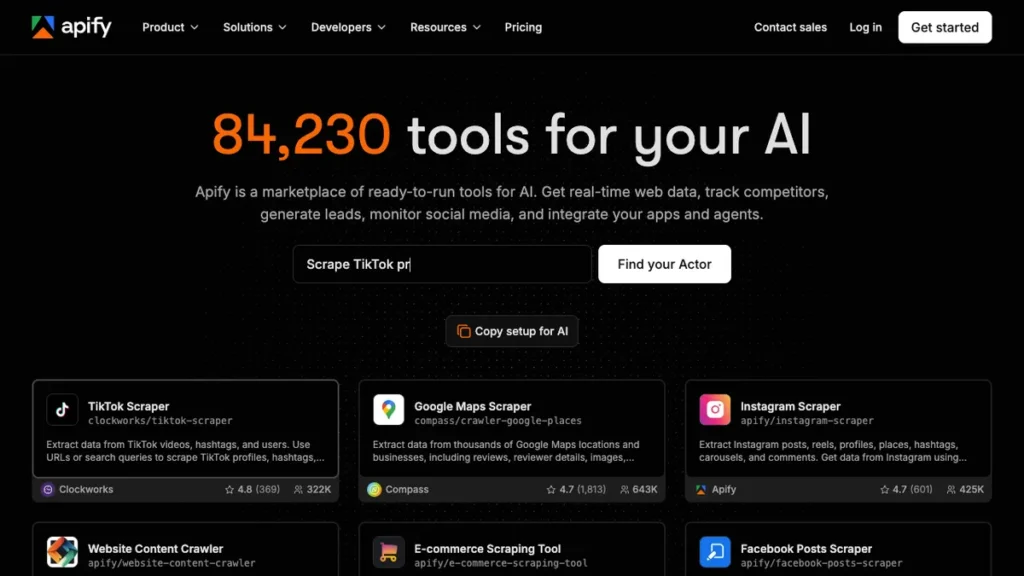
Apify operates as a scraping and automation platform built around a marketplace of pre-built Actors, ready-to-use scrapers for LinkedIn where terms of service permit, Google Maps, Product Hunt, and dozens of other sources relevant to lead research. It also offers a generous free tier for teams testing before committing budget.
The differentiator is that Actor marketplace, letting teams skip building a scraper from scratch for common lead sources and instead configure an existing one.
This fits teams researching leads across a specific, well-known set of platforms who want a ready-made scraper rather than building one from zero.
5. PhantomBuster
PhantomBuster is a no-code automation platform built specifically around social media and outreach workflows, commonly used for LinkedIn-based lead generation alongside scraping. It requires no technical knowledge to set up, similar in spirit to the outbound-focused tools covered in our Outseek AI review.
The differentiator is the focus on social platform automation specifically, rather than general-purpose website scraping, which makes it a common pairing with a broader scraper for teams whose leads live primarily on social networks.
This fits sales and growth teams sourcing leads mainly from LinkedIn and other social platforms who want automation built around those specific sources.
6. Zyte API
Zyte API is described as the strongest all-rounder for hard scraping targets, bundling ban management, browser rendering, session handling, and extraction into a single API call rather than requiring separate tools for each piece.
The differentiator is that bundled reliability layer, reducing the number of moving parts a team has to manage when a target site actively resists scraping.
This fits teams scraping difficult, heavily protected B2B directories who want ban management and rendering handled automatically rather than configured separately.
7. Scrape.do
Scrape.do positions itself as a pay-for-success option at scale, with Ready APIs that return parsed JSON and credits that charge only on successful calls rather than every attempt, successful or not.
The differentiator is that success-based billing model, which matters most for high-volume B2B scraping where failed requests against blocked or changed pages would otherwise still cost credits on other platforms.
This fits high-volume B2B lead generation pipelines where unpredictable success rates make pay-for-success pricing meaningfully cheaper than flat per-request billing.
8. Oxylabs
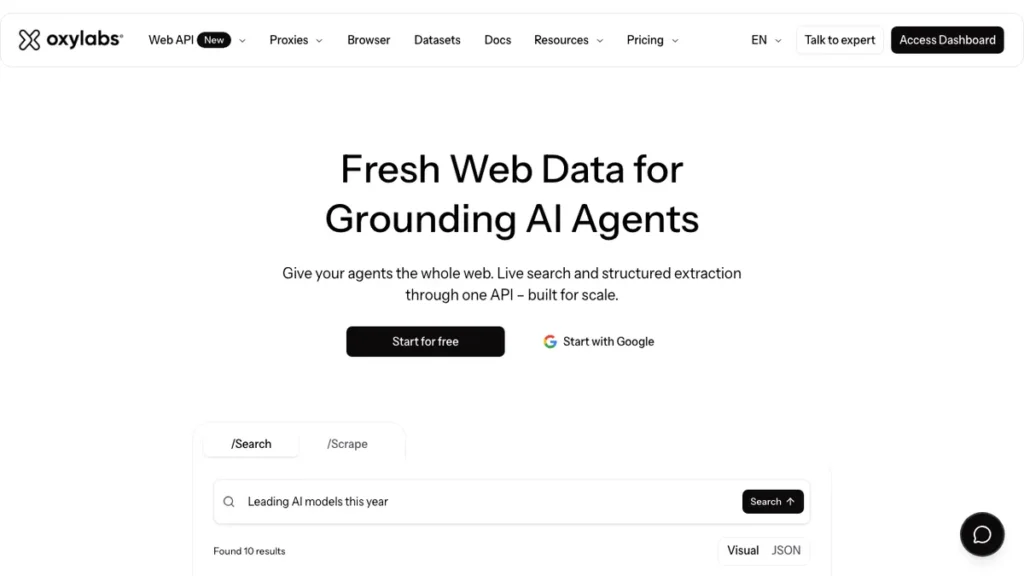
Oxylabs suits enterprise teams that want result-based billing paired with a broader data product stack beyond just SERP or lead scraping. It pairs clear, predictable billing with additional data services for teams that need more than a single-purpose scraper.
The differentiator is that broader enterprise data stack, positioning Oxylabs closer to an infrastructure partner than a narrowly focused scraping tool.
This fits enterprise teams that want lead scraping as one piece of a larger web data strategy rather than a standalone tool.
9. WebHarvy
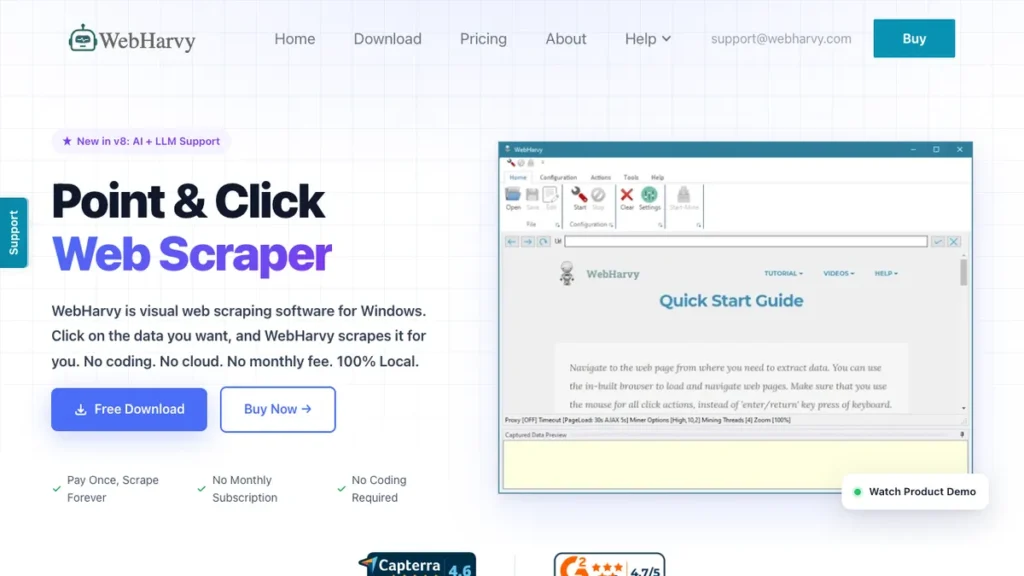
WebHarvy is another no-code scraping option, mentioned alongside Octoparse and PhantomBuster as requiring zero technical knowledge to operate. It focuses on point-and-click configuration for extracting data from web pages.
The differentiator is that simplicity for non-technical users who need a straightforward desktop tool rather than a cloud platform with a steeper learning curve.
This fits individual users or small teams who want a simple, no-code desktop scraper without committing to a larger cloud platform.
10. Clearbit
Clearbit, now part of HubSpot, focuses on enrichment for inbound leads and website traffic rather than external prospecting from scratch. It works best for marketing and sales teams already operating inside the HubSpot ecosystem.
The differentiator is that inbound enrichment focus. Clearbit’s value depends heavily on your existing inbound traffic volume and CRM workflow, since it is not a standalone scraper for building outbound lead lists from external sources.
This fits teams already using HubSpot who want to enrich and act on inbound leads rather than scrape new prospects from external directories.
Which Scraping Tool Fits Your Lead Gen Workflow
The right pick depends on whether your bottleneck is raw data collection at scale, working around anti-bot protection, or turning existing traffic into usable leads. A solo founder and an agency running multiple client pipelines need very different tools here.
Choose Based on Your Use Case
Full custom control with engineering resources: Scrapy gives complete flexibility for teams with Python expertise willing to maintain their own infrastructure.
No-code, marketing-team-operated scraping: Octoparse and WebHarvy both let non-technical users build and run scrapers directly.
Heavily protected B2B directories: Bright Data’s proxy depth and Zyte API’s bundled ban management both target sites that actively resist scraping.
Common lead sources like LinkedIn and Google Maps: Apify’s pre-built Actor marketplace and PhantomBuster’s social automation both skip building a scraper from scratch, an approach worth comparing against the broader freelancer toolkits in our roundup of AI tools for freelancers.
Unpredictable, high-volume scraping: Scrape.do’s pay-for-success billing avoids paying for failed requests against blocked pages.
Enterprise data infrastructure beyond scraping: Oxylabs pairs result-based billing with a broader data product stack.
Enriching inbound leads already in your CRM: Clearbit fits HubSpot-based workflows better than external prospecting from scratch.
How to Build a Lead Generation Scraping Pipeline
Step 1: Identify your primary lead sources Confirm whether your leads live mainly on specific platforms like LinkedIn and Google Maps, or across general B2B directories and company websites, since that determines which tool category fits.
Step 2: Choose between code-first and no-code Decide whether your team has the Python expertise to maintain a custom scraper like Scrapy, or needs a no-code platform like Octoparse or WebHarvy instead.
Step 3: Account for anti-bot protection If your target sites use aggressive bot detection, prioritize a platform with proxy depth and ban management, like Bright Data or Zyte API, over a simpler scraper.
Step 4: Set up enrichment and verification Raw scraped data usually needs enrichment, verified emails, company details, job titles, before it is usable for outreach, so confirm whether your chosen tool includes this or requires a separate step.
Step 5: Test against your real target list Run your actual target sites through the tool rather than generic test URLs, since success rates vary significantly by site structure and protection level.
Step 6: Route output into your CRM or outreach tool Confirm the scraper exports in a format your CRM or outreach platform accepts, since a clean list still needs to land somewhere your sales team can act on it directly.
Conclusion
Scrapy remains the strongest choice for teams with the engineering resources to build and maintain a fully custom pipeline, while Octoparse and WebHarvy serve marketing teams that need a no-code alternative. Bright Data and Zyte API both target the hardest scraping problems, heavily protected B2B directories, while Scrape.do’s pay-for-success model suits unpredictable, high-volume needs, a decision worth weighing against the broader automation strategy in our AI marketing roadmap.
Whichever tool you choose, remember that raw scraped data is only the first step. The teams getting real value from these platforms are pairing collection with enrichment and verification before a lead ever reaches an outreach sequence.
Frequently Asked Questions
Which tool is best for a marketing team with no coding skills?
Octoparse and WebHarvy both let non-technical users build and run scrapers directly through a drag-and-drop or point-and-click interface, without depending on a developer for every new data source.
How much does Octoparse cost?
Octoparse offers a free plan, with premium plans starting around 99 dollars a month.
Which tool is best for heavily protected B2B directories that actively resist scraping?
Bright Data’s proxy depth and Zyte API’s bundled ban management, browser rendering, and session handling both target sites with aggressive anti-bot protection, reducing the moving parts a team has to manage.
What’s the difference between Scrape.do and a flat per-request pricing model?
Scrape.do charges only on successful calls rather than every attempt, which matters most for high-volume B2B scraping where failed requests against blocked or changed pages would otherwise still cost credits on other platforms.
Is there a tool for enriching leads I already have, rather than scraping new ones?
Clearbit, now part of HubSpot, focuses on enrichment for inbound leads and website traffic already in the CRM rather than external prospecting from scratch.
Which tool requires the most technical expertise?
Scrapy is a fully open-source framework offering complete customization for teams with real Python expertise, but it requires building and maintaining your own infrastructure, including proxy rotation and anti-bot handling.
You May Also Like
- Best AI Tools for Digital Marketers — a roundup of AI tools built for marketing teams managing multiple content channels.
- What Is Crawl Budget in SEO — a look at how search engines allocate crawling resources, a concept that overlaps with how scrapers approach large sites.
- Affiliate Marketing Roadmap — a step by step path for building an affiliate strategy that pairs well with a strong lead pipeline.