
TL;DR: Apollo.io and Clay lead the comparison for most revenue teams, Apollo for combining data and outreach in one platform and Clay for AI-driven enrichment across multiple sources, while ZoomInfo and 6sense fit enterprise teams running account-based strategies.
- Apollo.io pairs a large B2B database with built-in sequencing and predictive lead scoring in one subscription.
- Clay’s Claygent research agent browses LinkedIn profiles and company websites to draft personalized openers automatically, rather than relying on static contact fields alone.
- 6sense combines intent data with first-party engagement signals to prioritize accounts most likely to convert, and was named a Forrester Leader in B2B Revenue Marketing for 2026.
How These 12 AI Lead Generation Tools Were Compared
AI lead generation tools now span several distinct jobs: finding prospects, enriching contact records, scoring intent, sending outreach, and qualifying visitors through conversation. Picking one tool without understanding which job it actually does well is the most common reason a subscription ends up unused. If lead generation is one piece of a broader growth plan, our affiliate marketing roadmap covers a related channel worth running alongside outbound.
This comparison covers 12 tools across data, enrichment, outbound sending, intent intelligence, and conversational qualification, evaluated on what each does differently and who it actually fits. A quick comparison table follows the numbered breakdown for anyone who wants the short version first.
1. Apollo.io
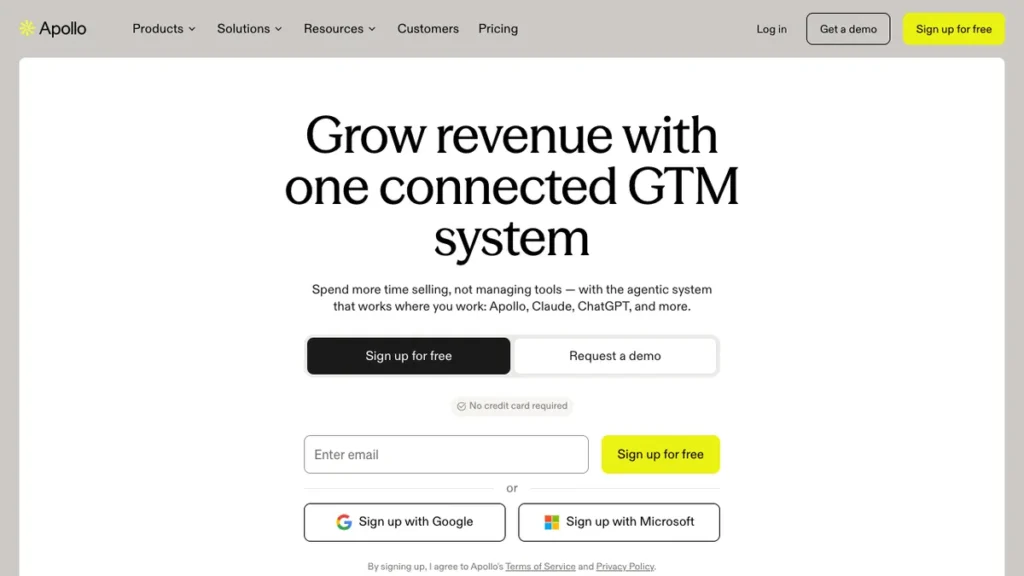
Apollo.io combines a large B2B contact database with a built-in sales engagement layer, so a team can find a prospect and email them without leaving the platform. Predictive lead scoring surfaces best-fit prospects, and AI sequences handle send timing across email and calls.
The differentiator is consolidation at an accessible price point. For a US-focused team doing outbound on a budget, Apollo.io is hard to beat, though data accuracy gets uneven once you filter strictly for verified emails, and many advanced teams end up using it purely for data while piping it into a dedicated sender. Current plans are listed at apollo.io.
Apollo.io fits teams that want one platform covering data and outreach rather than paying separately for a database and a sequencing tool.
2. Clay
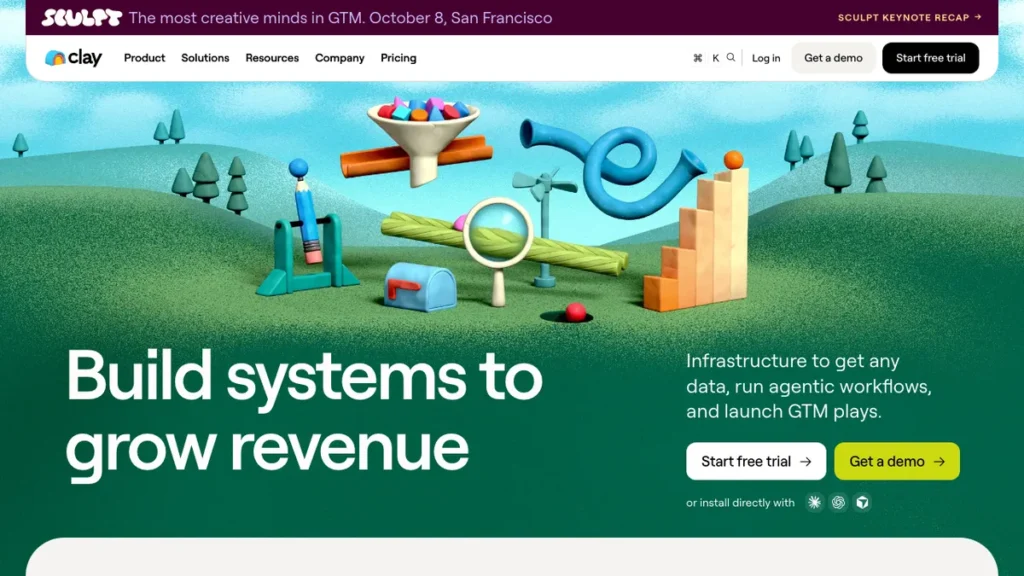
Clay works less like a single tool and more like a workflow builder for lead data, letting a team plug in multiple data sources and structure the enrichment process before exporting to an outreach tool. Its Claygent research agent browses LinkedIn profiles and company websites, then drafts personalized openers based on what it finds.
The differentiator is flexibility through composition rather than a fixed feature set. Small teams have built production-quality prospecting pipelines in Clay in a single weekend, though larger teams sometimes spend a month tuning workflows and never fully adopt the tool afterward. The underlying idea is close to what we cover in our guide to setting up free AI agent models, where a research agent does the manual browsing work a human would otherwise do by hand.
Clay fits teams with someone willing to build and maintain custom enrichment workflows, in exchange for far more control than a static database offers. Details are available at clay.com.
3. Instantly
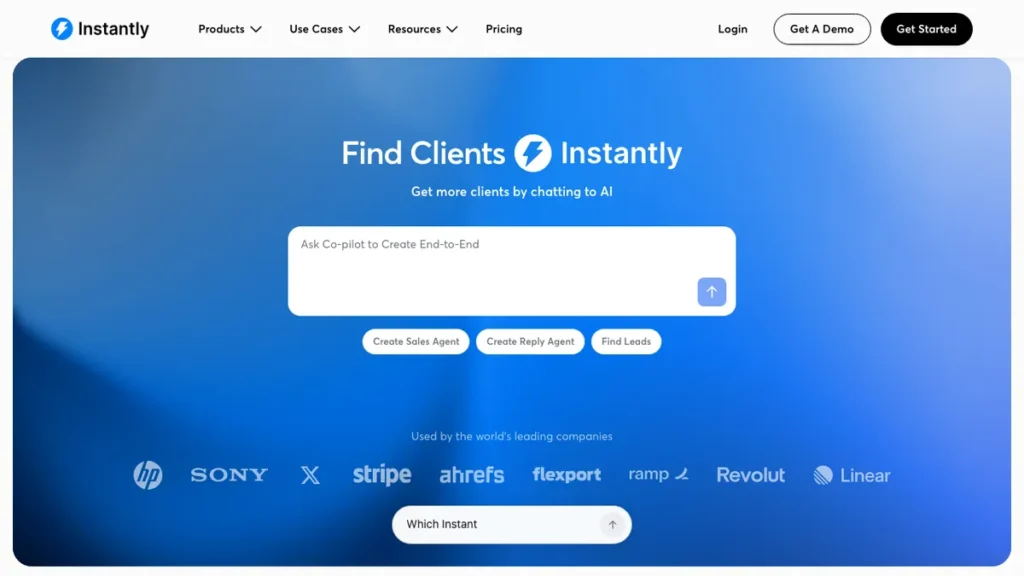
Instantly focuses specifically on cold email deliverability at volume, with email warmup, spam testing, and AI-generated personalization built in. It requires a separate contact data source, typically paired with Apollo or a similar database for top-of-funnel prospecting.
The differentiator is that spam testing alone prevents the majority of deliverability issues before a campaign launches, which matters more than any single feature once send volume climbs into the thousands. Instantly solves the narrow but critical problem of getting cold email into inboxes rather than covering the full prospecting workflow.
This fits teams whose main lead generation channel is cold email at scale and who need dedicated sending infrastructure rather than a bolt-on feature inside a broader platform.
4. ZoomInfo
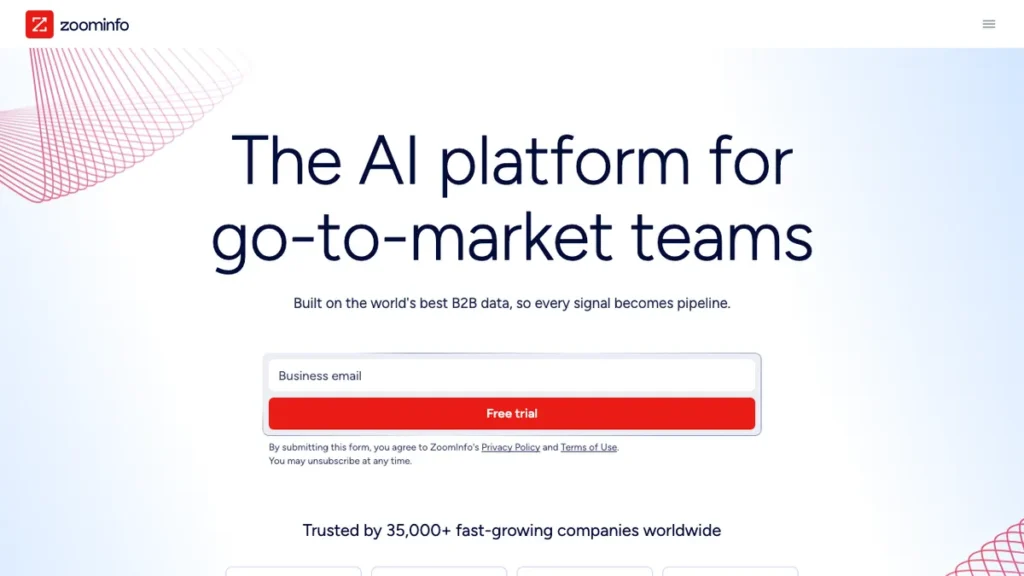
ZoomInfo is priced as a premium enterprise data source, pairing a large contact database with ZoomInfo Copilot for AI-assisted account prioritization. Like Cognism, it functions more as a data layer than a full engagement platform, so most teams pair it with a separate sender.
The differentiator is depth and reliability of enterprise account data. ZoomInfo’s database and Copilot scoring are built for teams making high-stakes prioritization decisions across large account lists, not for teams that just need a handful of verified emails.
ZoomInfo fits enterprise revenue teams that need deep account intelligence and are willing to pair it with a separate outreach tool.
5. 6sense
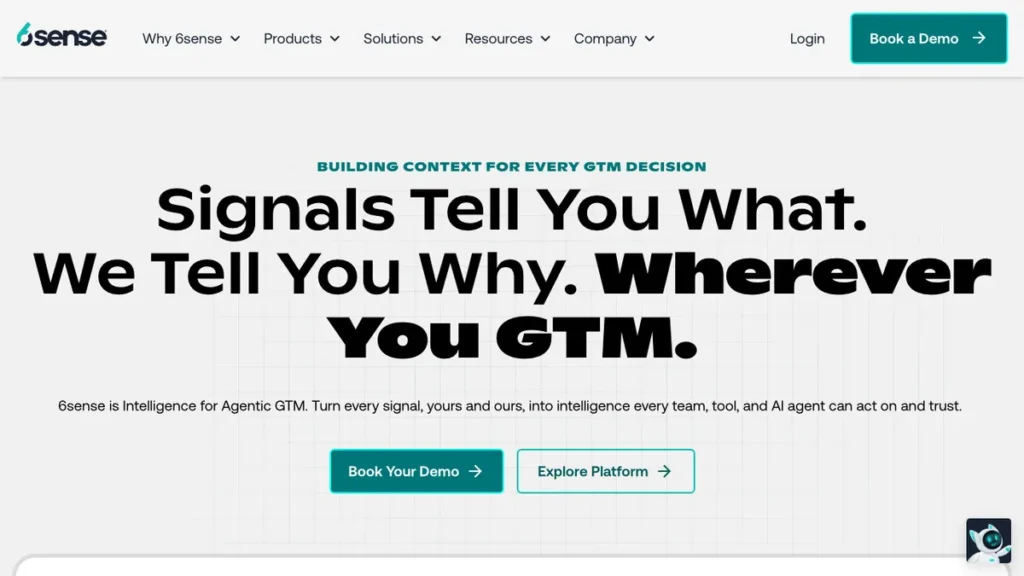
6sense blends third-party intent data with first-party engagement signals to identify accounts showing real buying intent, then prioritizes them for outbound and account-based campaigns. It was named a Forrester Leader in B2B Revenue Marketing for 2026, with particular strength in pipeline forecasting and buying group insights.
The differentiator is intent detection at the account level rather than the contact level. Where most tools on this list find and enrich individual contacts, 6sense identifies which accounts are actively researching a solution category before a single contact has even engaged, which changes when and how a sales team reaches out.
This fits marketing and sales teams running account-based strategies who need to know which accounts are in-market before spending outreach effort on them.
6. Cognism
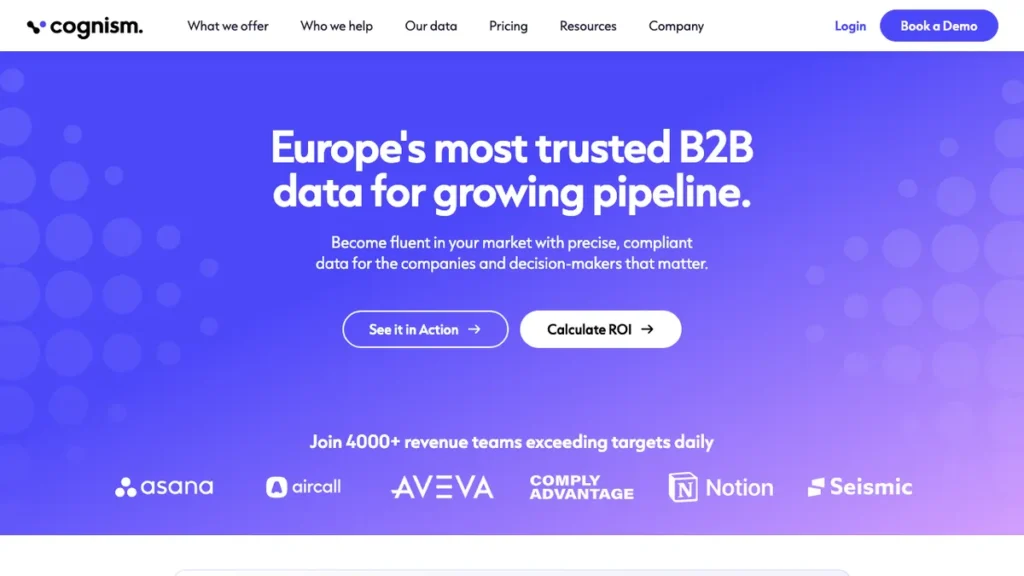
Cognism focuses on compliant contact data for outbound touching European prospects, where data privacy regulations make a US-first database risky to rely on. It combines verified contact data with intent signals, priced through custom enterprise contracts.
The differentiator is compliance posture. For teams running outbound into the EU or UK, Cognism’s data sourcing and compliance approach is the specific reason to choose it over a database built primarily for US markets.
Cognism fits teams running international outbound, particularly into Europe, where data compliance is a real risk rather than a checkbox. Current terms are published at cognism.com.
7. Lemlist
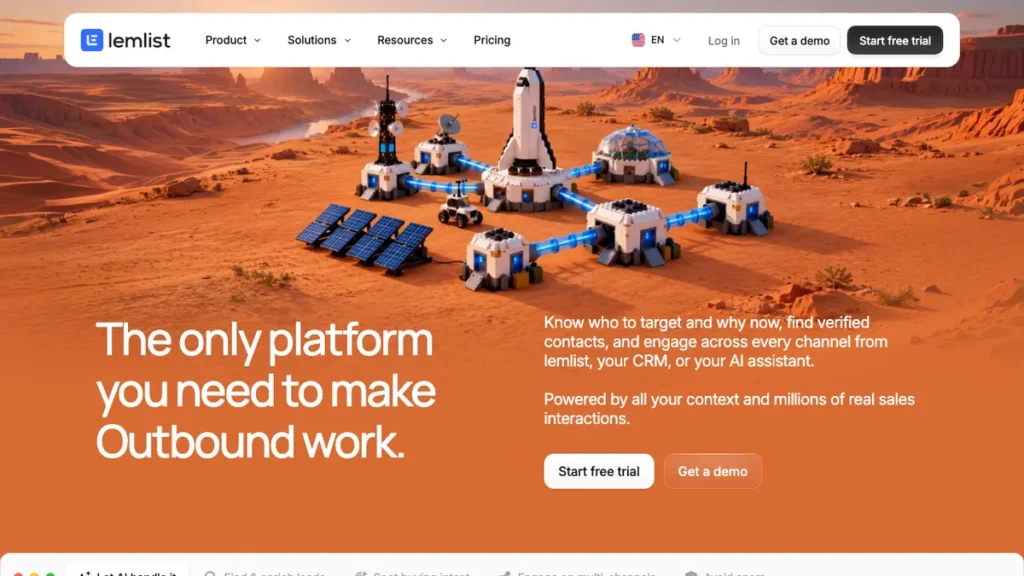
Lemlist adds multichannel sequencing (email, LinkedIn, calls, and WhatsApp) on top of cold email fundamentals, with native CRM sync to HubSpot and Salesforce. Like Instantly, it requires a separate contact data source to feed the sequences.
The differentiator is channel breadth combined with personalization depth. Where Instantly optimizes purely for email deliverability, Lemlist is built for reaching a prospect across several channels in a coordinated sequence rather than email alone.
Lemlist fits teams that want multichannel outreach with native CRM sync, rather than managing email, LinkedIn, and calls as separate disconnected efforts.
8. Smartlead
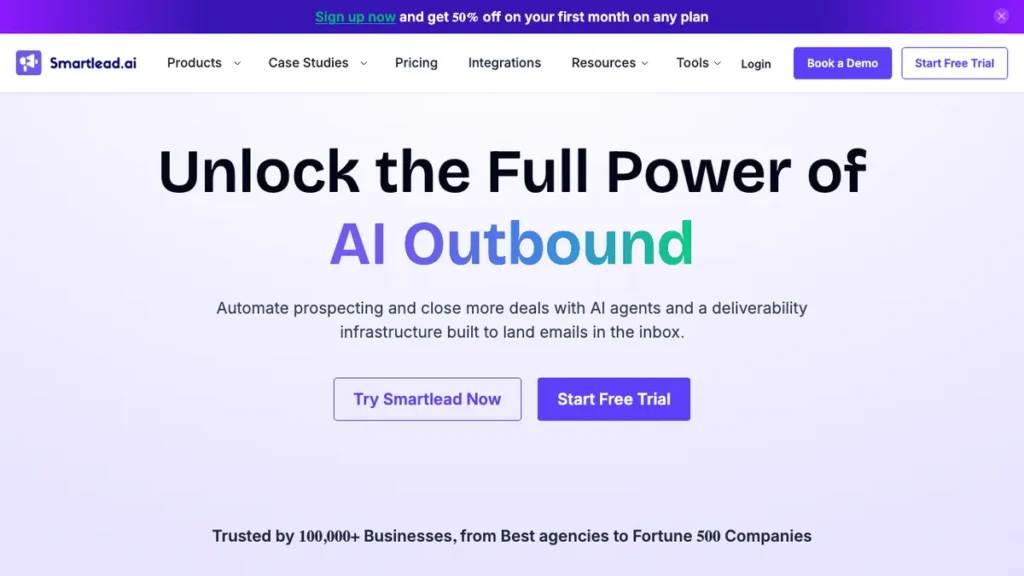
Smartlead offers tiered pricing starting around $39 a month for a basic plan covering roughly 2,000 active leads and 6,000 emails, scaling up through higher-volume unlimited tiers. It focuses on cold email sending infrastructure similar to Instantly, with a lower entry price point.
The differentiator is price relative to email volume. Smartlead’s tiered structure makes it accessible for smaller teams sending moderate volume, while still scaling to unlimited tiers for larger operations without switching tools.
This fits budget-conscious teams that want cold email infrastructure without committing to a higher-priced sending platform from day one.
9. LeadIQ
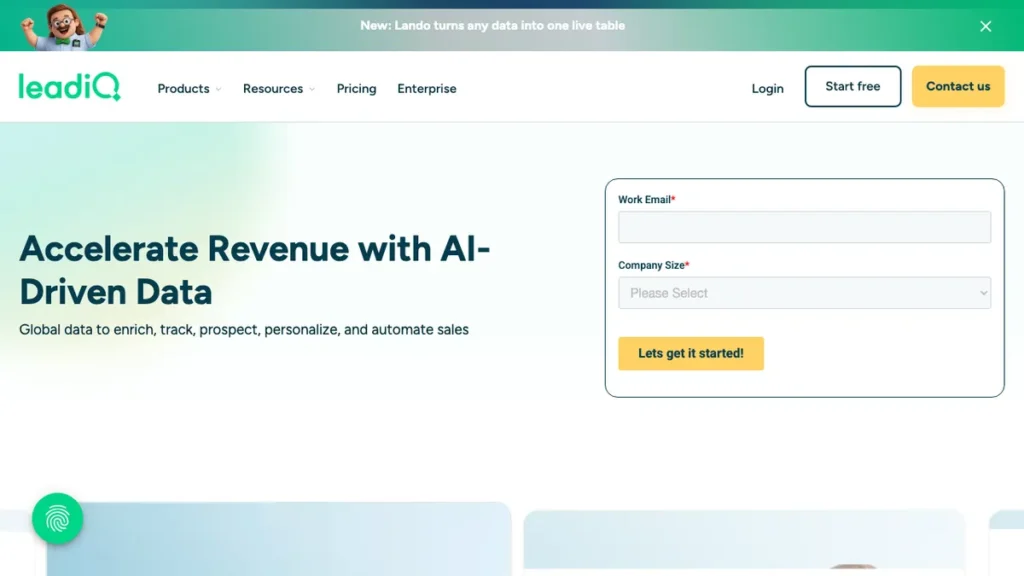
LeadIQ is built for one specific job: capturing leads directly off LinkedIn into a CRM without manual data entry. A Chrome extension grabs a contact in a single click, AI enrichment fills gaps and deduplicates records, and its Scribe feature drafts a first-pass outreach email.
The differentiator is speed on a narrow task. LeadIQ does not score intent or run outreach campaigns; it exists specifically to make LinkedIn prospecting fast for SDRs who already live inside Sales Navigator, sitting alongside a database and sender rather than replacing either. Teams evaluating AI research tools for this kind of capture-and-enrich workflow may also find our Genspark AI review useful for comparison.
LeadIQ fits SDRs and sales teams whose main prospecting activity happens on LinkedIn and who need capture speed more than a broader platform.
10. Cleanlist
Cleanlist combines AI-powered search with waterfall enrichment, stating 98 percent verified emails and 85 percent direct dials as product specifications. It charges $79, $229, or $599 a month with no per-seat fee, and offers a free tier of 30 credits a month with no card required.
The differentiator is pricing transparency paired with published accuracy claims. Where several tools in this category price by seat or require a sales call for a quote, Cleanlist publishes flat monthly pricing regardless of team size, which simplifies budgeting for growing teams.
Cleanlist fits teams that want transparent, flat-rate pricing and are willing to test the free tier before committing to a paid plan. Pricing details are listed at cleanlist.ai.
11. Intercom
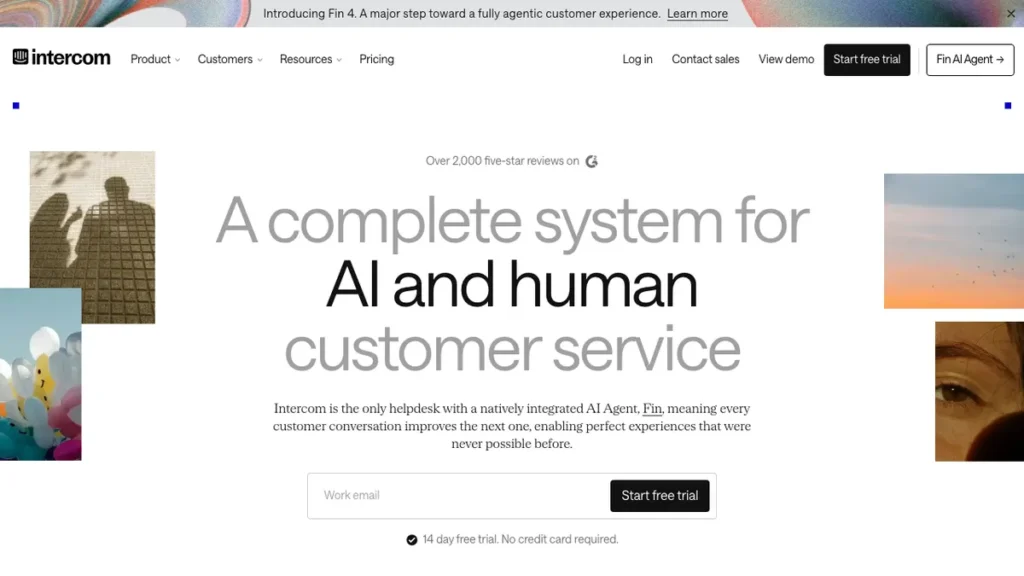
Intercom treats lead generation as a conversation rather than a form submission, using AI-powered chatbots and live chat to qualify visitors, answer questions, and route high-intent traffic to sales in real time. It works best for teams that already have meaningful website traffic to convert.
The differentiator is the conversational approach itself. Static forms cannot match the engagement of an immediate AI response to a visitor’s specific question, which tends to work especially well for SaaS products where prospects have questions before converting. The tradeoff is cost, since Intercom’s pricing has moved up several times and can get expensive as a team adds seats to handle chat volume.
Intercom fits SaaS and product-led businesses with existing traffic who want to convert more of it through conversation rather than generating new visitors.
12. HubSpot Sales Hub
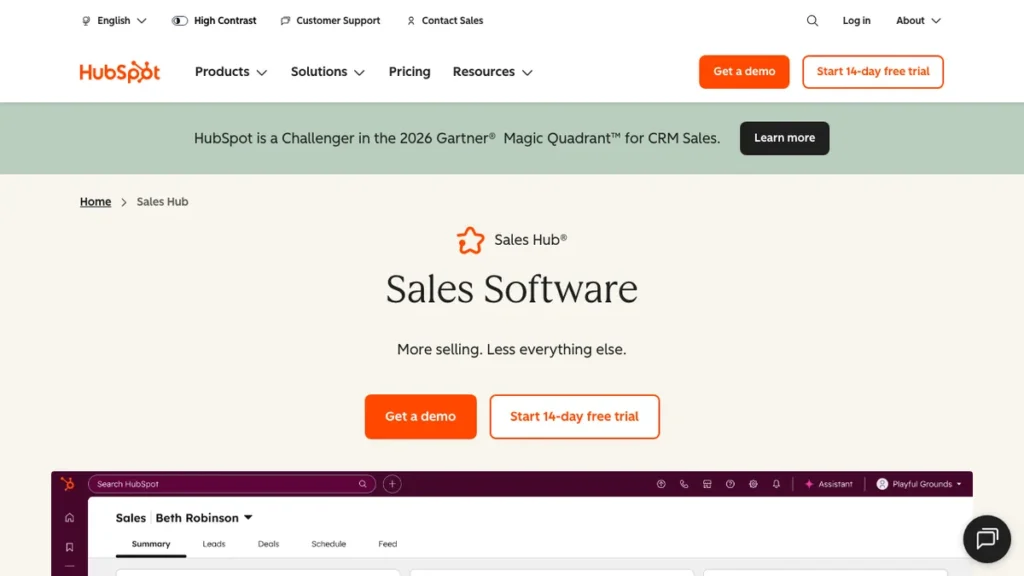
HubSpot Sales Hub layers AI-assisted email drafting, predictive lead scoring, and sequence automation on top of HubSpot’s CRM, with Starter plans beginning around $20 per user a month and higher tiers adding deeper AI features. Because it sits inside the same platform holding contact and deal history, its suggestions are grounded in real account context.
The differentiator is that automation lives inside existing customer data rather than a bolted-on connector. Teams already running HubSpot for marketing or support get lead generation AI without adopting a separate platform or exporting data between systems.
HubSpot Sales Hub fits teams already invested in the HubSpot ecosystem who want lead generation AI native to their CRM rather than a standalone tool.
Quick Comparison Table
| Tool | Best For | Starting Price |
|---|---|---|
| Apollo.io | All-in-one data and outreach | Free plan; paid from about $49/user/month |
| Clay | AI-driven multi-source enrichment | Custom, workflow-based pricing |
| Instantly | Cold email deliverability at volume | Custom, volume-based pricing |
| ZoomInfo | Enterprise account intelligence | Custom enterprise pricing |
| 6sense | Account-level intent detection | Free tier; custom enterprise pricing |
| Cognism | Compliant European contact data | Custom enterprise pricing |
| Lemlist | Multichannel personalized sequences | Custom, volume-based pricing |
| Smartlead | Budget cold email infrastructure | From about $39/month |
| LeadIQ | LinkedIn capture and enrichment | Custom, seat-based pricing |
| Cleanlist | Transparent flat-rate enrichment | Free tier; $79 to $599/month |
| Intercom | Conversational lead qualification | From about $18/month, scales with seats |
| HubSpot Sales Hub | Native CRM-integrated lead AI | From about $20/user/month |
Off-the-Shelf Tools vs. a Custom Lead Pipeline
Any of the tools above, used individually or in a pair, covers most teams running a single outbound motion. The comparison gets harder once a business needs several of these working together, pulling from multiple data sources, scoring against custom criteria, and routing qualified leads into a CRM without someone stitching the handoffs together manually.
Why a Custom Pipeline Wins Once You’re Combining Several Tools
Cross-tool data consolidation: A workflow built in n8n or Python can pull from a data provider, an enrichment tool, and an intent platform in one run, rather than manually exporting and merging spreadsheets.
Custom scoring criteria: Business-specific qualification logic gets built directly into the pipeline instead of adapted from whichever vendor’s default scoring model happens to be closest.
Direct routing with no manual handoff: Qualified leads land in the CRM with the correct tags and owner assigned automatically, instead of requiring someone to review and re-enter data by hand.
Cost that scales with volume, not seats: A custom pipeline avoids stacking per-seat fees across five different platforms as a sales team grows.
This is the same tradeoff covered in our performance marketing roadmap, where individual tools handle early-stage growth well until the process itself needs to run end to end without a person manually bridging each step.
How to Compare Lead Generation Tools for Your Team
Step 1: Identify which job you actually need solved Separate the problem into finding contacts, enriching data, scoring intent, or sending outreach, since most tools on this list specialize in one job rather than all four.
Step 2: Check pricing structure, not just the headline number Look for per-seat fees, credit limits, and hidden costs like minimum contract terms before comparing sticker prices across tools.
Step 3: Test data accuracy on a small sample first Run 50 to 100 contacts through a trial before committing, since published accuracy claims vary once applied to your specific target market.
Step 4: Confirm CRM integration depth Verify that a tool syncs cleanly with your existing CRM rather than requiring manual export and import, since that gap tends to be where adoption quietly fails.
Step 5: Map out how many tools you’ll actually need Decide upfront whether one all-in-one platform or a combination of specialized tools fits your workflow better, since stacking too many specialized tools recreates the complexity you were trying to avoid.
Step 6: Reassess after 90 days of real usage Review reply rates, data accuracy, and actual team adoption after three months, since a tool that looked strong in a demo does not always hold up in daily use.
Conclusion
There is no single winner across all 12 tools compared here, since each one solves a different piece of the lead generation problem. Apollo.io and Clay suit teams that want data and enrichment handled well in one place, ZoomInfo and 6sense fit enterprise account-based strategies, and Instantly, Lemlist, and Smartlead cover outbound sending at different price points and channel depths.
Start by identifying which specific job is your current bottleneck, test one tool against real data before committing, and resist the urge to adopt several platforms at once. Once your lead generation process needs multiple tools working together automatically, a custom pipeline usually earns back its setup cost faster than another subscription would. For a broader view of where lead generation fits into your overall marketing plan, our digital marketing roadmap is worth reading alongside this comparison.
Frequently Asked Questions
Which tool is best for compliant outreach into Europe?
Cognism focuses on compliant contact data for outbound touching European prospects, combining verified data with intent signals under a compliance-first approach for EU and UK markets.
What’s the cheapest tool to start with?
Smartlead starts around $39 a month, and Cleanlist offers a free tier of 30 credits a month with no card required before its paid plans at $79, $229, or $599 a month.
Which tool is best for account-based marketing and intent detection?
6sense blends third-party intent data with first-party engagement signals to identify accounts showing real buying intent, and was named a Forrester Leader in B2B Revenue Marketing for 2026.
What’s the difference between Apollo.io and Clay?
Apollo.io pairs a large B2B database with built-in sequencing in one platform, while Clay works more like a workflow builder, with its Claygent research agent browsing LinkedIn profiles and company sites to draft personalized openers.
Which tool turns website visitors into qualified leads through conversation?
Intercom uses AI-powered chatbots and live chat to qualify visitors and route high-intent traffic to sales in real time, working best for teams with existing website traffic.
How much does HubSpot Sales Hub cost?
Starter plans begin around $20 per user a month, with higher tiers adding deeper AI features like predictive lead scoring and sequence automation.
You May Also Like
Performance Marketing Roadmap: a guide to scaling paid and organic growth without adding headcount.
Digital Marketing Roadmap: a step-by-step guide to building a lean, effective marketing function.
Genspark AI Review: a review of an AI agent platform worth comparing against capture-and-enrich tools.