
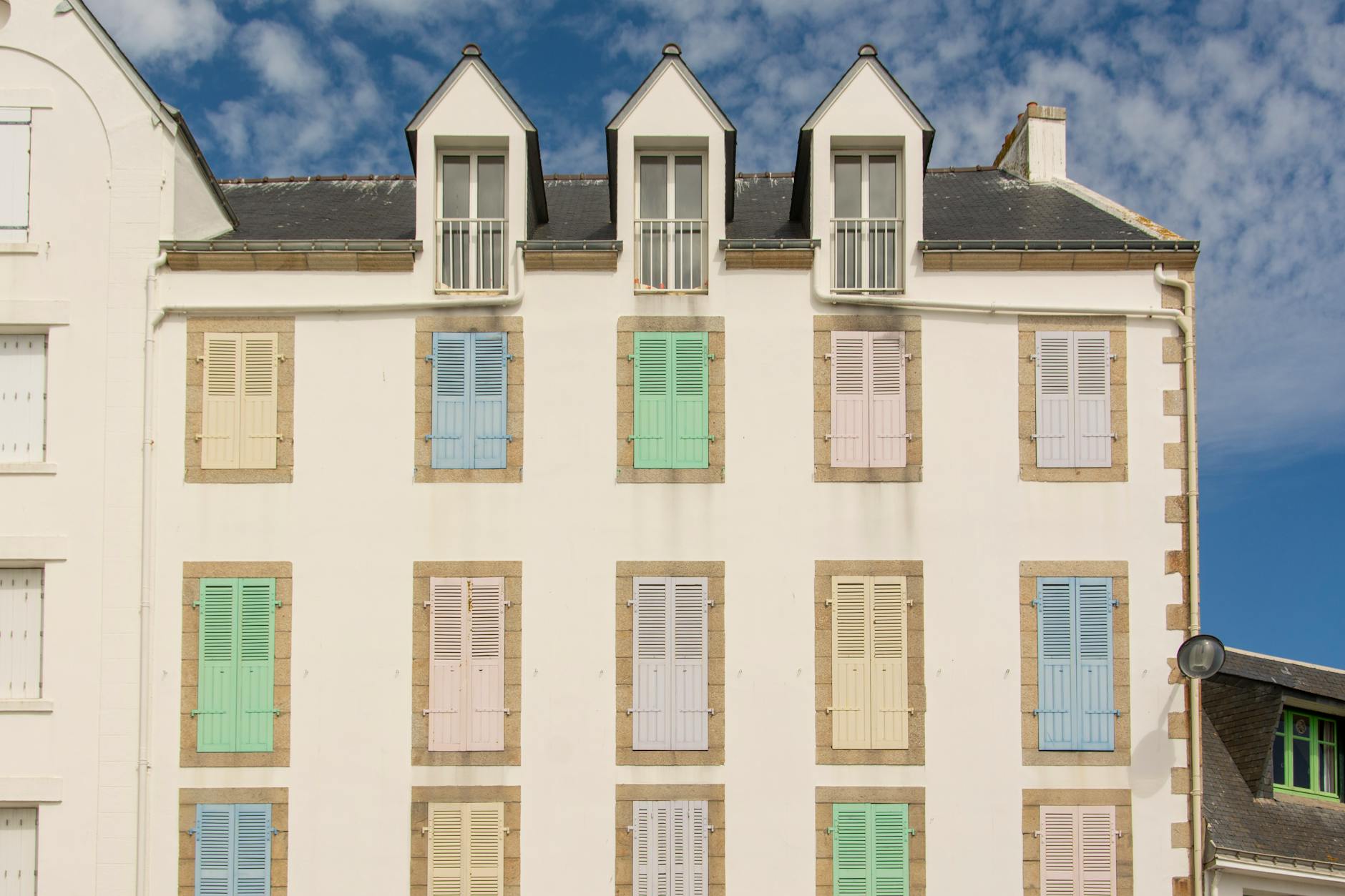
Wes Anderson has made nine live-action features, and the same cinematographer, Robert Yeoman, shot every one of them. That’s part of why the look holds together so precisely across decades: it isn’t a filter, it’s a set of camera and staging decisions repeated on purpose, square-on framing, a flat depth of field, a color palette pulled from the set and costumes rather than added afterward.
These 10 prompts translate that into a photo brief Google Gemini AI can actually use: exact framing, a specific color palette per scene, and a note on where the subject should look. The bonus prompt at the end skips the person entirely and goes after one of Anderson’s other signatures, the overhead flat-lay shot, for anyone building a still life instead of a portrait.
What Actually Reads as Anderson, Not Just “Symmetrical”
Centering a subject in the frame gets you halfway there. The rest of the look comes from a few other decisions working together.
What separates the look from a plain centered photo:
- A flat, front-on camera angle, square to the wall or subject, not a three-quarter turn
- A limited, deliberate color palette per scene, not “colorful” in general, one or two accent colors against a muted base
- Props and background details that look chosen and placed, not just whatever happened to be in the room
- A neutral or slightly wistful expression rather than a big smile, since the emotional tone stays understated even when the composition is bold
- Even, soft lighting with no hard shadows, closer to a stage set than a dramatic portrait
This restraint is what makes the style hold up in a family photo the same way it holds up in a still from The Grand Budapest Hotel, the composition carries the mood instead of the expression doing all the work.
Getting Your Source Photo Ready
A photo shot roughly straight-on, with the subject centered or close to it, gives Gemini the least work to do to hit the symmetry. A three-quarter angle or a candid, off-center shot can still work, but the AI has to invent more of the framing rather than refine what’s there.
A plain or simply patterned background helps more here than in most other styles, since Anderson’s look depends on a background that reads as deliberately dressed rather than incidental. Multiple subjects work especially well, Anderson’s films are full of ensemble casts arranged like a group portrait, so a family or group photo has real material to work with. That same logic carries over to our Gemini AI family photo prompts, which use a similar centered, group-arranged approach for a different visual style.
10 Wes Anderson Film Style AI Photo Prompts
Symmetrical Portraits
Prompt 1: The Tenenbaum Portrait. Subject using uploaded reference photo, dead-center medium shot, 50mm lens, camera square to the background wall. Wardrobe: vintage-cut clothing in muted rust, olive, or mustard tones. Background: patterned wallpaper, perfectly flat to the lens. Even, shadowless lighting. Slightly desaturated, warm color grade. Portrait Mode.
Prompt 2: The Hotel Concierge. Subject using uploaded reference photo, centered medium shot, 35mm lens, standing at full attention. Wardrobe: a formal uniform or tailored coat with a single accent color (burgundy or mustard). Background: an ornate lobby with geometric floor tiling, brass details, camera square to the space. Warm amber lighting, low contrast. Portrait Mode.
Prompt 3: The Train Traveler. Subject using uploaded reference photo, centered medium shot, 50mm lens, seated with a vintage suitcase visible in frame. Wardrobe: earth-toned travel clothing, one small accent accessory. Background: a train compartment or platform, straight-on perspective. Warm, saturated, slightly faded color grade. Portrait Mode.
Whimsical Family Tableaus
Prompt 4: The Family Gathering. Subject using uploaded reference photo, group arranged in a flat, centered row or grid, 35mm lens, camera square to the room. Wardrobe: coordinated vintage clothing in muted pastels across the group. Background: detailed wallpaper and period furniture, evenly lit. Soft, low-contrast color grade. Portrait Mode.
Prompt 5: The Camp Expedition. Subject using uploaded reference photo, centered shot, 35mm lens, standing at attention in front of a simple tent or forest backdrop. Wardrobe: matching vintage scout-style uniforms in olive and mustard. Background: flat, evenly lit forest or campsite, no depth blur. Muted green and brown color grade with a yellow accent. Portrait Mode.
Prompt 6: The Expedition Crew. Subject using uploaded reference photo, group centered on a flat plane, 35mm lens, camera square to a boat deck or dock. Wardrobe: matching red knit caps and navy uniforms. Background: weathered wood or maritime museum backdrop, symmetrical framing. Red and blue color grade with slightly desaturated skin tones. Portrait Mode.
Group scenes like these carry the style especially well, since Anderson’s ensembles work like a lineup rather than a candid moment. The same centered, coordinated-wardrobe logic shows up in our Brother Sister Gemini AI prompts, built for a different kind of group portrait.
Vintage Everyday Moments
Prompt 7: The Café Scene. Subject using uploaded reference photo, centered medium shot, 50mm lens, seated at a small café table facing camera. Wardrobe: simple, period-appropriate clothing in cream or mustard. Background: checkered floor, café signage, camera square to the table. Warm yellow and cream color grade. Portrait Mode.
Prompt 8: The Autumn Portrait. Subject using uploaded reference photo, centered medium shot, 50mm lens, standing against a flat rural backdrop. Wardrobe: tweed or corduroy in orange, brown, and mustard. Background: fall foliage arranged evenly, no depth blur. Rich orange and brown color grade. Portrait Mode.
Theatrical Interiors
Prompt 9: The Hotel Room. Subject using uploaded reference photo, centered medium shot, 35mm lens, positioned in the middle of an ornate room. Wardrobe: formal vintage clothing in pink or burgundy. Background: patterned wallpaper, antique furniture placed symmetrically around the frame. Rich pink and gold color grade. Portrait Mode.
Prompt 10: The Family Study. Subject using uploaded reference photo, centered medium shot, 35mm lens, standing in front of bookshelves and framed artwork arranged evenly. Wardrobe: vintage clothing in muted brown and cream. Background: a home library, camera square to the shelving. Muted pastel color grade with brown and cream accents. Portrait Mode.
Bonus Prompt: The Overhead Flat-Lay. Composition prompt, no subject required, direct overhead shot, 35mm lens, camera pointed straight down at a desk or open suitcase. Objects arranged in a precise grid, each item spaced evenly, no overlap. Even, shadowless top light. Muted, single-accent-color palette. Landscape orientation. Anderson uses this exact top-down composition constantly, a suitcase’s contents, a desk drawer, a map, and it’s one of his most recognizable shots that doesn’t involve a face at all.
Directing a Subject Who Isn’t an Actor
The hardest part of this style isn’t the background, it’s getting a real person to hold still and look slightly detached without looking bored or awkward.
- Ask for a neutral, slightly serious expression rather than “no smiling,” which tends to read as tense instead of composed
- Have the subject look just past the lens rather than directly into it, which reads as more natural in a formal pose
- Keep hands still and deliberate, resting rather than gesturing
- Take a few frames since the first attempt at “neutral” often looks stiff, and the right take usually comes a few shots in
One Style, Several Settings
A single Anderson-style photo reads as a novelty shot. A small set built around it reads as a deliberate visual project.
- One solo portrait and one group tableau, since the style reads differently at each scale
- At least one interior and one outdoor or travel scene for contrast
- The bonus flat-lay if any part of the set is meant for print or display rather than a straight portrait
A themed set built around travel specifically has its own considerations, covered in our travel photo Gemini AI prompts, which lean on a very different, looser composition than the square-on staging here.
The Two People Actually Behind This Look
The visual language these prompts are copying belongs to two specific people, not a generic “vintage aesthetic.” Wes Anderson, born in Houston in 1969, made his first feature, Bottle Rocket, in 1996, and has since built a body of work distinctive enough that critics can identify one of his frames without seeing the title card. The Grand Budapest Hotel alone won four Academy Awards for its production design, costumes, makeup, and score, the same technical categories these prompts are trying to approximate in a single photo.
The camera side of that look belongs to Robert Yeoman, the cinematographer on all nine of Anderson’s live-action features. Yeoman has said the first thing Anderson checks on set is whether the camera is square to the wall, dead square, which is the exact instruction built into every “centered, camera square to the background” line in the prompts above.
Frequently Asked Questions
Do I need special props or costumes for this style?
No. The color palette and framing do most of the work. A plain outfit in the right color family (mustard, rust, olive, muted pink) reads as “Anderson” far more than an actual vintage costume does.
Will this work with a photo that isn’t perfectly centered?
Yes, but the AI has to invent more of the symmetry rather than refine what’s already there. A roughly centered, front-facing source photo gives the most accurate result.
Can this style work for a solo portrait, or does it need a group?
Both work well. Anderson’s films use ensemble casts often, which is why the group prompts above lean into that, but several of his most recognizable shots are single characters, isolated and centered, exactly like prompts 1 through 3.
Is there a version of this that doesn’t need a photo of a person?
Yes, the bonus overhead flat-lay prompt is built specifically for that, a desk, a suitcase, or an arranged still life shot straight down, no subject required.
What resolution should I upload for the best result?
As high as you have available. The style depends on precise, evenly lit detail, an antique’s texture, a wallpaper pattern, a costume seam, and a low-resolution source photo loses that detail before the AI even gets to it.