

Structured Data is not just a technical upgrade; it’s the semantic bridge between your content and Google’s machine understanding. It enables search engines to contextualize, interpret, and represent your page in a more visually appealing and functional way within the Search Engine Results Page (SERP).
Definition: Structured data is machine-readable metadata added to a webpage that explicitly describes the meaning of its content using a standardized format, usually JSON-LD.
Structured data powers:
- Rich Results (star ratings, pricing, FAQ boxes)
- Knowledge Panels
- Zero-click answers
- Voice search compatibility
- Entity linking in the Knowledge Graph
Why Structured Data Is Essential for Semantic SEO
Semantic SEO requires entity clarity.
Google doesn’t rank strings; it ranks things (entities). Structured data explicitly defines these things:
→ Products, Recipes, Events, Courses, Organizations, People, Reviews.
Google’s NLP systems rely on signals from structured data.
It accelerates Google’s:
- Crawling → Indexing → Understanding → Ranking pipeline
Structured data enhances:
- CTR (Click-Through Rate)
- SERP real estate
- Brand trust
Without structured data, your page is a wall of text.
With it, your content becomes machine-indexable, user-scannable, and visually enhanced.
ALSO READ …
- What is entity and its types
- What is entity attribute value
- What is attribute and its types
- What is entity-based content
- How to help Google find entities on your content
Types of Structured Data Formats
| Format | Description | Preferred By |
|---|---|---|
| JSON-LD | JavaScript-based, injected into <script> | Preferred by Google |
| Microdata | Inline HTML annotation | Legacy but still valid |
| RDFa | Resource Description Framework in HTML | Used for linked data |
| Open Graph | For Facebook sharing previews | Social media platforms |
Best practice: Use JSON-LD for all major schema types.
Common Schema Types for SEO
| Use Case | Schema Type | Output in SERP |
|---|---|---|
| Ecommerce | Product | Rating, price, stock availability |
| Recipes | Recipe | Cooking time, ingredients, images |
| Blog Articles | Article, FAQPage | Featured snippet, FAQs, author |
| Local Business | LocalBusiness | Address, phone, business hours |
| Reviews | Review, AggregateRating | Stars, review counts |
| Events | Event | Date, time, location |
| Courses | Course, EducationalOrganization | Course details, duration |
Structured Data in Action: Real Use Cases
Without Structured Data:
A regular product page might look like this in SERPs:
text
Product Name
Buy the best product online today.
example.com/product
With Product Schema Structure Data
{
  "@context": "https://schema.org/",
  "@type": "Product",
  "name": "CBD Oil for Cats",
  "image": "https://example.com/product.jpg",
  "description": "Premium CBD oil formulated for cats.",
  "brand": {
    "@type": "Brand",
    "name": "PawWellness"
  },
  "aggregateRating": {
    "@type": "AggregateRating",
    "ratingValue": "4.3",
    "reviewCount": "208"
  },
  "offers": {
    "@type": "Offer",
    "priceCurrency": "USD",
    "price": "29.99",
    "availability": "https://schema.org/InStock"
  }
}
Result:
- ⭐ Stars, price, availability
- Boosts CTR by up to 30%+
- Enables zero-click summaries via voice assistants and SERP cards
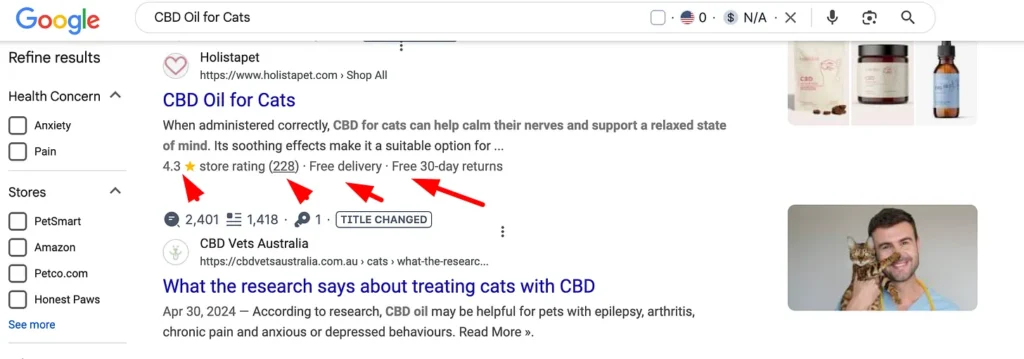
With vs. Without Structured Data
| Aspect | Without Structured Data | With Structured Data |
|---|---|---|
| SERP Display | Plain text + meta description | Enhanced visuals (stars, prices) |
| Machine Readability | Implicit via HTML + NLP | Explicit and structured |
| CTR Impact | Low engagement | Higher click-through |
| Voice Search | Hard to extract | Easy JSON context |
| Featured Snippet | Less chance to trigger | Higher eligibility for snippets |
USE THIS TOOL »> https://validator.schema.org/

Structured Data Optimization Checklist
- Use JSON-LD format
- Place
<script type="application/ld+json">in<head>or body
- Place
- Map schema types to content types
- Use
FAQPagefor FAQ sections,Reviewfor testimonial pages
- Use
- Implement Schema on High-Traffic Pages
- Products, articles, category pages
- Validate with Tools
- Google Rich Results Test
- Schema Markup Validator
- Avoid Common Errors
- Invisible content
- Keyword stuffing in structured fields
- Fake reviews or manipulated stars
- Wrong schema types (e.g.,
JobPostingfor a blog)
Advanced Benefits for Semantic SEO
- Structured data feeds Google’s Knowledge Graph
- It helps establish entity relationships and topic hierarchies
- Enables contextual clustering for:
- FAQ answers
- How-to guides
- Brand mentions
- Supports voice search and Google Assistant responses
- Enhances mobile-first indexing & snippet rendering
How Structured Data Impacts Local & Mobile SEO
- Local SEO: Use
LocalBusinessto show NAP (Name, Address, Phone) + Opening Hours - Mobile Search: Structured data renders carousel-style snippets and featured positions
- Voice Search: Uses schema clarity to extract concise answers for “What”, “When”, “How” queries
Best Practices
| Practice | Description |
|---|---|
| Keep schema relevant to content | Don’t use Recipe on a product page |
| Keep it visible & consistent | Don’t pass invisible info to Google |
| Keep it dynamic if possible | Update reviews, ratings, prices regularly |
| Keep it specific & rich | Don’t use placeholders, pass full entity info |
| Audit with Search Console | Monitor structured data issues under Enhancements |
Common Mistakes to Avoid
- Mixing schema types (e.g., product + job posting)
- Inflating fake review counts
- Skipping required fields (e.g., no
name, nooffers) - Using non-visible text in schema
- Applying schema site-wide without context
Final Thoughts: Structured Data is the Language of Semantic SEO
“If content is the message, structured data is the envelope that tells Google where to deliver it.”
Structured data isn’t optional; it’s fundamental. Especially in the age of:
- Voice Search
- Featured Snippets
- Zero-click results
- AI-generated SERPs (Gemini, SGE, etc.)
Coming Up Next: Part 14 – What Are Entities and Types? How They Power Semantic SEO
Disclaimer: This [embedded] video is recorded in Bengali Language. You can watch with auto-generated English Subtitle (CC) by YouTube. It may have some errors in words and spelling. We are not accountable for it.