
TL;DR: Botpress and Chatbase offer the most genuinely usable free AI tiers, while Tidio and HubSpot give small businesses a free rule-based chatbot builder without true AI included until you upgrade.
- Botpress provides 500 free AI messages a month with full access to its visual builder, open-source flexibility, and support for multiple LLM providers.
- Chatbase is one of the only tools on this list offering real AI conversation on its free tier, though the 50-message monthly cap only suits very low-traffic sites.
- Tawk.to remains the strongest free option for live chat specifically, with unlimited conversations at no cost, though it does not include native AI and works better paired with a separate AI layer.
Free Doesn’t Always Mean Free AI
The most important thing to understand before picking a chatbot builder is that “free” splits into two very different categories. Some tools offer genuinely free AI conversation, where the bot understands natural language and pulls answers from your content. Others offer free live chat or free rule-based bots, decision-tree style flows with no real language understanding, and gate actual AI behind a paid plan. Confusing the two is the single most common reason a small business signs up for a “free chatbot” and still ends up needing a credit card. If your website itself needs attention before adding a chatbot to it, our Hostinger hosting review covers the infrastructure side worth checking first.
This roundup covers 9 tools, being explicit about which free tiers include real AI and which are rule-based only, so you know exactly what you are getting before installing anything.
1. Botpress
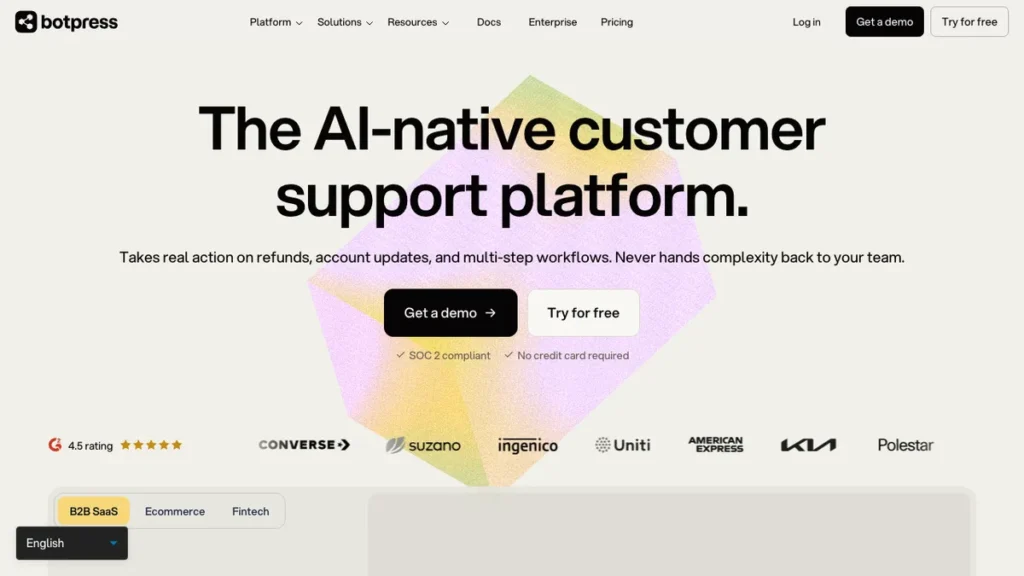
Botpress offers what is widely considered the best free no-code AI chatbot builder available, with 500 messages a month and full access to the visual builder rather than a stripped-down version. It is open source, supports multiple LLM providers, and gives technically inclined users far more flexibility than most no-code competitors.
The differentiator is that the free tier is not artificially limited in features, only in message volume. Where several “free” chatbot builders restrict which tools you can access until you pay, Botpress gives full builder access from the start, which matters for anyone who wants to actually test the platform’s real capability before committing budget. Our best AI coding tools review covers related developer-friendly AI platforms worth exploring if you want to customize a bot’s logic beyond what a visual builder alone offers.
Botpress fits small businesses comfortable with some technical setup who want genuine AI conversation and full feature access on a free tier before scaling up. It’s available at botpress.com.
2. Chatbase
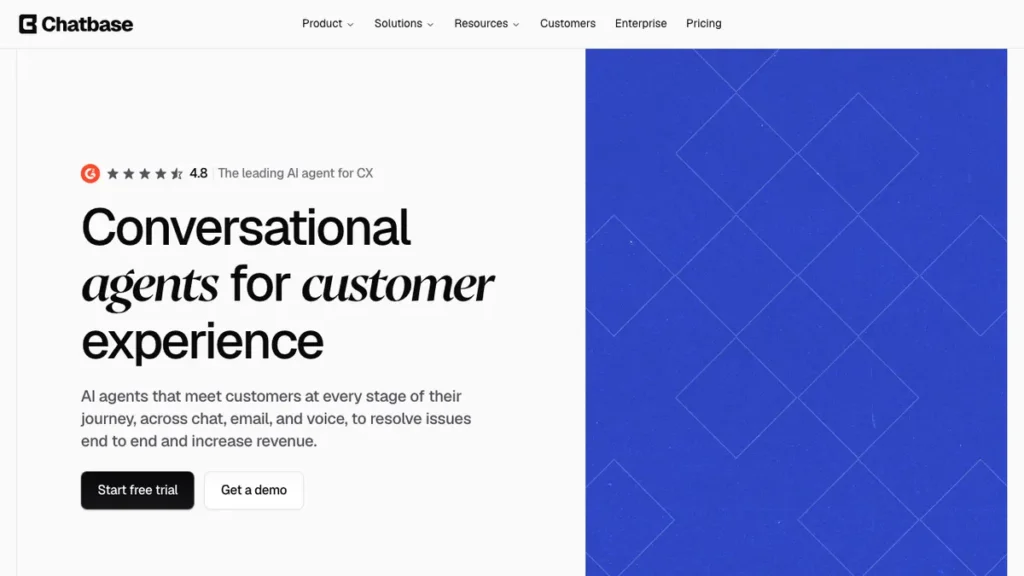
Chatbase is one of the only tools in this category offering real AI conversation, not a rule-based flow, on a genuinely free tier, capped at 50 messages a month. It trains a chatbot on your own uploaded content and website pages, so answers stay grounded in your actual business information.
The differentiator is that the free tier is real AI, just volume-limited rather than feature-limited. A site getting under 50 chatbot conversations a month can run entirely on the free plan; anything busier will hit the ceiling quickly and need to upgrade.
Chatbase fits very low-traffic sites that want to test genuine AI-powered answers grounded in their own content before committing to a paid plan.
3. Tidio
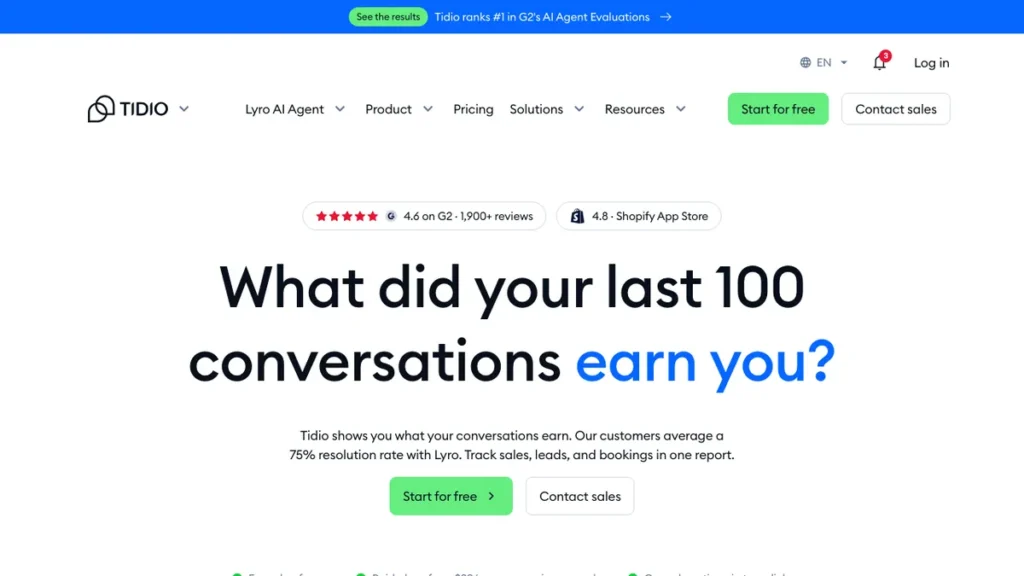
Tidio’s free plan includes 50 live chat conversations a month and full access to its visual chatbot builder for creating rule-based automation, like greeting messages and basic lead capture, without touching any code. Its AI assistant, Lyro, can pull answers from your FAQ and support docs, but Lyro sits on a separate, paid tier priced per conversation.
The differentiator worth knowing upfront is the gap between what’s free and what’s AI. Tidio’s free builder only supports rule-based, decision-tree flows, not natural language understanding; the moment you want AI actually handling conversations, you are looking at a separate monthly cost on top of the free plan, and that per-conversation AI pricing can add up faster than a flat-rate alternative.
Tidio fits small ecommerce stores that want a genuinely useful free live chat and basic automation setup, with the understanding that real AI conversation is a separate paid add-on.
4. Tawk.to
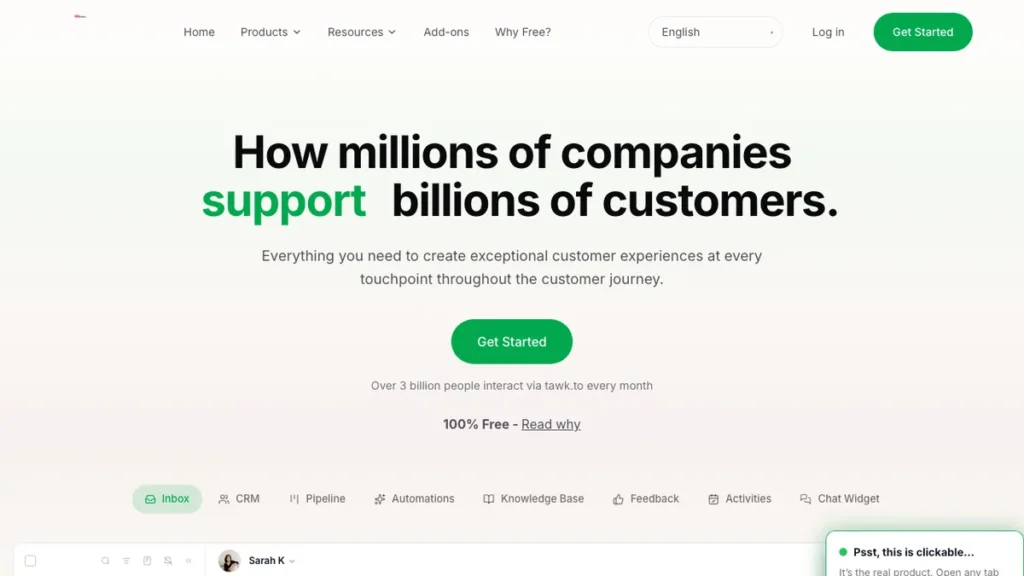
Tawk.to offers unlimited free live chat conversations with no cap and no native AI chatbot included. It is widely regarded as one of the most generous free live chat tools available, functioning as a solid foundation for human-staffed support rather than an automated AI layer.
The differentiator is that it does the one thing, live chat, extremely well and for free with no volume limit, rather than offering a watered-down AI feature on top. Businesses that want AI on top of Tawk.to typically pair it with a separate AI tool rather than expecting Tawk.to itself to provide natural language understanding.
Tawk.to fits small businesses that want unlimited free live chat handled by a real person, and are willing to add a separate AI tool later if automated conversation becomes necessary. It’s free to start at tawk.to.
5. HubSpot
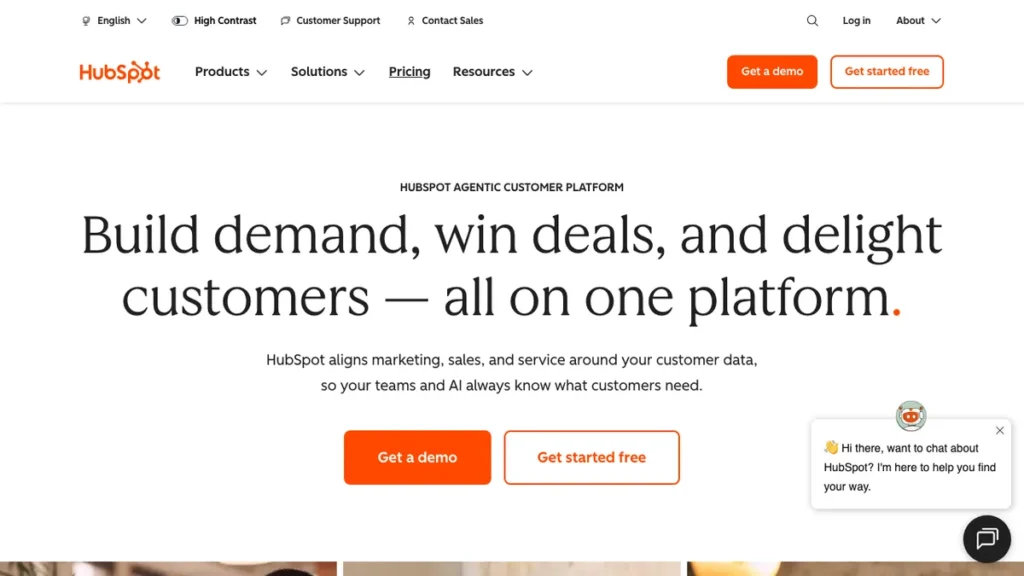
HubSpot’s free chatbot builder creates rule-based bots to qualify leads, answer FAQs, book meetings, or guide shoppers through basic support, included inside HubSpot’s free CRM plan with no time limit. Setup is quick and it handles routine, scripted questions well, routing anything more complex to a human.
The differentiator is that it lives inside a free CRM a small business may already be using for contact and deal management. Rather than adding a separate standalone chatbot tool, businesses already on HubSpot’s free CRM tier get a rule-based bot bundled in at no additional cost, though genuine AI-powered conversation requires upgrading to a paid tier.
HubSpot fits small businesses already using or considering HubSpot’s free CRM who want a basic bot for lead qualification without adding a separate tool.
6. ManyChat
ManyChat provides a strong free chatbot builder for social channels specifically, covering Instagram, Facebook Messenger, and WhatsApp from one platform with up to 1,000 contacts on the free tier. It focuses on social commerce and customer engagement rather than website-embedded chat.
The differentiator is native, unified social channel coverage. Where most chatbot builders focus primarily on a website widget, ManyChat is built around the channels small businesses selling through social media actually use, with WhatsApp Business API integration included alongside Instagram and Messenger. If social commerce is a growing part of your customer engagement strategy, our social media marketing roadmap is a useful companion for the broader channel strategy around it.
ManyChat fits small businesses selling primarily through Instagram, Facebook, or WhatsApp who need a chatbot native to those channels rather than a website-only tool. Details are at manychat.com.
7. Landbot
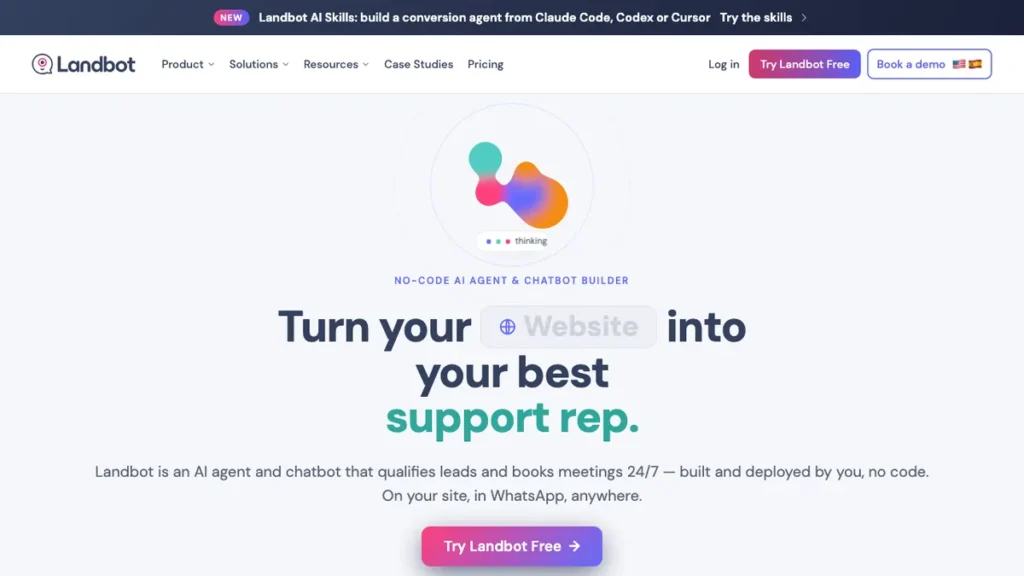
Landbot’s free plan includes a single operator seat and unlimited chats, with a drag-and-drop visual builder for creating guided conversational flows without code. It is well suited to scripted journeys, like walking a shopper through product recommendations step by step.
The differentiator is the visual flow-building experience itself. Landbot’s drag-and-drop editor makes designing a guided, branching conversation genuinely intuitive, which suits businesses that want a structured, scripted journey more than open-ended AI conversation.
Landbot fits solo operators and small teams who want a guided, visually designed chat flow for lead generation or product recommendations rather than free-form AI conversation.
8. Chatfuel
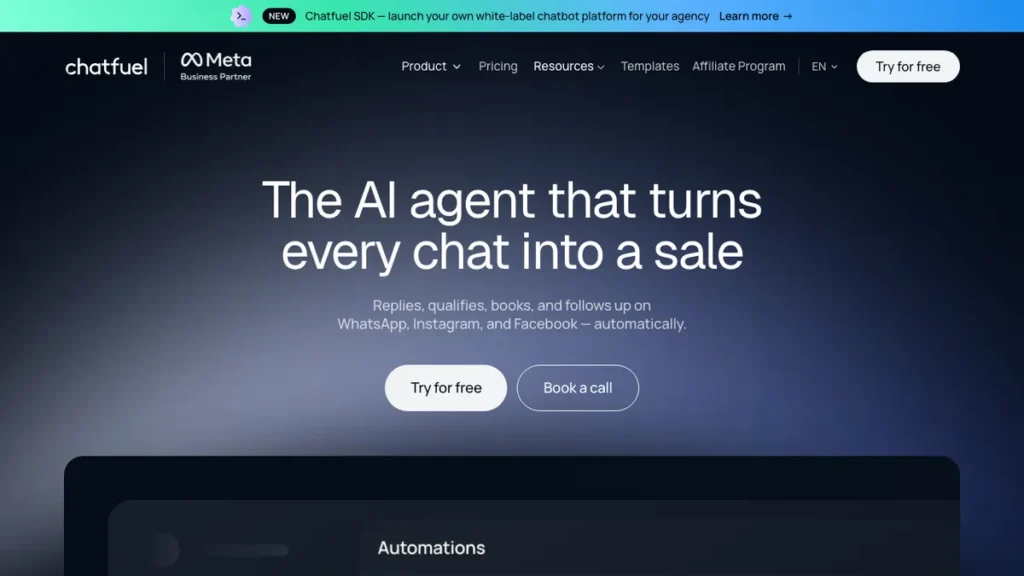
Chatfuel’s free chatbot tier is built specifically for Meta platforms, letting businesses build keyword-triggered bots and broadcasts covering roughly 50 conversations a month. It is well suited to small pages, influencers, and businesses whose customer engagement happens primarily through Instagram and Facebook.
The differentiator is that it specializes narrowly in Meta’s ecosystem rather than trying to cover every channel. For a business whose entire customer conversation already happens on Instagram or Facebook, a tool built specifically around that ecosystem tends to integrate more smoothly than a general-purpose builder retrofitted for social channels.
Chatfuel fits small pages and businesses with light conversation volume whose customers primarily reach out through Instagram or Facebook Messenger.
9. Crisp
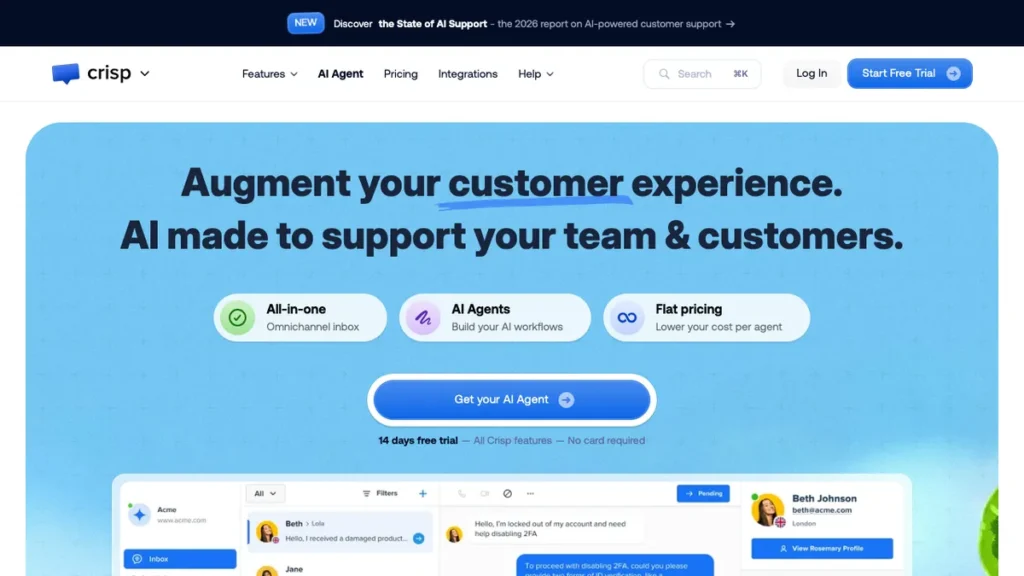
Crisp offers a free live chat plan for a single operator, hosted in the EU, with unlimited chats and an easy-to-customize widget on the free tier. Advanced AI features generally require a paid add-on, similar to the pattern seen across several other tools on this list.
The differentiator is EU hosting specifically, which matters for small businesses with customers or compliance requirements tied to European data residency. Its free tier also includes visitor tracking and reporting that some competitors reserve for paid plans.
Crisp fits small businesses, particularly those serving European customers, that want a free live chat tool with data hosted in the EU and solid reporting included at no cost. It’s available at crisp.chat.
Reading the Fine Print on Free Chatbot Tiers
Every “free” tool on this list has a real limit somewhere, whether that’s message volume, feature access, or whether AI is even included at all. Reading past the headline “free” claim to understand exactly what limit you’ll actually hit is worth five minutes before you build anything.
What to Check Before Committing to a Free Tier
Is AI actually included, or is it a paid add-on?: Several tools on this list offer free live chat or rule-based bots but charge separately once you want real AI conversation.
What’s the actual message or conversation cap?: A 50-message monthly limit works for a very low-traffic site and nowhere else, so match the cap to your real volume before committing.
Does the free tier include the channels you actually need?: A tool with a generous website free tier may charge extra the moment you want WhatsApp or Instagram coverage.
What happens when you hit the limit?: Some tools pause the bot entirely at the cap, others charge per additional conversation, which changes how predictable your costs are as you scale.
For a broader view of how a chatbot fits into your overall customer acquisition strategy, our performance marketing roadmap is worth reading alongside this list.
How to Pick and Launch Your First Free Chatbot
Step 1: Decide if you need AI or just live chat Be honest about whether your actual need is automated natural language conversation or simply routing chats to a human, since the right free tool differs significantly between the two.
Step 2: Estimate your real monthly conversation volume Check your current traffic or support ticket volume before picking a tool, so you know whether a 50-message free cap is realistic or a non-starter.
Step 3: Match the tool to your primary channel Choose a website-focused tool like Chatbase or Tidio for on-site chat, or a social-first tool like ManyChat or Chatfuel if most conversations happen on Instagram or WhatsApp.
Step 4: Build one simple flow before adding complexity Start with a single greeting and FAQ flow rather than trying to script every possible customer question on day one.
Step 5: Test the handoff to a human Confirm that conversations the bot cannot handle route cleanly to a real person, since a bot that dead-ends a frustrated customer causes more harm than having no bot at all.
Step 6: Track when you actually hit the free limit Monitor your usage against the free tier’s cap monthly, so an upgrade decision is based on real data rather than guessing when you’ll outgrow it.
Conclusion
The right free AI chatbot builder depends entirely on what “free” needs to include for your business. Botpress and Chatbase offer the most genuine free AI conversation, Tidio and HubSpot give a solid free rule-based builder with AI available as a paid upgrade, and Tawk.to and Crisp remain the strongest picks if live chat alone, without AI, is all you actually need right now.
Read past the headline “free” claim, match the tool to your real channel and volume, and start with one simple flow rather than trying to automate everything on day one. For a broader view of where a chatbot fits into your overall marketing and customer acquisition plan, our digital marketing roadmap is a useful next read.
Frequently Asked Questions
Which chatbot builder has the most generous free AI tier?
Botpress offers 500 free AI messages a month with full access to its visual builder, rather than a stripped-down version, and it’s open source with support for multiple LLM providers.
What’s the difference between a free live chat tool and a free AI chatbot?
Free live chat, like Tawk.to’s unlimited plan, routes conversations to a human with no natural language understanding, while free AI, like Chatbase capped at 50 messages a month, actually understands and responds to conversation.
Which tool is best for businesses selling through Instagram or WhatsApp?
ManyChat covers Instagram, Facebook Messenger, and WhatsApp from one platform, with up to 1,000 contacts on its free tier.
Is Tidio’s AI assistant actually free?
No. Tidio’s free plan includes 50 live chat conversations and a rule-based flow builder, but its AI assistant, Lyro, sits on a separate, paid tier priced per conversation.
Which tool matters for businesses with EU data compliance needs?
Crisp is hosted in the EU, which matters for small businesses with customers or compliance requirements tied to European data residency.
Which tool is best if I already use HubSpot’s free CRM?
HubSpot’s free chatbot builder creates rule-based bots for lead qualification and FAQs bundled inside the free CRM plan at no additional cost, though real AI conversation requires upgrading.
You May Also Like
Hostinger Hosting Review: a look at hosting infrastructure worth pairing with a growing website.
Best AI Coding Tools Review: a look at AI-assisted development tools for customizing bot logic further.
Social Media Marketing Roadmap: a step-by-step guide to building a consistent presence across channels.