
TL;DR: ActiveCampaign and Klaviyo lead for teams that need advanced, behavior-based automation, while Brevo and Mailchimp fit budget-conscious teams that want AI features layered onto a familiar platform.
- ActiveCampaign combines advanced workflow automation with an optional CRM add-on, making it a strong pick for teams that want sales and marketing automation running from one system.
- Klaviyo’s AI features are built specifically around ecommerce behavior, powering the predictive segmentation that drives a meaningful share of total store revenue for Shopify merchants.
- Brevo bundles AI subject line generation, predictive send-time optimization, and multichannel coverage across email, SMS, and WhatsApp into one budget-friendly platform.
How AI Changed Email Marketing Automation in 2026
The AI email marketing landscape in 2026 splits into three distinct tiers. Platform AI, built into tools like Mailchimp, ActiveCampaign, and Klaviyo, adds intelligence to traditional email marketing through better subject lines, smarter send times, and behavior-based triggers. Specialist AI tools excel at one specific dimension, like copywriting quality or deliverability, while a newer category of agent AI operates across an entire workflow, researching prospects and drafting personalized emails before a human approves the send.
This roundup covers 9 tools across those tiers, chosen for genuine AI depth rather than a subject line generator bolted onto an otherwise unchanged platform. If email is one channel in a broader growth plan, our digital marketing roadmap covers how it fits alongside other channels.
1. ActiveCampaign
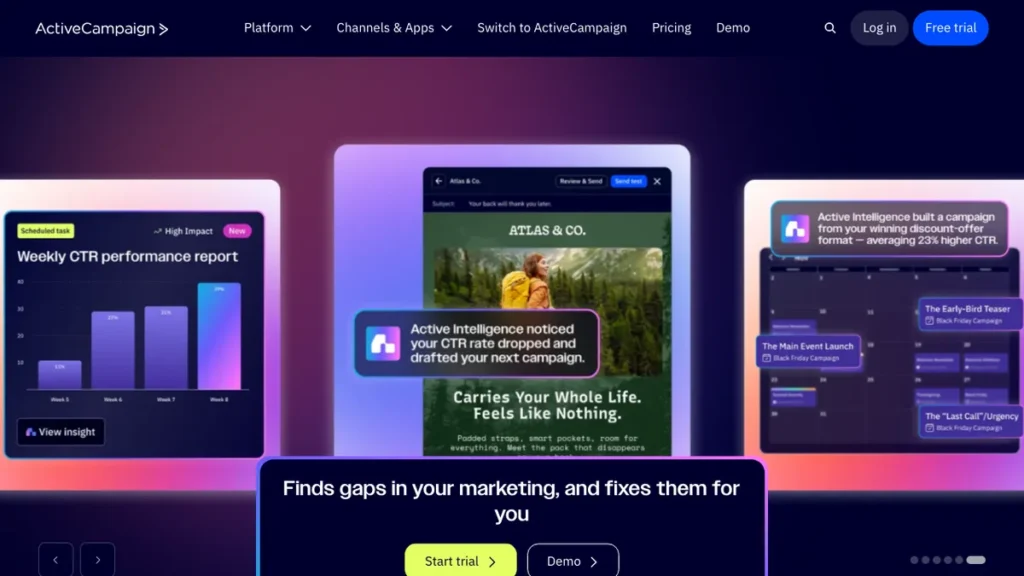
ActiveCampaign offers advanced workflow automation built around triggered campaigns, conditional logic, and an optional CRM add-on that lets marketing and sales automations run from the same system. Teams have used it across large sends and multiple portfolio companies specifically for its automation depth compared to simpler platforms.
The differentiator is automation complexity ceiling. Where entry-level plans on competing platforms cap automation actions fairly low, ActiveCampaign is built for teams running genuinely complex, multi-branch workflows, though the tool itself takes real time to learn and the entry-level Starter plan limits automations to a handful of actions.
ActiveCampaign fits larger businesses with the time and resources to build advanced, multi-step automations across marketing and sales in one connected system. Current plans are listed at activecampaign.com.
2. Klaviyo
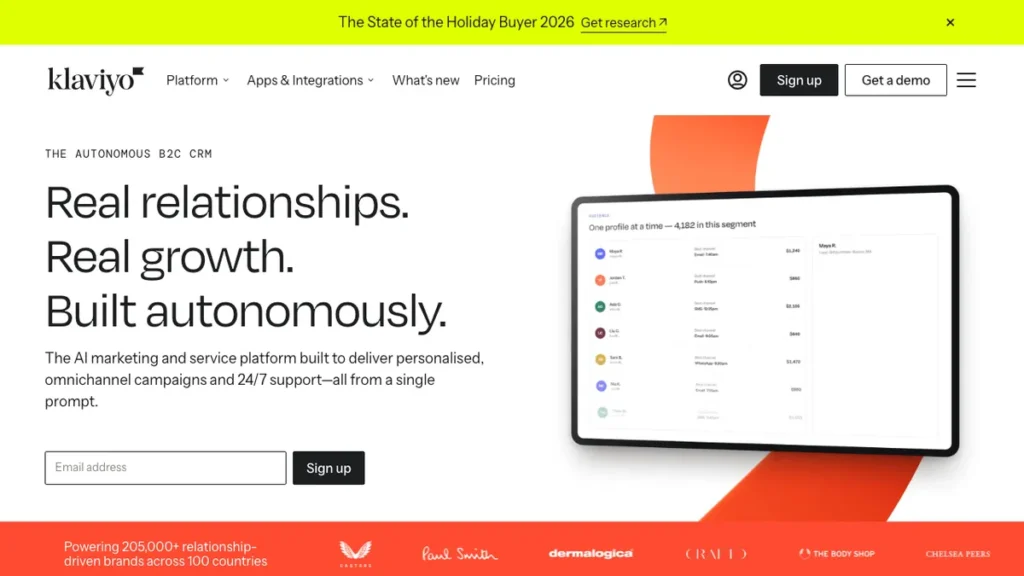
Klaviyo’s AI features are purpose-built around ecommerce behavior, powering predictive segmentation and behavior-based automation that ties directly into a store’s purchase history rather than generic list activity. It is widely regarded as the AI-driven standard for ecommerce email specifically, rather than a general-purpose platform adapted for online stores.
The differentiator is depth on ecommerce-specific triggers. A cart abandonment flow, a post-purchase sequence, or a win-back campaign built in Klaviyo draws on actual order data, which produces materially better targeting than a platform treating every subscriber the same regardless of purchase behavior.
Klaviyo fits ecommerce brands where email needs to be tightly integrated with order and purchase data rather than running as a separate, disconnected channel.
3. Brevo
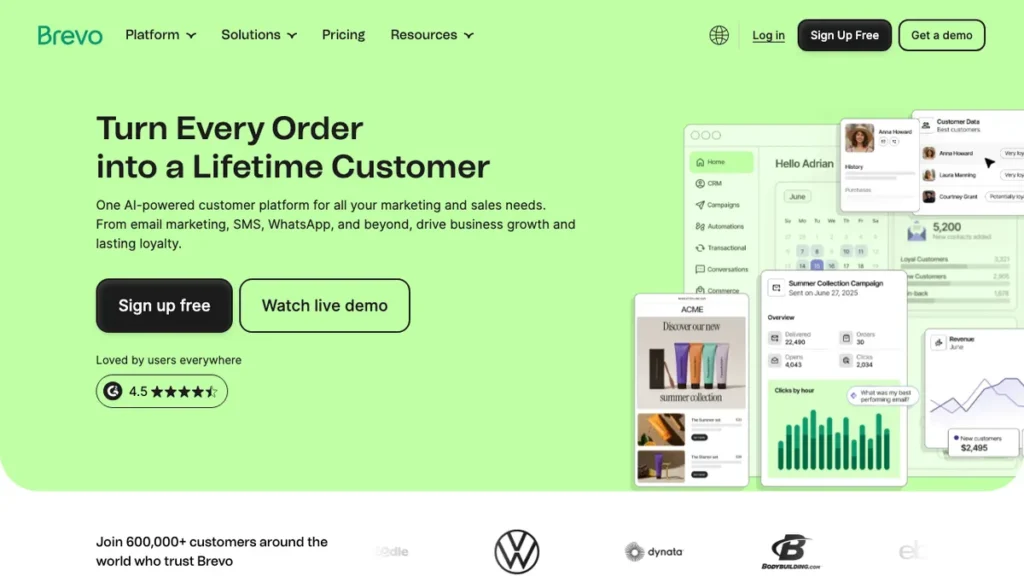
Brevo bundles an AI subject line analyzer and generator, predictive send-time optimization, and a workflow automation builder with condition logic into one platform, alongside built-in CRM and SMS or WhatsApp tools. For teams with large contact lists and moderate send frequency, its pricing structure tends to work out meaningfully cheaper than competitors charging by list size alone.
The differentiator is cost-efficiency at scale for straightforward automation needs. Brevo’s AI features cover the fundamentals well, subject lines and send timing, but its automation logic and personalization depth show real limits once a program needs complex, branching flow logic.
Brevo fits founders and agencies with large contact lists and moderate send volume who want cost-efficient, multichannel coverage without complex automation requirements.
4. Mailchimp
Mailchimp’s strongest argument in 2026 is its integration ecosystem, connecting with more than 800 third-party tools, alongside AI features covering subject line optimization and send-time prediction. Its familiarity and broad compatibility make it a low-friction choice for teams already running several other marketing tools.
The differentiator is ecosystem breadth rather than automation depth. Mailchimp’s AI features are solid but not the most advanced on this list; its real advantage is how easily it plugs into whatever other tools a marketing stack already includes.
Mailchimp fits teams that prioritize integration compatibility with an existing tool stack over having the single most advanced automation engine available.
5. Omnisend
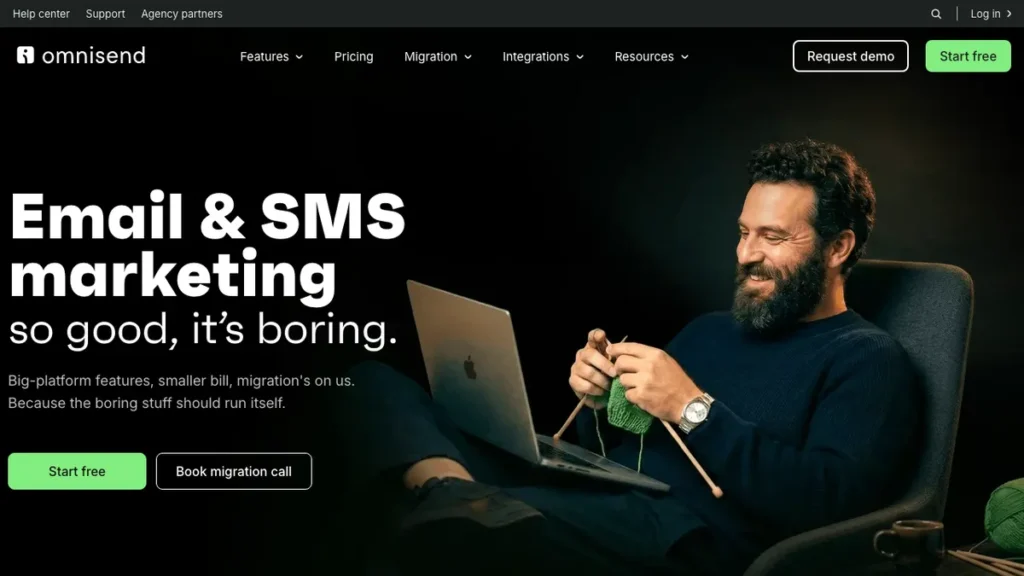
Omnisend focuses specifically on multichannel ecommerce automation, coordinating email, SMS, and push notifications from unified customer data rather than treating each channel as a separate campaign. Its automation workflows are built around common ecommerce triggers like abandoned cart and browse abandonment out of the box.
The differentiator is that multichannel coordination is the default rather than an add-on. Where some platforms treat SMS as a bolted-on extra, Omnisend builds automation flows that span channels from the start, which matters for stores running coordinated email and SMS sequences rather than disconnected campaigns.
Omnisend fits ecommerce brands that want email and SMS automation working together from one platform rather than managing two separate tools. Details are available at omnisend.com.
6. GetResponse
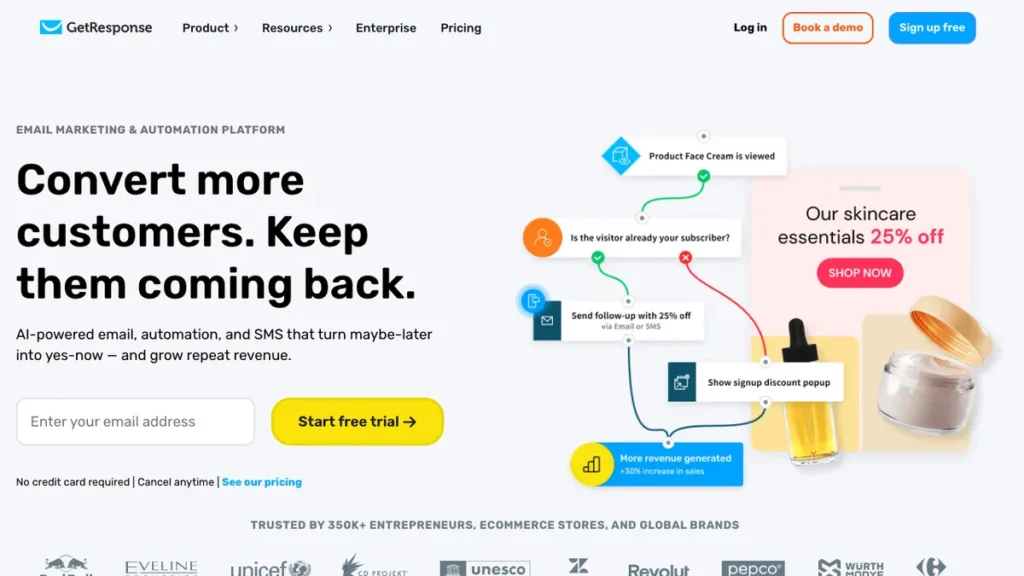
GetResponse offers fully featured marketing automation with particular strength in list management, including triggered campaigns, segmentation, tagging, and automated data updates. It also bundles webinar hosting alongside its core email automation, which is a differentiator most pure email platforms do not offer.
The differentiator is the webinar integration sitting alongside email automation. For businesses running webinars as part of their funnel, having registration, reminder, and follow-up sequences built into the same platform as the webinar hosting itself removes a genuine integration headache.
GetResponse fits businesses running webinars or events as part of their marketing funnel who want that workflow integrated directly with email automation.
7. Encharge
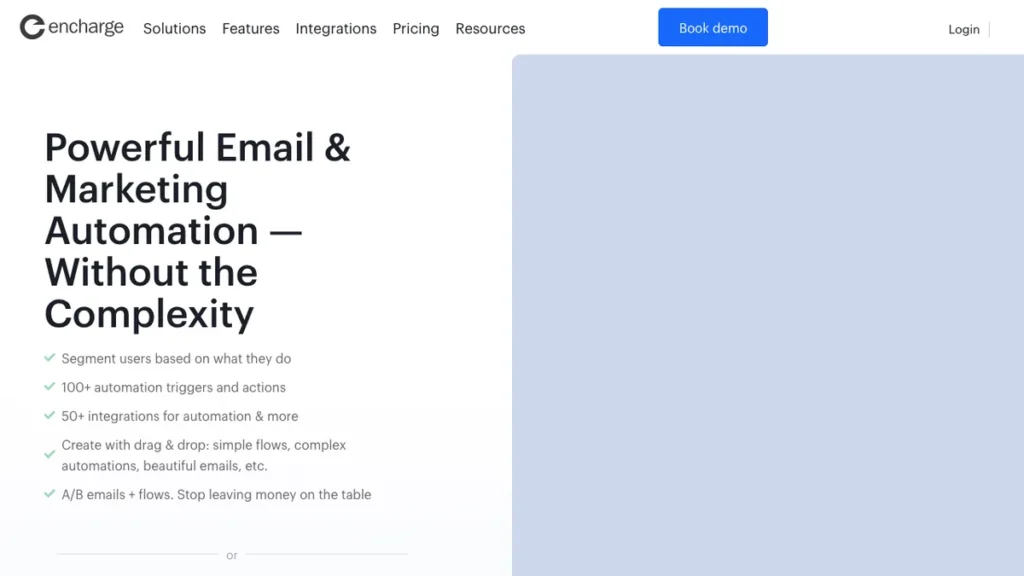
Encharge is built specifically for SaaS companies, offering behavior-based triggers and predictive sending tied to actual product usage data rather than generic email engagement. It ranks consistently high in AI email marketing comparisons specifically for how deeply its automation ties into product behavior.
The differentiator is product-usage-driven automation. Where most platforms trigger on email opens or clicks, Encharge can trigger a sequence based on what a user actually did inside your product, which produces far more relevant lifecycle emails for a software business than generic engagement-based triggers.
Encharge fits SaaS companies that want onboarding and lifecycle email sequences triggered by real product usage rather than surface-level email engagement metrics. Plans are listed at encharge.io.
8. Hoppy Copy
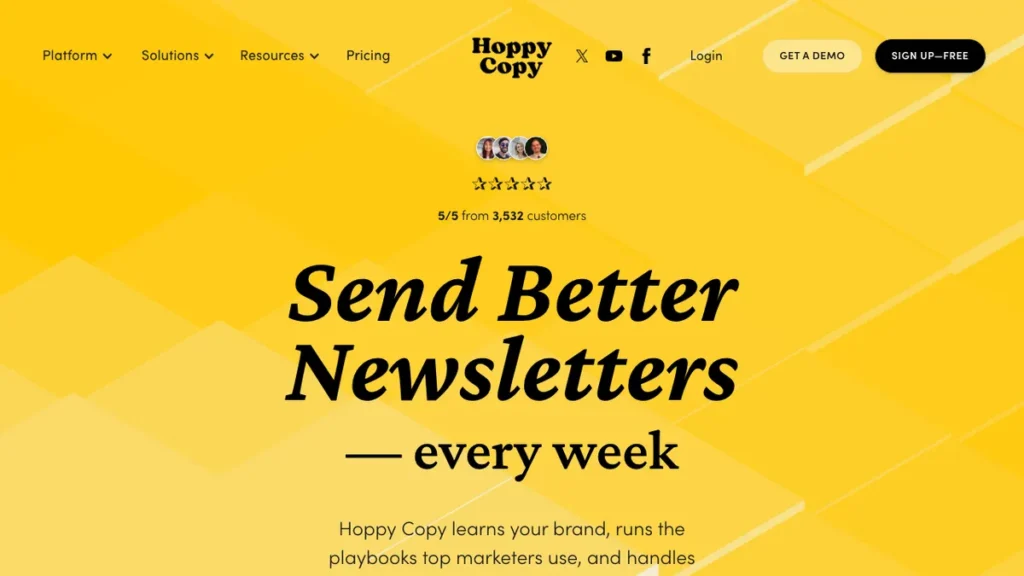
Hoppy Copy is an AI-powered platform focused specifically on writing email campaigns, sequences, and newsletters, using models trained on high-converting email copy patterns rather than general-purpose writing. A marketer describes what the email needs to accomplish and gets a structured draft built around proven email frameworks.
The differentiator is that it specializes narrowly in email copy rather than trying to also handle sending, automation, or list management. That focus tends to produce stronger email-specific copy than a general writing assistant not trained on what actually converts in an inbox. Our Agility Writer review covers a comparable specialist writing tool worth comparing if your copy needs extend beyond email into longer-form content.
Hoppy Copy fits marketers who already have a sending platform they like and specifically need stronger, faster email copy rather than a full new automation system. It’s available at hoppycopy.co.
9. Sai
Sai represents a newer category of agent AI, sitting on a marketer’s computer and orchestrating email marketing across every connected app rather than functioning as a standalone email platform itself. It researches prospects using LinkedIn and company data, drafts personalized emails referencing specific, real details, and connects to a CRM and calendar, all while requiring human approval before anything actually sends.
The differentiator is the approval-based safety model paired with cross-app orchestration. As AI generates more email content directly, the risk of an off-brand or inappropriate message going out increases; Sai’s requirement that every email gets human sign-off before sending addresses that risk directly, rather than sending autonomously like some cold outreach tools. This kind of cross-app orchestration is the same idea behind AI agent task automation more broadly, where an agent coordinates several connected tools rather than living inside just one.
Sai fits marketers who want AI handling prospect research and email drafting across multiple connected tools, while keeping a human reviewing every message before it sends.
Matching Automation Depth to Your Actual List
The tools above range from straightforward AI features layered on a familiar platform to fully agentic systems orchestrating research and drafting across your entire stack. Picking a tool with more automation depth than your program actually needs adds complexity without adding results, while picking one with too little depth means outgrowing it within a few months.
How to Match a Tool to Your Actual Needs
Straightforward automation needs: A platform like Brevo or Mailchimp covers subject lines, send timing, and basic triggered flows well without unnecessary complexity.
Complex, branching workflows: ActiveCampaign or GetResponse fit programs that need multi-step, conditional logic across marketing and sales.
Ecommerce-specific behavior: Klaviyo and Omnisend are purpose-built around purchase data and cart behavior rather than generic engagement.
Product-usage-driven lifecycle emails: Encharge fits SaaS companies whose best trigger data lives inside the product itself, not the inbox.
For a broader view of how email automation should tie into your overall growth strategy, our performance marketing roadmap is worth reading alongside this comparison.
How to Roll Out AI Email Automation Without Breaking Deliverability
Step 1: Audit your current list health first Check bounce rates and engagement on your existing list before adding AI-driven send frequency increases, since automation amplifies an unhealthy list’s problems just as fast as a healthy one’s wins.
Step 2: Start with one automated flow, not a full rebuild Launch a single automated sequence, like a welcome series or cart abandonment flow, before rebuilding your entire email program around AI at once.
Step 3: Review AI-generated subject lines before trusting them fully Treat AI subject line suggestions as a starting point rather than a final answer, since tone and brand fit still need a human check.
Step 4: Watch deliverability metrics closely during rollout Monitor open rates and spam complaints closely in the first few weeks of any new automation, since a flawed trigger condition can generate unwanted volume quickly.
Step 5: Layer in predictive send-time features gradually Test predictive send-time optimization on one segment before applying it list-wide, so you can confirm it is actually improving results for your specific audience.
Step 6: Reassess automation logic every quarter Revisit your automated flows every few months, since customer behavior and product offerings change, and an automation built a year ago may no longer reflect how customers actually move through your funnel.
Conclusion
The right AI email automation tool depends less on which platform has the most features and more on which tier of AI actually matches your program’s complexity. ActiveCampaign and Klaviyo suit teams that need advanced, behavior-based automation, Brevo and Mailchimp fit budget-conscious teams that want solid AI fundamentals without unnecessary complexity, and Hoppy Copy and Sai solve narrower problems around copy quality and cross-app orchestration.
Start with an honest read of your list’s current health and your program’s actual complexity before picking a platform. A tool with more automation depth than your team can maintain tends to become shelfware just as quickly as one that is too simple to grow into. For a related channel worth automating alongside email, our affiliate marketing roadmap is a useful next read.
Frequently Asked Questions
Which tool is best specifically for ecommerce brands?
Klaviyo’s AI features are purpose-built around ecommerce behavior, powering predictive segmentation and automation tied directly to a store’s actual order and purchase data.
Which tool bundles webinar hosting with email automation?
GetResponse includes webinar hosting alongside its core email automation, integrating registration, reminder, and follow-up sequences with the webinar platform itself.
Is there a tool designed specifically for SaaS companies?
Encharge triggers behavior-based sequences off actual product usage data rather than generic email engagement, which produces more relevant lifecycle emails for software businesses.
What makes Mailchimp different from the other tools on this list?
Mailchimp’s strongest advantage is its integration ecosystem of more than 800 third-party tools rather than having the most advanced automation engine on the list.
What is Sai and how does it keep outreach safe?
Sai is an agent AI that researches prospects and drafts personalized emails across a marketer’s connected apps, but requires human approval before anything actually sends.
Which tool tends to be cheaper for teams with large contact lists?
Brevo’s pricing structure tends to work out meaningfully cheaper than competitors that charge by list size alone, for teams with large lists and moderate send frequency.
You May Also Like
Digital Marketing Roadmap: a step-by-step guide to building a lean, effective marketing function.
Performance Marketing Roadmap: a guide to scaling paid and organic growth without adding headcount.
Agility Writer Review: a look at an AI writing tool built for long-form content production.