
TL;DR: Optmyzr and Adalysis lead for agencies managing several accounts, Optmyzr for rule-based automation across large portfolios and Adalysis for systematic ad copy testing, while Adzooma remains the strongest free starting point for solo advertisers.
- Optmyzr automates bid management, budget pacing, and reporting across large account portfolios, which is why it dominates agency workflows specifically.
- Adalysis specializes in ad testing and copy optimization, surfacing which headline and description combinations are actually driving results rather than guessing.
- Google’s own Smart Bidding and Responsive Search Ads remain the starting point for every advertiser, since they’re free, built into the platform, and require no separate tool to activate.
Why Google Ads Management Needs AI Help in 2026
The Google Ads interface has grown genuinely complex. Between Performance Max campaigns, broad match expansion, audience signals, and a constant stream of Google’s own recommendations (several of which exist to increase spend rather than returns), a human checking dashboards once a day is leaving real money on the table. Bid optimization increasingly needs to happen closer to hourly than daily, since the auction environment shifts by the minute. If you are building out your paid strategy from scratch, our Google Ads roadmap is worth reading alongside this list for the fundamentals these tools build on.
This roundup covers 9 tools worth evaluating in 2026, chosen to cover the distinct jobs Google Ads management actually requires: bid automation, creative testing, copy generation, and cross-channel reporting. Each entry explains the differentiator and who it fits.
1. Google Smart Bidding and Responsive Search Ads
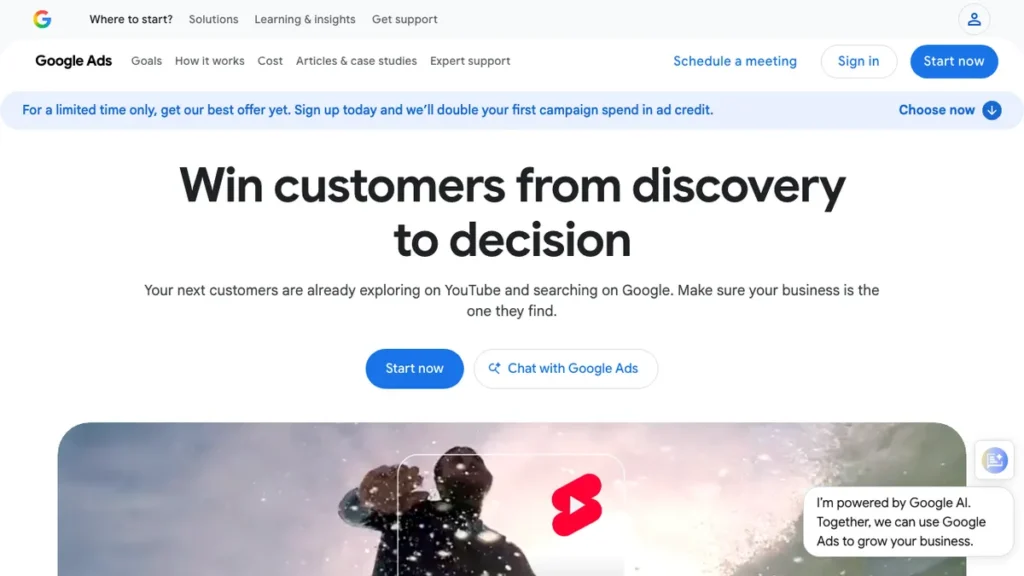
Smart Bidding and Responsive Search Ads are Google’s own native AI features, built directly into the Ads platform with no separate tool or subscription required. Smart Bidding automatically adjusts bids in real time based on conversion likelihood, while Responsive Search Ads test headline and description combinations automatically within a single ad unit.
The differentiator is that these are the baseline every advertiser already has access to, free, before adding anything else. The tradeoff worth understanding upfront is that Google’s own AI is optimized to maximize spend efficiency from Google’s perspective, which is not always identical to maximizing an advertiser’s actual ROAS.
This fits every advertiser as a starting point, since it costs nothing and is already available inside the account you are running campaigns from.
2. Optmyzr
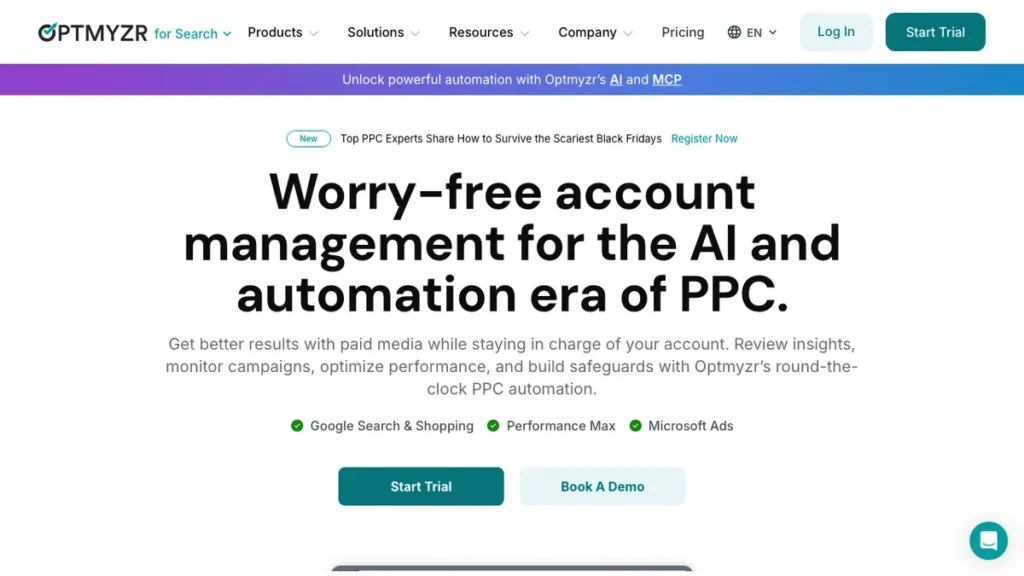
Optmyzr automates bid management, budget pacing, and performance reporting across large account portfolios, priced around $208 a month for its core plans. It is widely regarded as the strongest option specifically for agencies managing several client accounts at once rather than a single advertiser optimizing one campaign.
The differentiator is portfolio-scale automation. Where several tools on this list are built for optimizing one account well, Optmyzr is designed around the workflow of an agency managing many accounts simultaneously, with rule-based automation that applies consistent logic across an entire client roster.
Optmyzr fits agencies and in-house teams managing multiple Google Ads accounts who need consistent, rule-based automation applied at scale. Current plans are listed at optmyzr.com.
3. Adalysis
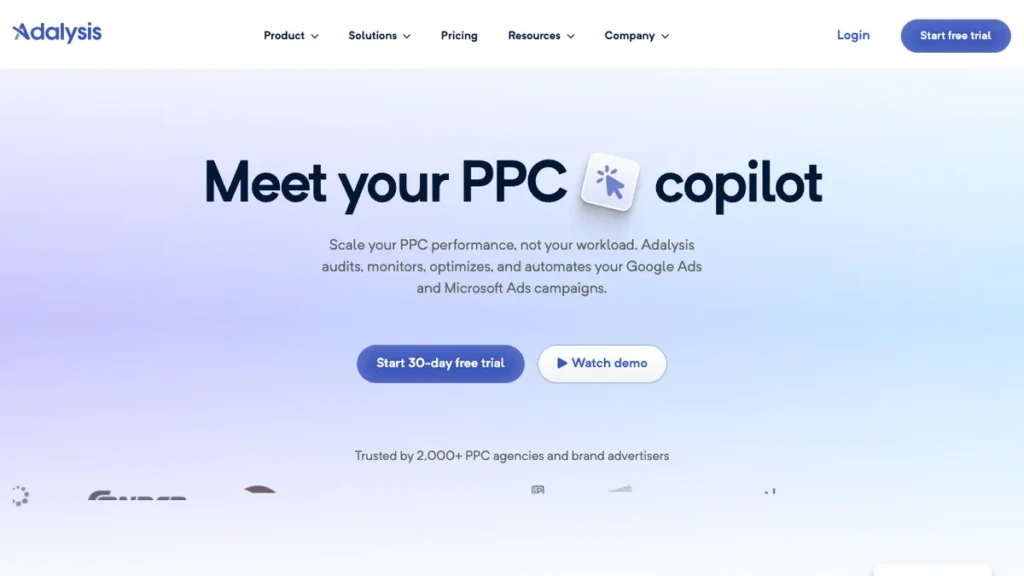
Adalysis specializes in ad testing and copy optimization, systematically tracking which headline and description combinations actually drive performance rather than relying on Google’s own black-box testing. It runs around $99 a month and is frequently cited alongside Optmyzr as a strong pick for agency workflows.
The differentiator is testing transparency. Where Responsive Search Ads test combinations inside Google’s own system with limited visibility into what is actually working, Adalysis surfaces that data directly, giving an advertiser real insight into which specific copy elements are earning clicks and conversions.
Adalysis fits advertisers who want to actively improve ad copy based on real performance data rather than trusting Google’s automated testing to optimize on its own.
4. Opteo
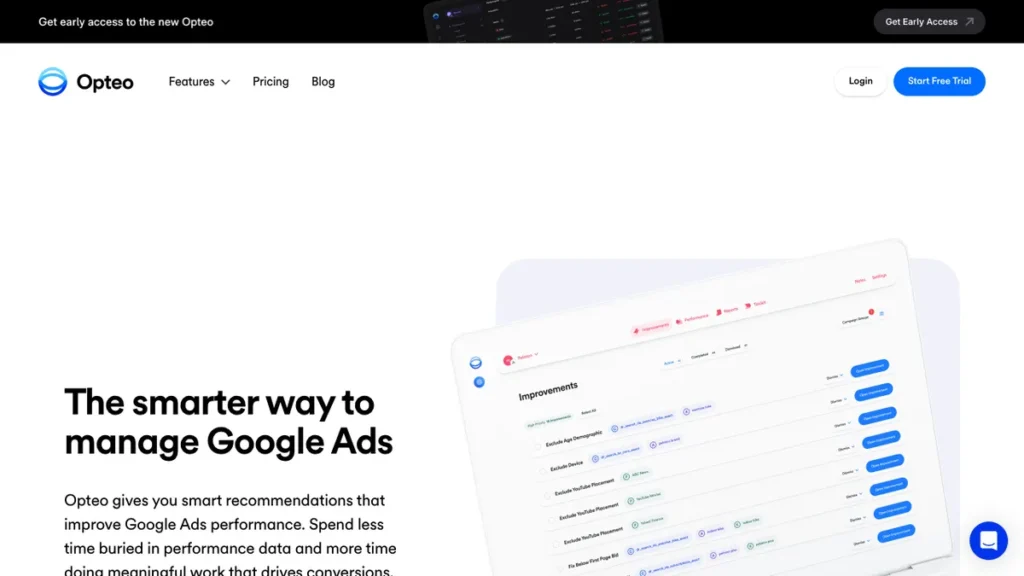
Opteo delivers smart, prioritized recommendations for account improvements, running around $97 a month and positioning itself as a guided optimization layer rather than a fully autonomous management platform. It surfaces specific, ranked actions an advertiser should take next rather than handling every decision automatically.
The differentiator is that it keeps a human in the loop by design. Where fully autonomous tools make changes without approval, Opteo’s recommendation-first approach suits advertisers who want AI-assisted guidance while still reviewing and approving changes themselves before they go live.
Opteo fits advertisers who want AI-powered suggestions to speed up decision-making without handing full account control over to an automated system.
5. AdCreative.ai
AdCreative.ai focuses on creative and asset generation, specifically built to handle the volume of assets Performance Max campaigns require, often 15 or more headline variants, several descriptions, and multiple images across different aspect ratios for a single campaign. It automates that asset production rather than requiring a designer to build each variant manually.
The differentiator is creative volume at the specific scale Performance Max demands. Manually producing that many asset variants for every campaign is a genuine bottleneck, and AdCreative.ai is built specifically to remove it. Our AI video tools review covers additional options worth comparing if your Performance Max asset groups need video alongside static creative.
AdCreative.ai fits advertisers running Performance Max campaigns who are bottlenecked on producing enough creative variants to fill every asset group properly.
6. Adzooma
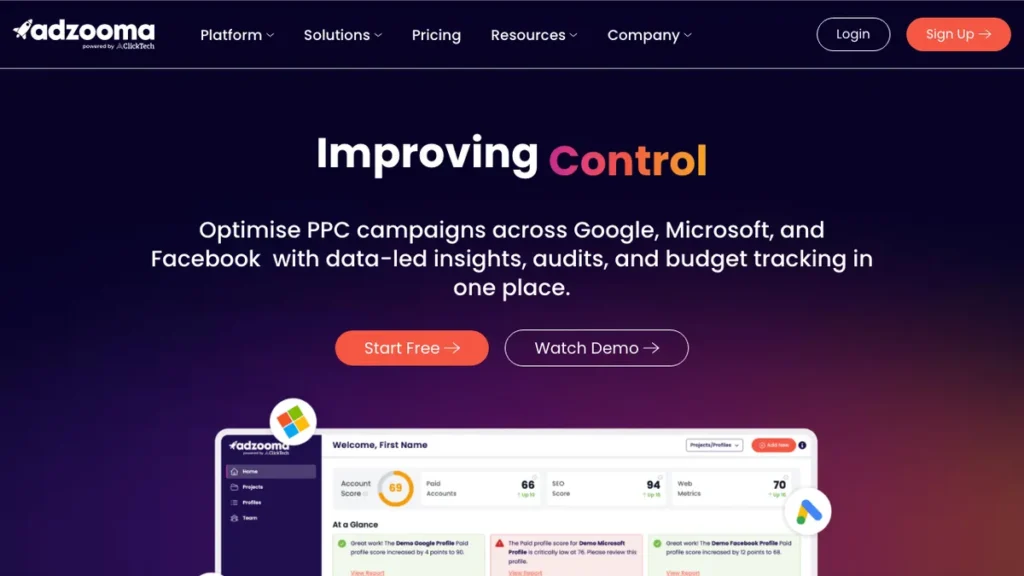
Adzooma is widely cited as the strongest free option in this category, offering automated recommendations and basic optimization without a paid subscription required to start. It gives solo advertisers and small businesses a meaningful entry point into AI-assisted management before committing budget to a paid tool.
The differentiator is that it delivers real value at zero cost. Where most tools on this list charge $40 a month or more, Adzooma’s free tier is genuinely usable rather than a stripped-down teaser designed purely to push an upgrade.
Adzooma fits solo advertisers and small businesses testing AI-assisted Google Ads management for the first time without committing to a paid subscription. The free tier is available at adzooma.com.
7. Anyword
Anyword focuses specifically on AI-generated ad copy, producing headline and description variants optimized for predicted performance rather than generic template output. It scores generated copy against predicted engagement before an advertiser even runs the test live.
The differentiator is the predictive scoring layer applied to generated copy. Rather than generating variants and hoping one performs, Anyword ranks its own output by predicted effectiveness first, which narrows down which variants are worth testing in a live campaign.
Anyword fits advertisers who specifically need help generating and prioritizing ad copy variants rather than managing bids or budgets. Details are available at anyword.com.
8. Ryze AI

Ryze AI positions itself as a fully autonomous ad management platform, adjusting bids multiple times a day, reallocating budgets between campaigns based on real-time performance, and pausing underperforming ad groups automatically. It is priced at a flat rate around $40 a month and supports several ad platforms beyond Google Ads. Note that ROAS improvement figures cited by Ryze AI come from the company’s own published testing rather than independent third-party verification, so treat specific performance claims with appropriate caution and test on your own account before trusting them fully.
The differentiator is full autonomy at a relatively low, flat price point. Where most tools on this list surface recommendations for a human to approve, Ryze AI is built to act on decisions directly without requiring manual sign-off on every change.
Ryze AI fits advertisers comfortable handing significant account control to an automated system in exchange for near-zero manual bid management time, though independent verification of results is worth seeking before fully committing.
9. Madgicx
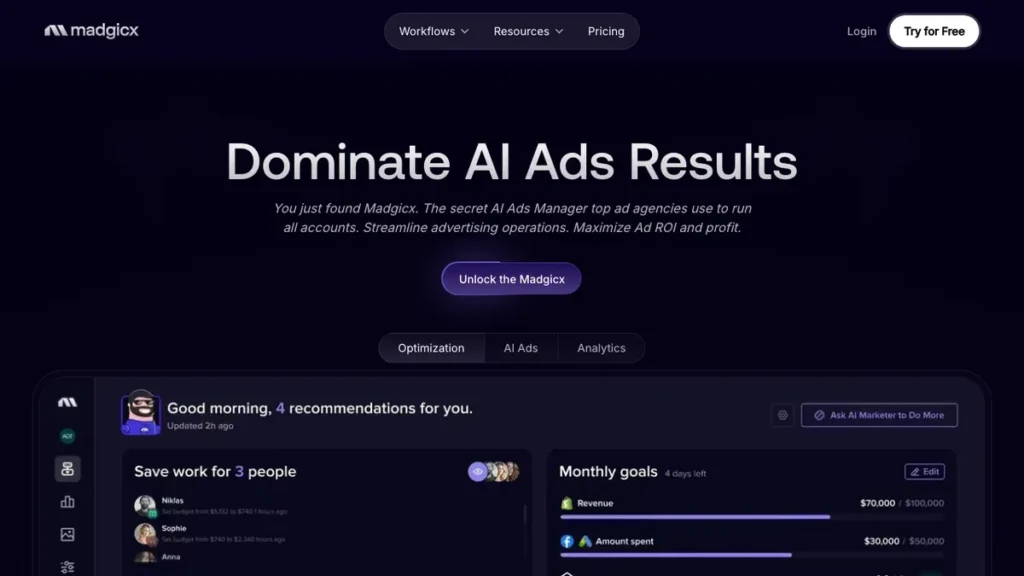
Madgicx started as a Meta-focused optimization platform and has expanded into cross-channel management covering Google Ads alongside Meta, which fits advertisers running budget across both platforms who want unified reporting and optimization. It is generally positioned as the stronger pick for Meta-primary spend with some Google Ads activity layered in.
The differentiator is cross-channel visibility. Where most tools on this list focus exclusively on Google Ads, Madgicx is built for advertisers whose budget spans multiple platforms and who need one dashboard rather than switching between separate tools for each channel. If Meta is a growing part of your paid mix, our Facebook and Meta ads roadmap is a useful companion for that side of the budget.
Madgicx fits advertisers splitting significant budget between Meta and Google who want cross-channel reporting and optimization in one platform rather than two separate tools. Plans are listed at madgicx.com.
Why an Independent Tool Sometimes Beats Google’s Own AI
Google’s Smart Bidding and Performance Max are convenient and genuinely effective in many cases, but it is worth remembering that Google’s own AI is optimized around Google’s revenue incentives, not necessarily an advertiser’s ROAS specifically. An independent third-party tool has no incentive to nudge an account toward higher spend, which is a meaningful distinction once budgets scale.
What to Watch For When Trusting an AI Tool With Your Ad Account
Check who benefits from the recommendation: A tool built by the ad platform itself has different incentives than an independent third-party optimization tool.
Verify vendor-published performance claims independently: Self-reported ROAS or CPA improvements from a tool’s own marketing should be tested on your own account rather than taken at face value.
Match autonomy level to your comfort with risk: Fully autonomous tools save the most time but require the most trust; recommendation-first tools take longer but keep a human reviewing every change.
Confirm reporting covers your full channel mix: If your budget spans Google and Meta, a Google-only tool leaves a real gap in cross-channel visibility.
For a broader view of structuring paid spend across channels before layering AI optimization on top, our media buying and SEM roadmap is worth reading alongside this list.
How to Choose Your First AI Tool for Google Ads
Step 1: Identify your actual bottleneck Decide whether bid management, creative production, or ad copy testing is costing you the most time before picking a tool built for a different problem.
Step 2: Start with what’s already free Confirm Smart Bidding and Responsive Search Ads are properly configured in your account before paying for a separate tool that duplicates functionality Google already provides.
Step 3: Choose your autonomy level Decide whether you want a tool that recommends changes for approval or one that acts automatically, since that choice matters more than any specific feature list.
Step 4: Test on one campaign before rolling out account-wide Run a new tool on a single campaign first, so you can judge its actual impact before trusting it with your full account.
Step 5: Track results against a real baseline Compare performance against your account’s recent history, not a vendor’s published case study, since your account’s specific dynamics will differ from any published benchmark.
Step 6: Reassess after one full budget cycle Give any new tool at least one complete monthly budget cycle before deciding whether to keep it, since early results can be noisy in either direction.
Conclusion
There is no single best AI tool for every Google Ads account, since the right pick depends on whether your bottleneck is bid management, creative volume, copy testing, or cross-channel reporting. Optmyzr and Adalysis lead for agencies running multiple accounts, AdCreative.ai solves the specific creative volume problem Performance Max demands, and Adzooma remains the strongest starting point for anyone testing AI-assisted management for free.
Start with Google’s own native AI features, identify your actual bottleneck, and test one additional tool on a single campaign before rolling it out account-wide. For a broader view of where Google Ads optimization fits into your overall growth strategy, our performance marketing roadmap is a useful next read.
Frequently Asked Questions
What should I try before paying for a Google Ads AI tool?
Google’s own Smart Bidding and Responsive Search Ads are free, built directly into the Ads platform, and worth confirming are properly configured before adding a separate paid tool.
Which tool is the strongest free option in this category?
Adzooma is widely cited as the strongest free option, offering automated recommendations and basic optimization without a paid subscription required to start.
How much does Optmyzr cost and who is it for?
Optmyzr runs around $208 a month and is built for agencies managing multiple client accounts, automating bid management, budget pacing, and reporting across large portfolios.
What’s the difference between a fully autonomous tool and a recommendation-first tool?
Ryze AI, around $40 a month, acts on bid and budget decisions directly without requiring sign-off, while Opteo, around $97 a month, surfaces prioritized recommendations for a human to review and approve.
Should I trust the ROAS improvement numbers advertised by these tools?
The article specifically flags that Ryze AI’s cited ROAS figures come from the company’s own published testing rather than independent verification, and recommends testing on your own account before trusting them fully.
Which tool is best for advertisers running both Google and Meta ad spend?
Madgicx started as a Meta-focused platform and has expanded into cross-channel management, giving advertisers unified reporting and optimization across both platforms.
You May Also Like
Google Ads Roadmap: a step-by-step guide to running paid acquisition campaigns.
Media Buying and SEM Roadmap: a guide to structuring paid spend across search and display.
Facebook and Meta Ads Roadmap: a step-by-step guide to planning and running Meta ad campaigns.